Progress Update
AI Notebook
I have created an AI notebook with many sources of information on Project 2025 and tracking how it is being implemented (which you can use to query aspects of the Trump & MAGA regime change). This overview of where we are has also been created using it (with minor tweaks).

Introduction: A Democracy Staring at the Abyss
American democracy is under attack from a profound and existential threat (and Europe is next). This is not a traditional political challenge defined by cyclical policy debates or partisan disagreements. It is a coordinated, systemic assault on the nation’s foundational institutions, legal guardrails, and democratic norms, orchestrated by a network of authoritarian-minded actors.
The USA has become increasingly a symbolic democracy in the last few decades (you can have your Govt sponsored genocide in red or blue), it has been a long process of radicalisation of the people, extraordinary growth in inequality and a hollowing out of even nominal democratic principles in favour of capital and corporatism. Now the radical extremists (the Republicans) have decided to dispense even with the democratic window dressing.
At the heart of this assault is Project 2025, the comprehensive, operational blueprint for dismantling the U.S. system of government as we know it.This plan is designed to methodically shatter democratic checks and balances and consolidate immense, unchecked power within the executive branch and the person who is President.
In March, I published a summary of Project 2025. it is time to check-in on how Project 2025 is being effectively implemented.
But first by way of reminder….
The Blueprint for Autocracy: Deconstructing Project 2025
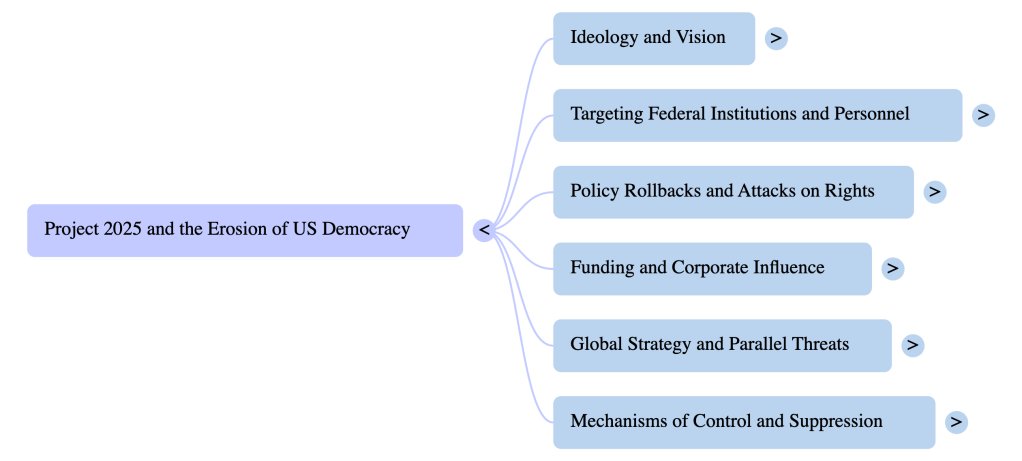
Project 2025 is not a collection of policy proposals; it is a revolutionary plan to fundamentally reshape the American system of government to make it an autocracy (a dictatorship with the veneer of popular influence on elections and government). An extensive, well-funded initiative spearheaded by the far-right Heritage Foundation and supported by a coalition of over 100 conservative organisations. Its goal was to create a detailed blueprint to enable Donald Trump’s second administration to rapidly restructure the entire federal government starting on January 20, 2025.
Central Ideology and Policy Goals
The project’s political framework is anchored in a controversial, maximalist interpretation of the unitary executive theory, which asserts that the entire executive branch must be under the president’s complete and direct control, eliminating the independence of agencies like the Department of Justice (DOJ) and the FBI. Key policy objectives include:
- Federal Workforce Purge: Systematically replacing career civil servants with political loyalists by reinstating Schedule F, a personnel mechanism designed to strip job protections from thousands of non-partisan employees.
- Environmental Deregulation: A wholesale reversal of federal climate policy, including gutting the Environmental Protection Agency (EPA), eliminating clean energy programs (like those targeted at the Department of Energy), restricting research funding related to climatology, and promoting fossil fuel production.
- Social and Cultural Agenda: Implementation of Christian nationalist policies, seeking to abolish the Department of Education, criminalize abortion nationwide (potentially banning medication abortion like mifepristone), and dismantle Diversity, Equity, and Inclusion (DEI) programs across the government.
- Economic and Social Safety Nets: Lowering the threshold to remove overtime eligibility for millions of workers, imposing work requirements for food assistance (SNAP), advocating for deep cuts to Medicaid, and potentially raising taxes on middle- and lower-income families while cutting corporate taxes.
Implementation and Funding
Project 2025 is fueled by an “eight-figure” budget (Heritage allocated $22 million specifically for transition infrastructure). Financial backing largely comes from a non-transparent “dark money” network linked to ultra-wealthy families and major conservative donors, such as the Koch and Uihlein families, who seek deregulation.
The Hungarian Model: An Authoritarian Blueprint
The architects of Project 2025 have looked to international models of democratic decay for inspiration. A direct parallel can be drawn to Viktor Orbán’s consolidation of power in Hungary. After a political defeat radicalized him, Orbán spent eight years out of power developing extensive and detailed plans for seizing control of the state. This effort included hiring law firms to create a policy blueprint—like Project 2025—designed for immediate implementation upon his return to office.
Once elected, Orbán executed this plan with ruthless efficiency, systematically capturing government agencies, the media, and the judiciary. This transformation of Hungary into what the European Parliament has designated an “electoral autocracy” serves as a stark warning and a proven model for the anti-democratic agenda detailed in the Project 2025 “Mandate for Leadership.”
This domestic US assault, modeled on international examples of autocracy, is intrinsically linked to a vision for a transformed global order controlled by a small number of billionaires and corporations.
Progress Tracker Since Inauguration
The implementation of Project 2025 since the inauguration in January 2025 has been characterized by rapid, high-velocity executive action and strategic personnel placements that align closely with the blueprint laid out in the Mandate for Leadership.
Paul Dans, the former director of Project 2025, stated that the administration’s early agenda was “beyond my wildest dreams” and confirmed the alignment between the blueprint and the administration’s actions.
Implementation progress has been actively tracked by a number of community-driven initiatives, including:
- the Project 2025 Tracker, reported 119 objectives complete and 66 in progress across 34 agencies as of October 2025 and estimates that nearly 50% of the Project 2025 objectives are now completed1;
- Professor Christina Pagel (with the help of some ‘brilliant volunteers’) operates the Trump Action Tracker which groups the Trump admin’s actions by key policy areas:

There are three main strategic pathways used for implementation:
- The use of Executive Orders;
- The installation of loyal personnel, including the creation of a parallel dismantling mechanism;
- The immediate rollback of policies and funding through executive authority.
Implementation By Executive Order
President Trump set a historical record for Executive Orders in the first 100 days of his second term, signing 143 (surpassing FDR’s 99).
- Number of Executive Orders: As of late September/early October 2025, President Trump had signed 209 Executive Orders in his current administration (Executive Orders 14147 through 14355).
- Scope: The executive orders cover a wide range of topics, frequently focusing on rolling back prior policies, implementing core administration priorities, and reorganizing the federal government. Key areas include:
- Energy and Environment: Actions like “Unleashing American Energy” and “Unleashing Alaska’s Extraordinary Resource Potential,” and terminating environmental mandates.
- Immigration and Border Security: Orders related to border protection, sanctuary cities, and attempting to end birthright citizenship.
- Foreign Policy and Global Health: Initiating the withdrawal of the U.S. from international bodies like the World Health Organization (WHO), and reevaluating foreign aid.
- Government Efficiency and Accountability: Establishing the “Department of Government Efficiency,” (DOGE)
- Federal Workforce and Social Issues: Orders to end Diversity, Equity, and Inclusion (DEI) programs, and actions related to military service and transgender issues (some of which have faced legal challenges).
- Economic and Trade: Directives related to tariffs and modifying trade agreements.
- Healthcare: Actions to roll back key patient protections under the Affordable Care Act (ACA) including to allow insurers to once again deny coverage based on pre-existing conditions and impose lifetime coverage limits in certain types of plans.
Implementation: Personnel and Structural Consolidation
The central mechanism for implementing the agenda involves restructuring the federal workforce and centralising power around the presidency, based on the unitary executive theory.
The Personnel Purge and Loyalty Appointments
The core operational tactic is the reinstatement and mass application of Schedule F, designed to strip civil service protections from tens of thousands of career civil servants and replace them with political appointees loyal to the administration.
- Executive Order 14170 (The Merit Purge): This order, introduced in January 2025, formally reinstated Schedule F to speed up firings and mandated that agencies shift hiring criteria away from perceived “‘equity’ quotas” toward standards based on “merit, practical skill, and dedication to our Constitution”. This process is viewed by critics as establishing an ideological vetting mechanism consistent with the “MAGA loyalty test”.
- Strategic Appointments: Key Project 2025 architects and contributors were placed in high-level implementation roles:
- Russell Vought (key architect and P2025 co-author) was nominated and confirmed to lead the Office of Management and Budget (OMB). This position is strategically important, allowing him to control the federal technology infrastructure and enforce presidential policy across the executive branch, effectively acting as the chief operational officer for the P2025 agenda. Vought’s influence appeared to preview the early freeze on federal spending.
- Tom Homan (P2025 contributor) was appointed as the White House “border czar”.2
- Brendan Carr (P2025 author) was appointed to lead the Federal Communications Commission (FCC).
The Parallel Mechanism: Department of Government Efficiency (DOGE)
The administration utilized the Department of Government Efficiency (DOGE), led by Elon Musk, as a parallel implementation mechanism to execute Project 2025’s dismantling objectives.
- Establishment and Mandate: DOGE was formally established by an executive order on January 20, 2025. Proponents and critics note that DOGE’s agenda maps onto Project 2025 goals. Nine of the fifteen agencies first targeted by DOGE were explicitly identified by Project 2025 for elimination or downsizing.
- Methods: DOGE employs mass resignations, mass layoffs, and the elimination of entire departments in the name of efficiency. Its methods directly mirror the Project 2025 goal of purging government personnel. DOGE also sought to “streamline” the FAA’s oversight of SpaceX operations and targeted the Environmental Protection Agency (EPA).
- Data and Technology: DOGE quickly gained “God mode” access to extensive amounts of sensitive federal data and IT systems, including the Social Security Administration (SSA) and the Treasury Department. This capability was reportedly used to build a master database to surveil and track immigrants and assist with immigration crackdowns. DOGE is also reportedly assisting OMB, under Vought, with a “massive IRS data project”.
Key Policy Areas of Implementation
The new administration acted rapidly in specific policy domains, often using executive orders that mirrored the Mandate for Leadership‘s language and intent.
Energy, Climate, and Environmental Deregulation
Early executive actions focused heavily on rolling back climate policy, aligning with the P2025 goal to “purge climate action from the federal government”.
- DOE Clean Energy Cuts: The Department of Energy announced the termination of 321 financial awards supporting 223 clean energy projects, resulting in reported savings of approximately $7.56 billion. This aligns directly with the P2025 directive to eliminate green subsidies and terminate economically unviable projects.
- National Oceanic and Atmospheric Administration: The proposed dismantling of the NOAA is being effected. The administration has already fired hundreds of NOAA staffers.
- Environmental Protection Agency (EPA):
- The EPA has terminated grant agreements worth $20 billion. Project 2025 mandates stopping all grants to advocacy groups and reviewing federal investments. It also specifically instructs the administration to ensure that grants funded by the Inflation Reduction Act (IRA) are provided to state regulatory entities and not to nonprofits. DOGE also targeted three EPA contracts totalling $45 million.
- Elimination of Offices: The EPA has shut its offices that deal with addressing the disproportionate burden of pollution faced by poor people and minorities. Specifically, the plan called for the elimination of the Office of Environmental Justice and External Civil Rights (OEJECR). This office has been formally eliminated. The Office of Children’s Health Protection will likely follow.
- DOGE targeted a $22 million contract for “research and development in the physical, engineering, and life sciences” for the NOAA Office of Oceanic and Atmospheric Research (OAR)
- Climate Agreements and Costs: On the first day of the second term, the U.S. withdrew from the Paris Climate Agreement and ended the use of the Social Cost of Carbon (SCC) analysis by executive order.
- Fossil Fuel Expansion: The President moved to reopen Alaska to drilling on the first day. The Interior Department lifted the coal leasing moratorium in January 2025.
- Regulatory Rollbacks: A pending Biden administration regulation for ground and surface water limits on toxic PFAS was withdrawn under the administration’s day-one freeze on new regulations.
Dismantling Diversity, Equity, and Inclusion (DEI)
The administration took significant steps to dismantle DEI initiatives across the government and private sector, signing multiple executive orders to abolish these programs.
- Contractor Discrimination Policy: An executive order revoked a 60-year-old policy (EO 11246) that prohibited employment discrimination by government contractors, a move Project 2025 explicitly called for.
- Program Elimination: The administration systematically dismantled diversity initiatives. For example, the Property Appraisal and Valuation Equity (PAVE) task force, designed to eliminate racial bias in home appraisals, was disbanded, fulfilling a Heritage Foundation recommendation.
- Social Policy: An executive order was signed rescinding federal funding from school programs that permit transgender women to participate in women’s sports, aligning with P2025’s social agenda.
- Federal Policy and Legal Status:
- Redefining Sex/Gender: An executive order was issued that defines sex as the biological binary of male and female, effectively removing federal recognition of gender identity and non-binary status. This directive requires government agencies to use the new definitions.
- Erosion of Non-Discrimination Policies: Policies from the previous administration that prohibited discrimination on the basis of sexual orientation and gender identity have been rescinded. The Department of Education has announced plans to narrow the scope of Title IX regulations to exclude these protections for students.
- Federal Funding Restrictions: Orders have been issued to freeze federal funding, grants, loans, and aid to entities that are deemed to be “promoting ‘gender ideology,’” which has reportedly led to funding cuts for some organizations, including some HIV programs and community health centers.
- Health Care:
- Gender-Affirming Care Bans: Executive orders have been signed that aim to end coverage for gender-affirming care under federal health programs like Medicare and Medicaid. Directives also prohibit the use of federal funds to “fund, sponsor, promote, assist, or support” gender transition for children.
- Military Health Care: The administration has moved to remove coverage for gender-affirming care from the Federal Employees Health Benefits (FEHB) Program, which impacts federal employees, retirees, and their families, including transgender military members and veterans.
- Military Service bans on Transgender Service: The ban on openly transgender people serving in the Armed Forces has been reinstated.
- Identification and Data – Passport Gender Markers: The State Department has stopped granting requests for new or updated passports with an “X” gender marker and no longer honours requests to change the gender marker for transgender people to one that differs from the newly defined biological sex.
- Data Censorship: Information and resources related to transgender and LGBTQ+ health, education, and inclusion have been removed from federal government websites, including the Centers for Disease Control and Prevention (CDC).
- State-Level Legislation: In addition to federal actions, hundreds of anti-LGBTQ+ bills, primarily targeting transgender people, have been introduced and, in many states, passed into law by state legislatures in 2025. These state laws cover areas such as bans on gender-affirming care for minors, restrictions on student and educator rights, and the use of public accommodations.
Fiscal Control and Spending Cuts
Actions were taken to consolidate budgetary power and halt Biden-era spending initiatives, particularly targeting large legislative funding packages.
- Blocking Funds: The administration moved to block government agencies from spending funds appropriated through Biden-era infrastructure and inflation bills, reflecting Project 2025’s support for rescinding all unspent funds from these laws.
- IRS Expansion: The Department of the Treasury completed the Project 2025 objective to reverse the Inflation Reduction Act’s expansion of the IRS.
- Foreign Aid: The administration initially froze new foreign aid for 90 days in January 2025. By February 26, 2025, funding to the majority of USAID-supported PEPFAR programs was stopped, which may lead to permanent discontinuation.
Education and Public Services
Implementation actions aimed at dismantling or refocusing federal education and health agencies:
- Education Policy: The President signed Executive Order 14191, which diverted funding from public schools to private school vouchers, aligning with P2025’s goal to reshape the education system.
- Health Research Funding: The National Institutes of Health (NIH) announced a change in February 2025 to restrict the maximum indirect cost rate for university research grants from 50% to 15%, aligning with a specific recommendation from Project 2025.
- Department Dismantling: The administration signaled its intent to follow Project 2025’s call to dismantle the Department of Education, with the Secretary of Education reportedly telling staff the agency was on a “historic final mission”.
Project Esther
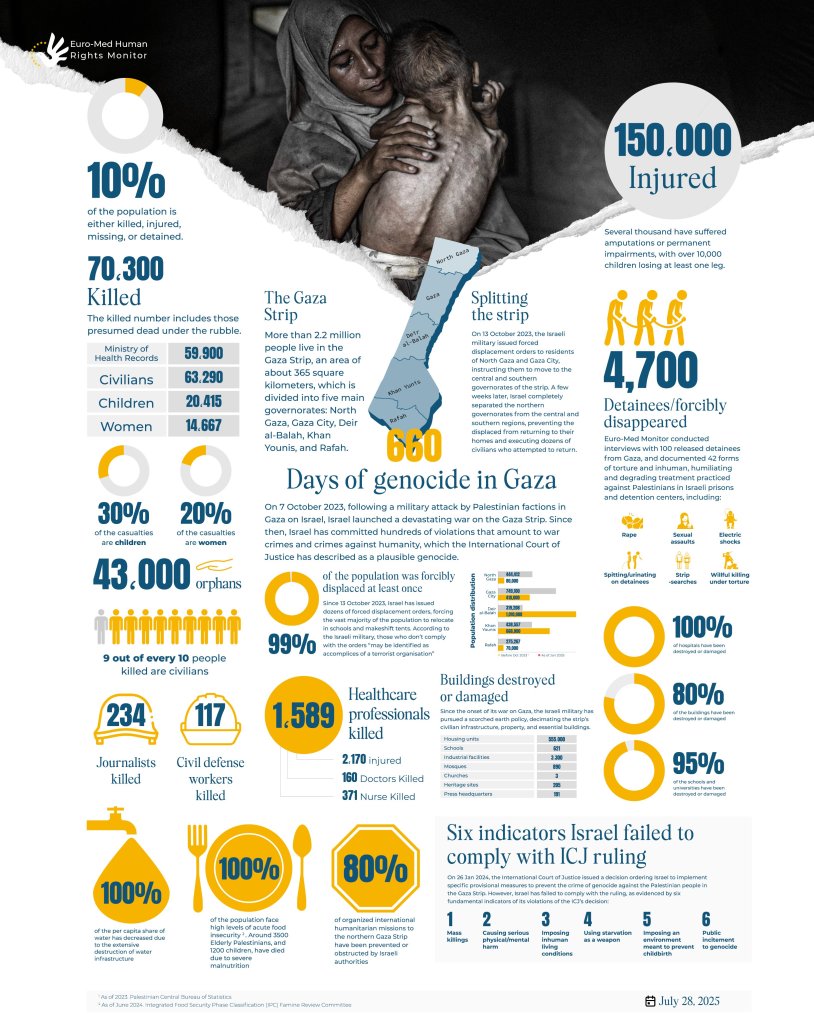
Project Esther is a specific policy blueprint, separate from but closely related to Project 2025, led by Victoria Coates. The project’s central objective is to suppress pro-Palestinian protests and what the group classifies as antisemitism. The implementation of Project Esther is characterised by a strategy to treat domestic criticism of Israel as a national security threat, enabling the use of federal enforcement tools against activists and universities.
- Project Esther is anchored in the premise that a broad range of critics of Israel constitute an “effectively a terrorist support network” or part of a “Hamas Support Network”. This framework allows the administration to deploy security and law enforcement mechanisms against perceived political opponents.
- The project’s goal is explicitly focused on targeting left-wing and pro-Palestinian activism, and it does not address right-wing antisemitism.
- The implementation strategy involves both executive orders and the integration of technology for surveillance and control:
- Executive Action Against Activism: The Trump administration executed a crackdown on civil society groups supporting Palestinian rights.
- An executive order was issued that mandated federal agencies identify “all civil and criminal authorities or actions” within their jurisdiction that could be used to combat “campus antisemitism”.
- Targeting and Suppression Mechanisms: Implementation involves concrete steps to disrupt and penalise activists, including policies designed to have critics of Israel deported, defunded, sued, fired, expelled, or ostracised.
- It calls for the purging of curricula, the firing of teachers and professors, and the denial of permits for protests organized by targeted organizations.
- It advocates using the RICO Act (racketeering charges) to “exploit” the “vulnerabilities” of groups like Jewish Voice for Peace and Students for Justice in Palestine.
- Technology Integration and Surveillance: The administration has utilised sophisticated technology, including the deployment of AI targeting systems refined in Gaza, for domestic enforcement operations in American cities. This technology has been used to flag individuals, such as Mahmoud Khalil, for enforcement action, relying on comprehensive data integration—the same approach reportedly used in Gaza to identify Palestinian families.
- ICE awarded Palantir a contract for the development of “ImmigrationOS,” a comprehensive surveillance platform that provides “near real-time visibility” into individual movements, supporting the tracking and enforcement mandate.
- Targeting Media Dissent: Plans are in place to “identify and target” Wikipedia editors potentially using facial recognition and harvested IP addresses.
It has also been implemented using soft-power tactics, in recent wide-ranging acquisitions of major American media channels by pro-Israeli corporations and individuals.3
Immigration
In addition to the attack on diversity, this has been the cruellest immediate focus of the Trump administration. See next section.
Immigration and Border Security
Recent ICE arrest and detention practices, often mirroring or exceeding tactics advocated by Project 2025, are characterised by increased aggression, militarisation, and the elimination of traditional boundaries:
- Operations are described by critics as a “blitzkrieg of illegality” and are often carried out in a paramilitary style, blurring the line between law enforcement and intimidation.
- Agents have employed highly aggressive, combative tactics, sometimes described as “military-style,” including using unmarked trucks and helicopters to surround buildings, and agents reportedly rappelling from Black Hawk helicopters.
- During raids, agents have allegedly kicked down doors, used chemical agents such as tear gas and smoke bombs on city streets and near a school, and used zip ties to detain adults and children, including U.S. citizens.
- Agents typically wear masks, concealing their identities and operating “without accountability”.
- The deployment of heavily armed federal agents using unmarked vehicles and armored equipment, sometimes without state consent, has been described as military-style execution.
Targeting and Sensitive Locations:
- Project 2025 advocates for rescinding all memoranda limiting enforcement of immigration laws, including those identifying “sensitive zones”.
- An administration directive rescinded ICE guidelines that required prior approval for arrests at “sensitive locations” such as schools, hospitals, and churches.
- ICE can now conduct civil immigration enforcement actions in or near courthouses, though they are directed to avoid areas wholly dedicated to non-criminal proceedings when practicable.
- The strategy targets a broad range of immigrants; 71.5% of those held in ICE detention as of September have no criminal conviction. The focus of arrests has expanded beyond those who pose a security threat to include anyone who is in the country illegally.
- Federal surveillance technologies, likened to systems deployed in Gaza, are utilized to continuously harvest data from over 200 websites and social platforms to create comprehensive profiles that guide enforcement actions, leading to the targeting of individuals based on their activism (e.g., a Palestinian student at Columbia University).
- The official lexicon for those arrested has been changed to “alien” and “illegal alien,” enforcing statutory language over previous guidance, signaling an “ideological shift”.
The Scale of Current and Planned Enforcement
The sources indicate a massive planned increase in funding, manpower, and detention capacity designed to enable mass deportations.
Funding and Personnel Expansion:
- Project 2025 proposes dramatically scaling up enforcement efforts. The policy blueprint calls for Congress to mandate and fund a significant increase in detention space, raising the daily available number of beds to 100,000.
- Congress was asked to fund ICE for at least 20,000 Enforcement and Removal Operations (ERO) officers and 5,000 Office of the Principal Legal Advisor (OPLA) attorneys.
- Recently enacted legislation provided $74.9 billion to ICE, doubling the agency’s budget under the previous administration, with $45 billion allocated for new detention centers and nearly $30 billion for enforcement and deportation.
- ICE plans to hire 10,000 additional agents over five years.
- The Department of Homeland Security now possesses a $10 billion unrestricted fund to pay contractors and local law enforcement to join the enforcement effort.
Arrest and Detention Capacity
- The new administration is preparing to more than double its detention capacity by planning to open four new 10,000-bed facilities and 14 smaller sites (700 to 1,000 people each).
- The plan utilizes the flexibility to use large numbers of temporary facilities such as tents.
- As of September 2025, there were 186 immigration detention centers operating, with 50 more expected to open by the end of the year.
- There have been reports of mass arrests, including over 1,000 immigrants in a crackdown in the Chicago area. The administration reported arresting over 300,000 individuals labeled as “illegal aliens” in 2025.
Policy Changes Driving Scale
- ICE Enforcement and Removal Operations (ERO) are identified as primarily responsible for enforcing civil immigration regulations, including civil arrest, detention, and removal of immigration violators anywhere in the United States, without warrant where appropriate.
- The principle of mandatory detention would be enforced by eliminating ambiguous language in Title 8, clarifying that aliens “shall” be detained.
- The use of Alternatives to Detention (ATD) for border crossers is planned for elimination, except in rare cases.
- The government has signaled plans to expand capacity at Guantánamo Bay, Cuba, to detain some unauthorised immigrants with serious criminal backgrounds.
The Use of Foreign Prisons and Conditions for Deportees
“They’ve been stripped of their hair and their clothes… It’s like your life just ceased to exist. You’re just a person in white clothes now,” Holsinger said.
“And it was a sense of watching people disappear.”4
The U.S. government has recently struck deals with foreign nations to deport migrants to overseas facilities, where conditions are reported to be severe.
- The U.S. administration reached a deal with El Salvador to ship detained migrants and imprisoned criminals to the country. Venezuelan migrants, many without apparent criminal records, were deported from the U.S. to El Salvador’s notorious Terrorism Confinement Center (CECOT).
- CECOT is a mega-prison designed to hold 40,000 inmates and is known for its stark rules and cruel living conditions.
- Lawyers for deportees released from CECOT described their experiences as enduring “state-sanctioned torture” and a “living nightmare”.
- Detainees reported being subjected to lengthy beatings, humiliation by guards, and isolation.
- Prisoners were allegedly beaten for six consecutive days after attempting to break cell locks, and male guards brought in female colleagues who beat naked prisoners and recorded videos.
- New arrivals, including those deported under the Alien Enemies Act, were greeted by masked police in riot gear. They were quickly stripped of power: grabbed by the neck, shaved, forced to kneel, and pushed face down onto the concrete floor.
- Inmates sleep on metal slabs without pillows or blankets, there are no books or television, and zero outside communication.
- Food was limited, and drinking water was dirty. Lights were left on all night, and guards would enter cells at night to administer beatings.
- U.S. deportation flights continued even after a federal judge ordered a halt following the invocation of the Alien Enemies Act, resulting in hundreds of people being sent to El Salvador.
striking deals with third countries including El Salvador, Rwanda, Uganda and South Sudan to remove dozens of people who have no connections to where they are being sent and are not given any opportunity to challenge their removals.5
Intended Scope of Mass Deportations Envisioned by Project 2025
Project 2025 outlines a blueprint for sweeping and rapid mass deportations, relying heavily on expanded presidential authority and the coordination of federal and local agencies. The policy blueprint calls for what it describes as “the largest domestic deportation operation in American history“.
- Russell Vought, one of the architects behind Project 2025, specifically emphasised drafting executive orders to implement the mass deportation of as much or more than 20 million people as quickly as possible. The plans call for mass arrests and the detention of undocumented immigrants, specifically mentioning the targeting of DREAMers.
- The plan also calls for the Department of State to quickly and aggressively address the failure of “recalcitrant countries” to accept deportees.
- This involves the quick and full enforcement of Section 243(d) visa sanctions, which means countries that do not accept their returned nationals risk the suspension of all immigrant visas, nonimmigrant visas, or all visas. These sanctions would remain in place until the sanctioned country accepts the return of all removal-pending nationals and formally commits to future, regular acceptance. The stated goal of this measure is to compel other nations to respect U.S. immigration laws.
Divergences and Extensions Beyond the Blueprint
While alignment is high, some administration actions have gone further than or diverged from the Project 2025 blueprint:
• Deportations and Penalties: The administration has gone further than Project 2025 on calls for mass deportations of undocumented immigrants. The President also expanded the scope of crimes eligible for the death penalty, exceeding the Mandate’s proposals.
• TikTok: The President issued an executive order that paused a federal ban on TikTok while negotiating its divestment, running contrary to Project 2025’s call to ban the app immediately on national security grounds.
• Foreign Aid: Actions to dismantle the U.S. Agency for International Development (USAID) went beyond P2025’s recommendation to “reform” and “scale back” its global footprint.
A New International Order: The Global Implications
The agenda of Project 2025 extends far beyond America’s borders, seeking to fundamentally realign global power structures and shatter the post-World War II international order. Its foreign policy vision is not one of isolationism, but of aggressive, transactional nationalism that abandons long-standing alliances in favour of a system where American power (and the President in person) is the sole arbiter of lawfulness and legitimacy.
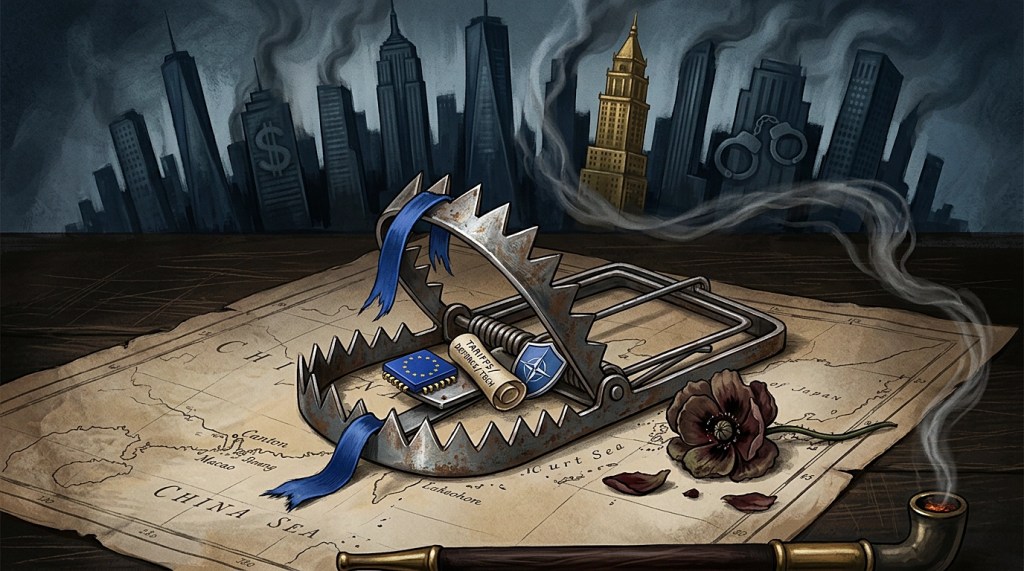
This involves moving away from a model of mutual commitment and treaty-based alliances like NATO toward a purely transactional approach based on “tactical leverage and conditional loyalty.” This doctrine views allies not as partners with shared values but as temporary assets to be leveraged for short-term gain (a protection racket with regular shakedowns). This unilateral assertion of power rejects any external constraints or accountability, logically favouring relationships with autocrats, who operate on similar principles of personal power, over the procedural and value-based commitments required by democratic alliances.
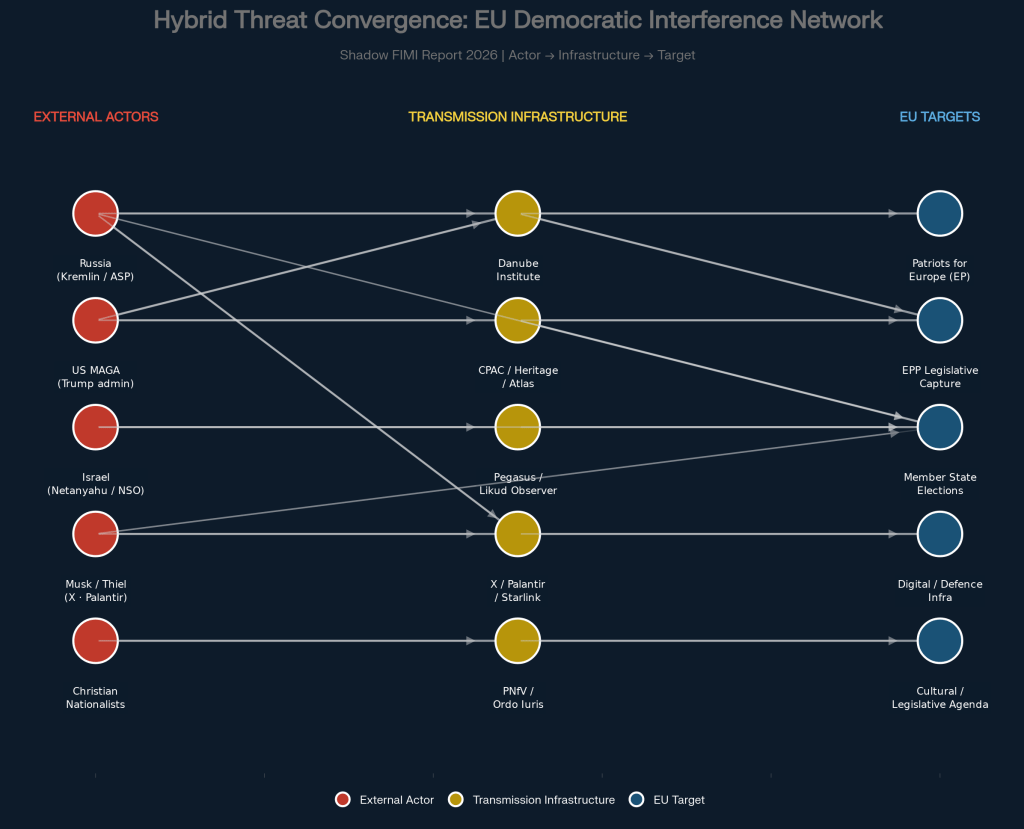
This strategic realignment is not occurring in a vacuum. It is part of a broader effort to foster a new international axis of far-right, nationalist powers working in concert to undermine democratic institutions globally. The key nodes of this emerging network are:
- A Trump-led America, acting as the powerful anchor of this illiberal alliance.
- Putin’s Russia, a long-standing actor in disinformation campaigns aimed at weakening Western democracies.
- Netanyahu’s Israel, a genocidal administration which has also cultivated strong bonds with far-right European parties. Funded and supported by the USA.6
- Figures like Hungary’s Viktor Orbán, who serve as a critical bridge, connecting American and Israeli influence with Russian support to destabilise democratic blocs like the European Union.
This axis represents a coordinated, transnational effort to replace the liberal international order with one governed by strongman rule, ethno-nationalism, and shared contempt for democratic norms. The global nature of this threat necessitates our responsibility to defend against it.
A Call for Democratic Defence: The Path Forward
The threat to representative American democracy is clearly not theoretical, it is happening in front of our eyes. It is funded by immense wealth, and aligned with a global authoritarian movement. In the face of such a clear and present danger, passivity is not an option. Indifference is complicity. An active, strategic, and broad-based defence of democratic institutions and values (and each other) is the only viable path forward.
Playbook for Resistance and Renewal
Just as authoritarians have a playbook, so too do the defenders of democracy. The following strategies, distilled from organisers, academics, and civil society leaders, provide a clear and empowering framework for action.
- Organise Locally, Build Networks: The foundation of democratic resilience is local. The first and most vital step is to form affinity groups and neighbourhood networks. These small, trusted circles are essential for building social solidarity, sharing information and discussing the specific threats facing your community, and planning collective, coordinated responses. Effective social networks are the bedrock of a resilient society.
- Engage in Strategic Non-Cooperation: Autocrats rely on people “obeying in advance“—anticipating a more restrictive society and behaving accordingly. To counter this, we must engage in strategic non-cooperation. This includes participating in boycotts of corporations that enable the authoritarian agenda, organising workplace actions to protest immoral directives, and practicing active noncompliance with policies that violate fundamental rights. Authoritarian regimes ultimately fall when people refuse to go along with them.
- Defend the Pillars of Democracy: Provide tangible support—through donations, volunteering, and public advocacy—for independent journalism, which holds power to account and to civil liberties organisations like the ACLU and legal groups like Democracy Forward that are fighting critical battles in the courts to protect the rule of law.
- Hold All Power Accountable: Democratic defence requires applying pressure at all levels. Call elected officials—from city council to Congress, across the political spectrum—and demand they publicly commit to upholding democratic norms and rejecting authoritarian tactics. Use consumer power and public protest to target the corporations who provide financial support and technological infrastructure for this regime.
Conclusion: The Work of Millions
The defence of democracy is not the work of a few heroes, government officials, or political parties. It is the collective and urgent responsibility of every citizen who values a free and open society. The path to overcoming it lies not in grand, singular acts but in the distributed, persistent efforts of millions. We must all find our role, connect with others, and commit to the work ahead, guided by the timeless teachings of compassion and the need for a community of humanity, that sees itself as just one important species on this wonderful diverse planet.
“You are not responsible for completing the work, nor are you allowed to desist from it. We will succeed because millions of people do a couple things well, not because one person does a million things.”
(based on a Jewish proverb)
No Kings – October 18 2025

Footnotes
I have kept references to a minimum given that the AI Notebook provides cross-referenced sources.
- An analysis of 53 executive orders and actions taken in the first week of the administration found that more than two-thirds (36) mirrored proposals outlined in the Mandate for Leadership. ↩︎
- https://www.independent.co.uk/news/world/americas/us-politics/vance-stephanopolous-abc-homan-bribe-b2844042.html ↩︎
- https://www.democracynow.org/2025/10/8/bari_weiss_david_klion_cbs_paramount ↩︎
- “As Holsinger snapped the last few photographs, he felt that he had just watched the Venezuelan men become “ghosts.””: https://www.cbsnews.com/news/photojournalist-witnesses-venezuelan-migrants-arrival-in-el-salvador-60-minutes/ ↩︎
- https://www.theguardian.com/world/2025/oct/06/us-deportees-eswatini-lawyers-ngos ↩︎
- https://www.newsweek.com/war-gaza-cost-us-over-30-billion-israel-10827062 ↩︎
Ps: In case you are wondering, I used an American Israeli flag to represent Israel as the 51st state (together Usrael).







 Compossible - that which can live together
Leave a comment