The Epstein Network – Sexual Abuse, State Power, and Impunity
How Epstein’s network really worked: money, banks, intelligence links, oligarchs, powerful abusers, the Florida plea deal, and the ongoing cover‑up that still stands between survivors and anything resembling justice.
Updated November 2026
Introduction #
There is a point where impunity is not a failure of the system; it is the purpose of the system. Anyone who spends time with the Epstein case arrives there. Justice is too often institutional force applied to the weak by the strong: the strong do what they will and the weak suffer what they must.
That is the starting point for the AI‑assisted podcast series this article accompanies, and for its opening episode, “The Deal of a Lifetime”.
Anyone who reads the documents — FBI files, court transcripts, bank records, internal emails, informant reports — runs into the same problem. There is no single neat theory that explains everything. We are working an enormous jigsaw with most of the pieces withheld: on the DOJ’s own numbers, we have been allowed to see perhaps two per cent of the evidence seized from Epstein’s properties. The rest sits protected from public scrutiny by the US government.
The Epstein story is ultimately about impunity: about an American justice and political system that has spent more than thirty years manufacturing it for the wealthy and powerful.
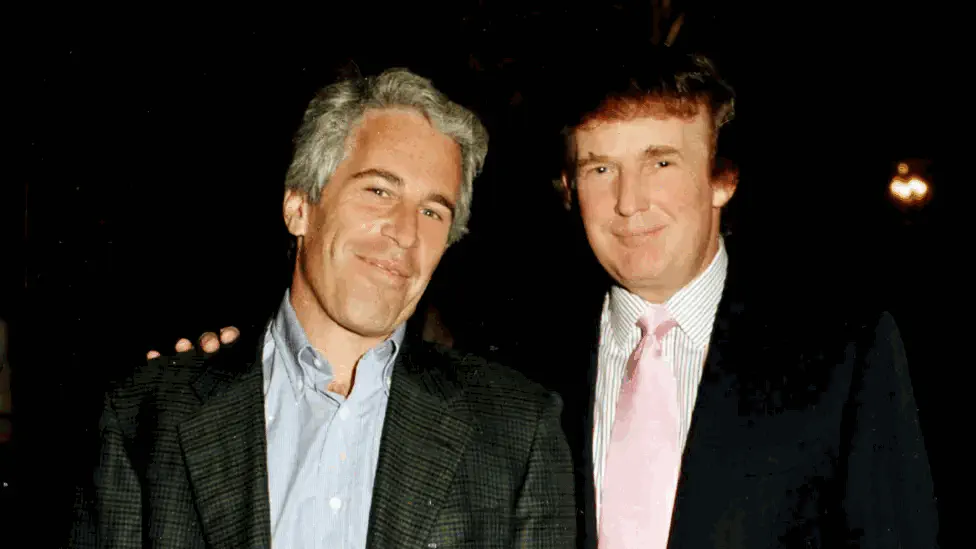
If the United States was a great country for the Epstein enterprise in 2003, it has become a greater one since. We have a man in the White House who was Epstein’s friend for years and moved in the same circles, who is closely linked to Russian mafia‑adjacent figures, who has been found liable by a jury for sexual abuse, and against whom allegations by a woman who says she was 13 at the time were taken seriously enough by the FBI to be recorded four times. That is not unrelated. The system had to be subverted for a long time for someone like Trump to become President.
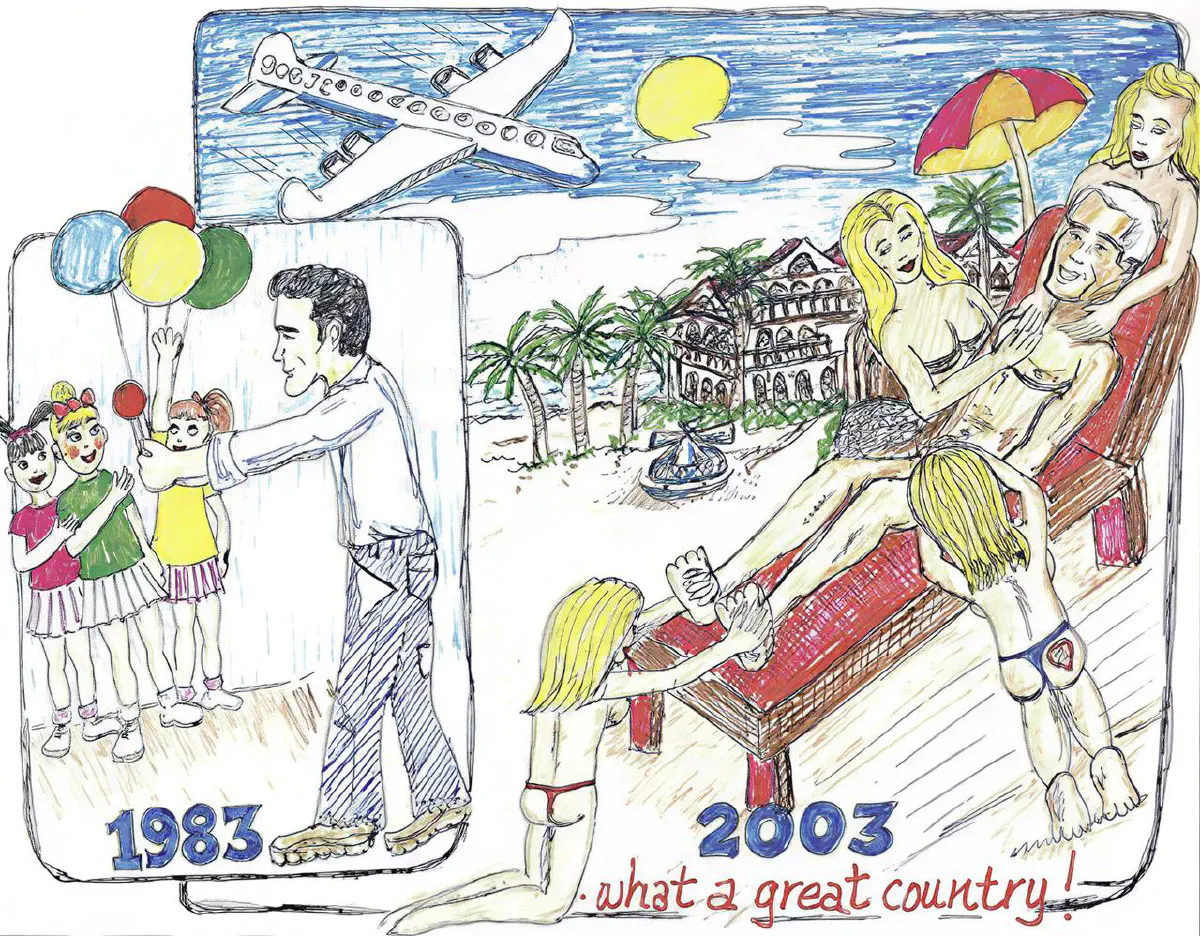
Rich predator. Blackmail honeypot. Mossad and US intelligence asset. Russian‑mafia‑connected. Tax‑evasion specialist to the ultra‑rich. Each of these captures a fragment. None carries the whole weight: the scale of the trafficking, the range of powerful men involved, the conduct of prosecutors and regulators, the banks that protected him, the immunity deal that shut the investigation down, the way the truth keeps being buried, and the US government’s determination to do anything but follow the money.
By the end, one hypothesis looks to me like the only realistic way to make sense of the evidence we have: Epstein was not a rogue predator with friends in high places. He was a long‑running intelligence asset, intermediary and operator embedded in the darkest parts of what we call the deep state, across several countries.
Two cautions. First, the risk of antisemitic misuse is real, and the framing matters: this was not a “Jewish conspiracy”. On the structural support and the sources we have, the network was most plausibly a US‑Israeli intelligence asset with links into the Russian mafia, and the cover‑up is American‑led — powerful Americans deciding what the national interest required and whose human rights it trumped. Second, you may not accept the intelligence‑asset hypothesis; in my experience most people simply do not want to believe their governments capable of this (history says otherwise). The point is not to insist on one Truth. It is to treat Epstein as a network of people, institutions and interests, and ask which hypothesis best explains all the known facts.
“You are like a closed book to many of them but you know everything about everyone … A COLLECTOR OF PEOPLE.” (Ehud Barak and his wife, in Epstein’s birthday book — Guardian)
The aim is to keep questioning this publicly; to demand the arrest and prosecution of the powerful people involved; to force an admission that agencies and the justice system were compromised; and one day to offer the hundreds or thousands of victims some belated justice, or at least recognition and apology. These women and children were abused by powerful men and then abused again by the US government, and that will continue until the cost of silence outweighs the cost of honesty.
Made with a wide range of AI tools for research, analysis and drafting. Published in stages and updated as material emerges.
What this series covers, and why it is not about Epstein
The Epstein story is not really about Epstein. It is about how power launders itself through banks, charities and “philanthropy”; how law enforcement learns, or is directed, to look away; how intelligence agencies and organised crime share corridors and assets; and how victims become an afterthought in a system ostensibly built to protect them. I am interested in the structures that made Epstein possible, survivable and profitable — the architecture that let so many people live comfortably beside what they knew, or should have known, was systematic sexual abuse on an extraordinary scale. We are talking about assault and repeated rape by politicians and billionaires, including of children.
Virginia Giuffre, aged 18 at the time, described being trafficked to a man she identified only as a prime minister:
“He repeatedly choked me until I lost consciousness and took pleasure in seeing me in fear for my life. Horrifically, the Prime Minister laughed when he hurt me and got more aroused when I begged him to stop. I emerged from the cabana bleeding from my mouth, vagina, and anus … Afterward, I tearfully begged Epstein not to send me back to him … he wouldn’t make any promises, saying coldly of the politician’s brutality, ‘You’ll get that sometimes.’” (Nobody’s Girl, 2025)
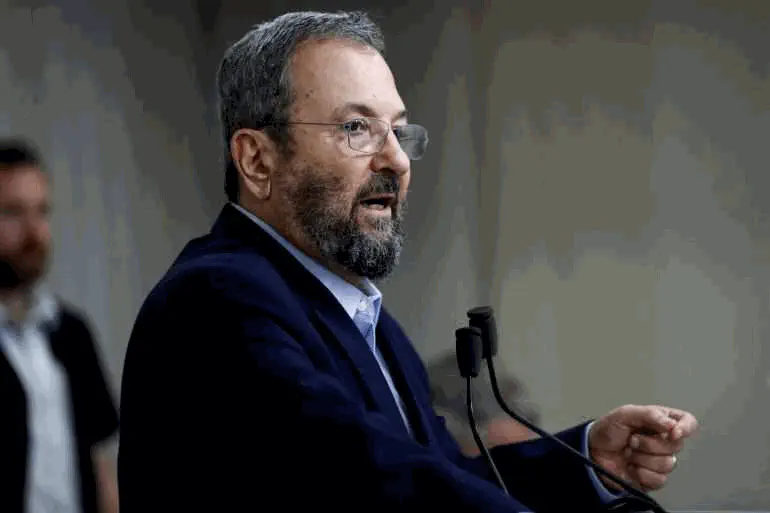
The identity of the prime minister has been widely speculated on, Ehud Barak most often; Barak categorically denies it.
The episodes map the ecosystem rather than the monster: funding and benefactors (why billionaires paid a predator nearly $500m, many after his conviction); the banks (JPMorgan, Deutsche, and the elasticity of “risk” for a valuable client); intelligence (CHS reports, Mossad claims, “allied intelligence” euphemisms, and what “co‑opted” means); Russian money and global crime; the powerful men (what is sworn and documented); the cover‑up (Florida and the quieter self‑protection afterwards); and the hunt for justice.
Episode 1 — The Deal of a Lifetime #
A courtroom in Palm Beach, Florida. 30 June 2008.
The FBI has spent years on the Epstein network. It has a thick file of victim statements, flight logs, photographs, corroborating witnesses, and a 53‑page, 60‑count draft federal indictment prepared by prosecutor Marie Villafaña. This is an interstate trafficking case with dozens, likely hundreds, of underage victims. Everyone in the room knows what comes next in a functioning legal system.
It does not happen. The indictment stays in the briefcase. Epstein pleads to two minor state charges: 13 months, nominally in custody, actually on a day‑release that looks like a holiday with a curfew — a “special wing” of the county jail, twelve hours a day at his office, supervised by guards he hires. Jail as gentlemen’s club.
But the real story is the document that made it possible: the Non‑Prosecution Agreement, signed off by US Attorney Alex Acosta, who is reported to have said he was told Epstein “belonged to intelligence” — a claim that also surfaces in released FBI human‑source reports. (Acosta told the DOJ’s Office of Professional Responsibility that the answer was no, and OPR reported finding no evidence that Epstein was an intelligence asset. A House Oversight Committee report in November 2026 is reported to have reached no conclusion on the question.) Buried in the NPA is a clause extending immunity from federal prosecution to “any potential co‑conspirators”: recruiters, pilots, coordinators, the men who did the raping.
In one piece of paper, the US government promised not to use its most powerful tools against the rest of the network. Unnamed persons were granted immunity for unnamed crimes.
Epstein gave nothing and got everything. A trafficking ring needs infrastructure; blanket immunity for its infrastructure is not leniency, it is the intentional dismantling of an investigation into a multinational criminal enterprise. The DOJ’s Office of Professional Responsibility later called the clause “troubling”. Heaven save us from understatement: “troubling” is cover for extraordinary, unjustified, immoral.
The young women who had given sworn statements were never told the hearing was happening. A federal judge later found the government had violated the Crime Victims’ Rights Act by concealing the deal, and called it a “national disgrace”. The network, shielded, dispersed back into global finance, espionage, politics and pseudo‑philanthropy.
Why start here, and who fought for that clause
Episode 1 does three things. It anchors the story in a concrete legal event — a courtroom, a date, a document — before intelligence, oligarchs and banks. It shows impunity as an active construction: this was not a prosecutor’s bad day. Defence lawyers, Alan Dershowitz among them (he denies any wrongdoing), fought behind the scenes for a clause protecting unnamed “others”; federal authorities had to want, or be made, to agree; victims had to be lied to by their own government. And it establishes that the series is about institutional abuse, not monsters. Epstein is dead. The structure that protected him is alive, and some of the people in it hold the highest offices in government and business.
Episode 2 — Follow the Money #
How does a college dropout with no financial qualifications, an embroidered CV and an unexplained exit from Bear Stearns end up moving billions through the heart of the global financial system?
In the early 1990s Les Wexner, the billionaire behind Victoria’s Secret and Abercrombie & Fitch, gave Epstein unlimited power of attorney over his assets — the right to sign cheques, liquidate holdings and direct his foundation’s giving without supervision. Epstein liquidated more than $1bn of it. Wexner was at the same time a central figure in the “Mega Group” of pro‑Israel donors. This does not pass the smell test.
When Wexner distanced himself after the conviction, the operation found a new billionaire. Leon Black, co‑founder of Apollo, paid Epstein more than $170m for “tax and estate planning” with no written work product anyone has been able to show. Epstein was neither a tax lawyer nor an accountant. The US Virgin Islands alleged those payments financed the operation; two women who did not know each other independently described being assaulted by Black in Epstein’s massage room and paid in cash afterwards; the Manhattan DA closed the matter without charges. Black denies the allegations.
The same funding structure appearing twice makes it hard to treat this as a run of lucky frauds against naïve billionaires. It looks like a network with a well‑established modus operandi — what some researchers call a “cut‑out” model, in which Epstein’s own biography matters less than the money and access he channelled for others. Against the background of Robert Maxwell’s alleged role in earlier intelligence cut‑outs, the Wexner and Black arrangements look less like eccentric friendships and more like the financial layer of an organised system. American billionaires paid Epstein roughly $500m in fees; the Russian and Eastern European operations ran to hundreds of millions, but the US ties were the foundation.
One detail from Wexner’s 2026 congressional deposition lands hard: despite years of FBI interest, and internal documents once labelling him a potential co‑conspirator, neither the FBI nor the DOJ has ever interviewed him. The great thing about not interviewing someone is that it leaves no record. At the deposition he laughed, like a man who need not worry about the laws that apply to ordinary mortals.
What the wires show, and why the banks’ behaviour is telling
This episode leans on three kinds of material: a forensic financial study (“Financial Architecture: The Epstein Criminal Enterprise”); internal JPMorgan emails and compliance reports; and unsealed court documents from the US Virgin Islands and related civil cases. Together they show accounts repeatedly flagged by compliance officers; large round‑number wires with vague or no economic rationale; heavy use of offshore structures and shells; and flows whose function was to move, disguise and redistribute money whose origin had to stay obscure. The “Wall Street genius” label was a pre‑fabricated explanation for money that should not exist.
Money is the operating system. It bought the island and the Manhattan mansion, paid for the constant flights that moved trafficked women, and bought the ability to pay off, intimidate or overrule anyone who might have stopped it. That is also why there has never been a full forensic review of the money trail back to the 1990s, despite Senator Wyden’s efforts: I believe it would show an organised crime network permitted to flourish because it was useful.
When compliance officers raise red flags that match textbook typologies for trafficking and corruption, and the client is kept because he brings in relationships and fees, innocent ignorance is off the table. It raises the question whether a bank like JPMorgan — in many ways an extension of the US state — was leaned on, or assured of protection, because the network was considered important to national interests. Most regulatory lawyers would infer that a US institution does not knowingly move over a billion dollars for ten years for a known sex offender, filing no SARs, without some form of implicit official tolerance.
Wexner and Black both appear in the birthday book (“your friend, Leslie”; “Love and Kisses, Leon”). Nothing Epstein did afterwards was possible without the foundational support of two billionaires closely aligned with Israeli interests; given the personal involvement of a former Israeli prime minister and the human‑intelligence records in the files, this cannot be waved away as coincidence.
Episode 3 — The Banks #
We are encouraged to think of JPMorgan and Deutsche as having “failed to spot” red flags. That language imagines a system that basically works. The evidence shows active enablement.
By the time JPMorgan cut ties in 2013, Epstein had been a prized private‑banking client for over a decade, near the top of an internal list of ultra‑profitable clients nicknamed the “Wall of Cash”. The bank processed thousands of transactions totalling over a billion dollars, including payments to women later identified as trafficking victims and flagged as such in its own compliance documents — all after his 2008 guilty plea. Senior lawyers recommended ending the relationship in 2010 and 2011 and were overruled; Jes Staley, himself later accused of serious sexual misconduct (which he denies), argued to keep him and used him as a connector to the ultra‑rich.
Senator Wyden’s November 2025 analysis shows John Duffy, then CEO of the US private bank, advising Epstein to route large cash withdrawals through his aviation company to avoid triggering anti‑money‑laundering alerts. Only after Epstein’s arrest and death in 2019 did JPMorgan file Suspicious Activity Reports covering those thousands of transactions — reports it was legally obliged to file at the time. It filed only once he was dead. Many of those involved still hold senior positions; the bank has never been prosecuted.
Deutsche then onboarded him in 2013, five years after his conviction, and was fined $150m in 2020 for processing hundreds of transactions that “should have prompted additional scrutiny” — payments to Eastern European women, transfers to models and law firms, large cash withdrawals — despite classifying him as high‑risk.
The Epstein network enjoyed unfettered access to the global financial system long after his crimes were acknowledged by the courts. The banks provided it; the state, when forced to look, has been more interested in limiting institutional damage than exposing the cycle of money, power and protection.
Sources, the DEA memo, and what Treasury is withholding
The New York Times reconstruction is How JPMorgan Enabled the Crimes of Jeffrey Epstein; accessible summaries are NPR’s How J.P. Morgan enabled Jeffrey Epstein and the NYT video How JPMorgan Financed Jeffrey Epstein. Wyden’s release: New Analysis Detailing How Top JPMorgan Chase Executives Enabled Epstein’s Sex Trafficking Operation; see also In Epstein Case, Follow the Money, Democratic Senator Says and the Wealth Management piece on the executive at the centre of the inquiry. Deutsche: the DFS $150m order, CNBC, Fortune’s Deutsche Bank and Jeffrey Epstein’s ghost, and the FinCEN Files context. The best in‑depth AML/KYC review is Aly McDevitt’s four‑part The Banks Behind the Epstein Enterprise and the FT’s How Deutsche Bank rolled out the red carpet.
SARs list counterparties: they show who was on the other end of the wires. Treasury has refused to give Wyden unredacted SARs. In early 2026 Wyden disclosed a 69‑page DEA memorandum confirming that Epstein and 14 associates were targets of a five‑year investigation (2010–15) into “illegitimate wire transfers connected to illegal drug and/or prostitution activities”, identifying roughly $50m in suspicious transfers through Switzerland, France, the Caymans and New York — Wyden Questions DEA Over Mystery Epstein Investigation; Yahoo coverage. The probe closed without charges, and senior DOJ officials have intervened to stop Congress seeing the memo in full. If justice were anyone’s intention at the Department of Justice, we would have disclosure.
Episode 4 — Trump, MAGA and the Network #
If the banks show how Epstein plugged into finance, the Trump story shows how deeply he overlapped with contemporary far‑right politics. Publicly, Trump barely knew him and Bannon exposes “globalist elites”. In the documents, both turn up in Epstein’s inbox as people he knew well enough to pitch, coach and help.
The relationship goes back decades: the same New York and Palm Beach circles, parties at Mar‑a‑Lago, a shared taste for “beautiful women … on the younger side”. Virginia Giuffre said her trafficking began when she was recruited while working at Mar‑a‑Lago.
By Trump’s presidency it had become political. Emails released in 2025 show Epstein tracking Trump’s behaviour and offering himself as a source of “insight” to people around the Kremlin: three weeks before Helsinki, he suggested to former Norwegian PM Thorbjørn Jagland that Lavrov be given “insight on talking to” Trump, and Jagland said he would pass it on. At the same time Epstein was corresponding with Sergei Belyakov, a graduate of the FSB academy. Byline Times found at least 45 emails with Steve Bannon, who told Epstein that MAGA “could be a shield” for him and sketched a decade‑long project to neutralise #MeToo; Epstein offered introductions to Gulf sovereign‑wealth figures and crypto funding structures for Bannon’s European populist projects. The architect of Trumpism and one of the most notorious abusers of the century were swapping contacts and discussing how the populist right could protect men like Epstein. “Drain the swamp” was always about replacing it with Trump’s own.
The files the DOJ didn’t want you to see #
The most concrete evidence that the current DOJ is managing the story came in January 2026. An unnamed woman had given the FBI four separate interviews in 2019, alleging that Epstein began abusing her at about 13 in the 1980s and that Donald Trump also sexually assaulted her when she was between 13 and 15. The allegations are uncorroborated; Trump denies all wrongdoing and no law‑enforcement body has charged him with anything Epstein‑related. But the FBI took them seriously enough to interview her four times.
When the DOJ released the files under the Epstein Files Transparency Act (signed 19 November 2025), it published one of the four summaries — the one with no allegations against the sitting President. The other three were withheld, as independent journalist Roger Sollenberger first spotted and NPR confirmed. House Democrats accused the DOJ of illegal withholding; Rep. Robert Garcia, who read the unredacted documents, said “the FBI took these allegations seriously”. Under pressure the DOJ released the three on 5 March 2026, explaining they had been “believed to be duplicative” — which satisfied nobody. As of Senator Whitehouse’s letter of 10 March, 37 pages of FBI notes remain withheld; he called it “a dark cover‑up for the President”.
The allegations may never be tested in court. The sequence is not in doubt: a survivor made serious allegations to the FBI four times; three named the sitting President; those three were withheld; they were published only under congressional pressure; and 37 pages are still sealed.
Sources, Maxwell’s prison move, and Trump’s Russia history
Byline Times: Steve Bannon Offered Trump’s MAGA as Shield for Jeffrey Epstein and Jeffrey Epstein Had Access to Trump’s Inner Circle, While Working with Steve Bannon. The Lavrov emails: Yahoo/Politico and Novaya Gazeta Europe. Ghislaine Maxwell was moved to a low‑security prison after meeting Deputy AG Todd Blanche; many suspect it was in return for cooperation with the effort to suppress evidence against Trump and others.
Trump’s Russia entanglements are the backdrop: the NYT’s For Trump, Three Decades of Chasing Deals in Russia, New York’s Felix Sater: Donald Trump’s Original Russia Connection, and Slate’s Trump’s Nuclear Experience on his 1980s view that the US and USSR “between those two nations … have the power to dominate any of those countries”. A Russian‑versus‑Israeli nexus debate misses the point: the network is a transnational system with a rotten American heart, a grey zone where wealth, access and intelligence blur, kompromat is a business model, and movements supposedly about sovereignty are repurposed to protect autocrats and criminals.
Episode 5 — The Russian Networks #
Follow Epstein out of Palm Beach into the post‑Soviet world and the Russian dimension stops being abstract “influence” and becomes specific trafficking operations and organised‑crime contacts. The evidence is clearest on three things.
Industrial‑scale recruitment. A May 2011 email from Moscow headed “updates on the girls” lists women by name, age and physical description — “very beautiful, fresh … ready to work for direct booking”. Later messages ask for “many Russian girls” aged “20–23” and “is that okay?”. Internal spreadsheets catalogue women by nationality, age, visa status and ranking, heavily Russian, Ukrainian, Lithuanian and Belarusian, their visas and interview dates tracked like inventory. This is where the trafficking evidence is most operational: procurement emails, named women, logistics. It reads as what it was — organised crime.
Mafia capital and the grey zone. For thirty years Trump’s business orbit overlapped with post‑Soviet money routed through people like Felix Sater, a convicted felon with documented links to Semion Mogilevich’s network who also informed for US intelligence. Epstein sat in the middle: hosting Russian ambassadors and Gulf royals at the same lunch as Ehud Barak and Tom Barrack, while corresponding with former FSB‑academy officials about models and money.
Putin’s circle. Epstein tried repeatedly to turn his Trump familiarity into access for Russian officials; he corresponded with Belyakov about a Russian model blackmailing New York businessmen, and pitched him a Bitcoin‑style scheme to help Russia dodge sanctions and weaken the dollar. The Dossier Center traced a recruitment pipeline centred on Novosibirsk — which appears 307 times in the correspondence — consistent with industrialised honey‑trap operations.
He was more aspirant than insider in the Kremlin world: no Russian state money funded his rise and his attempts at a Putin audience seem to have failed. What the files show is a man embedded in the same mafia‑touched, sanctions‑busting, trafficking ecosystem that has destabilised democracies elsewhere — all of it plugged into a system designed, protected and legalised in Washington, not Moscow.
Maxwell, Mogilevich and the generation before
Robert Friedman’s Red Mafiya documents Semion Mogilevich obtaining an Israeli passport through Robert Maxwell in 1988 — the year Ghislaine Maxwell began her relationship with Epstein. The same families and networks, a generation before the operation became visible. As Sarah Kendzior puts it, “some blame Russia for the US downfall, some blame Israel, but it was always both — along with American collaborators”. Kendzior is also acute on how much Trump and his circle learned from the Soviet collapse and the opportunities it created for oligarchs. Oligarchic and mob‑linked capital flowed into Western property, hedge funds and tech through offshore structures and Chabad‑linked social networks that blurred Kremlin, mafia and “respectable” investors. Red Mafiya belongs on any serious Epstein reading list.
Episode 6 — A Transnational Network With an American Heart #
Many people want the story to rest, in the end, on someone else’s doorstep. If it is primarily Russian, it folds into a familiar narrative about oligarchs and hybrid war. If it is primarily Israeli, Americans can tell themselves a foreign service penetrated an innocent system (or spin it antisemitically). Both contain truth. Neither fully explains why the US justice system failed as it did. That requires decades of home‑grown cover from the top tier of the American political and intelligence class.
The documents show a network with four poles. America provides the foundation: courts, prosecutors, banks, universities, media, and the social spaces where reputations are made and laundered. It was American prosecutors who turned a 53‑page indictment and an 82‑page money‑laundering memo into a secret NPA with blanket immunity; American regulators who fined banks for “oversight failures” while charging no executive; American agencies that hold 98 per cent of the evidence in sealed vaults.
Israel is not incidental. Two redacted FBI confidential‑human‑source reports describe Epstein as “belonging to both US and allied intelligence services” and refer to an “Israeli state‑sponsored technology collection and extortion operation” built partly around his properties. Whatever weight those unverified reports deserve, the public record confirms that Epstein invested in Carbyne, a surveillance firm built by Unit 8200 veterans; that Ehud Barak visited his properties dozens of times and co‑invested with him; and that he was an informal fixer in Israel–Gulf rapprochement years before the Abraham Accords.
The Gulf. The FBI found in his safe a fake Austrian passport issued in 1982, bearing his photo, listing a home address in Dammam, Saudi Arabia, with a Saudi visa and entry stamps. Not a document that appears in the life of an ordinary financier. Sultan Ahmed bin Sulayem, chairman of DP World, resigned in February 2026 after appearing thousands of times in the files; Epstein had lobbied Peter Mandelson to “be nice to Sultan” as DP World sought London Gateway. Russia is set out above.
These poles do not add up to a master‑planned conspiracy. It is more disordered, and more dangerous: overlapping elites sharing information and each other’s tools. A prosecutor who decides an intelligence‑linked asset is “above his pay grade” benefits every foreign partner embedded in the same operation. A bank that coaches a client on evading AML rules preserves a channel others — in Tel Aviv, Moscow, Riyadh or London — can exploit. Once US assets are made available to such a network, the question who is using whom? no longer has a clear answer.
If we believe this is essentially foreign capture, the remedy looks like better vetting and counter‑intelligence. Those are not bad things, but they miss the centre of gravity. The decisive choices were American: US attorneys choosing impunity; regulators preferring fines to discovery; Treasury blocking SARs; senior DOJ officials hiding an unclassified DEA memo. The Epstein network is a concentrated expression of something that now runs through Western politics — very wealthy, very connected men building transnational systems above national law, accountable to no voter. When accountability comes at all, it lands on the marginal, the expendable or the dead.
Israel, Carbyne, Barak, Bessent and the Gulf: the documentary detail
The CHS reports. EFTA00090314 records an informant describing Epstein as a “co‑opted Mossad agent” and Dershowitz as a direct Mossad agent (an informant’s belief, which he denies; Virginia Giuffre withdrew her own allegation against him in 2022), and refers to earlier intelligence‑asset reports not in the release. EFTA01683612: “USPER had been to Epstein’s residence and believed he was a ‘construct’ who was playing a role. Specifically, Epstein was running an Israeli state‑sponsored technology collection and extortion operation … Due to the number of secrets Epstein must have been aware of, it’s not surprising he did not last long after being put into custody.” These are primary documents containing unverified source reporting; they are evidence of what the FBI was told, not findings.
Carbyne. In January 2016 Epstein’s Southern Trust Company became a 50% limited partner in Sum (E.B.) 2015 LP, a structure designed by his lawyer Darren Indyke, with Barak’s consultancy Ergo as general partner controlling where the money went; one destination was Carbyne. In February 2026 Axon — maker of most American police body cameras — completed a $625m all‑cash acquisition of Carbyne, so surveillance technology funded through Epstein’s offshore structures and built by Unit 8200 veterans is now embedded in both the 911 system and police recording infrastructure. See Jacobin’s Epstein, Barak, Thiel and Carbyne and Burleigh and Chenoweth’s The Epstein Accords.
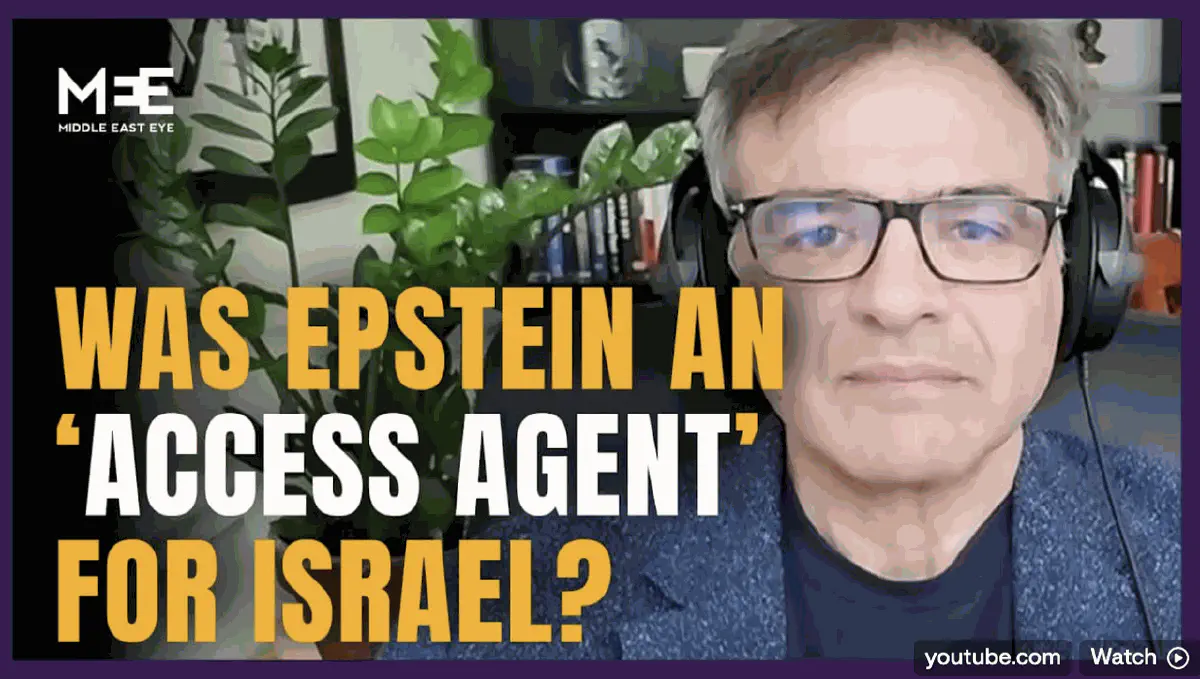
Israeli sponsored asset? (AI-generated summary, August 2025.) Claims that Jeffrey Epstein worked as an intelligence asset have intensified following Tucker Carlson’s July 2025 allegations that the convicted sex offender operated on behalf of Israeli intelligence, prompting former Israeli Prime Minister Naftali Bennett to categorically deny the accusations and call them part of “a vicious wave of slander and lies” against Israel. These espionage theories center on Epstein’s mysterious wealth sources, his controversial 2008 non-prosecution agreement, extensive surveillance equipment discovered at his properties, high-level meetings with figures including William Burns (later CIA Director), financial relationships with Israeli officials like Ehud Barak, connections to major financial institutions that processed billions in suspicious transactions, and allegations linking him to Israeli startup Carbyne and former Mossad-connected figures, though the Justice Department maintains there is no credible evidence supporting claims that Epstein blackmailed prominent individuals or served as a spy.
https://www.perplexity.ai/page/jeffrey-epstein-political-cove-4nlLD.mRTdGCNGWqj5RPOg
AI Podcast
Bessent. Treasury Secretary Scott Bessent — who chairs CFIUS, oversees FinCEN and refused Wyden’s three formal requests in 2025 — is reported, in a single Substack investigation that I have not seen confirmed elsewhere, to have a prior commercial connection to the network those records would map: Kait Justice, ‘Is This Why The Treasury Secretary Is Blocking Epstein’s Financial Records?’, 4 March 2026.
The Gulf. The passport, in the name “Marius Robert Fortelni”: NYT on the safe, and the NY Post; his lawyers said it was for “personal protection”. DP World: NYT and the Sussex Centre for the Study of Corruption on the Mandelson–Epstein affair. Saudi: CBS on the royals, the Kiswah cloth and his consultations on Saudi interests in Washington.
The prosecution record. Bloomberg, Epstein Prosecutors Prepared Sex Trafficking Indictment in 2007; Judge Marra’s ruling in Jane Doe 1 & 2 v. United States; the Miami Herald’s “Perversion of Justice”; and the New Republic and Channel 4 News analyses of how little of the seized evidence the 2026 release contained.
In the Words of the Victims #
So far we have covered nearly everything but the victims: their suffering, and their bravery in speaking against the most powerful people and institutions in the world — abusers given government immunity who have no fear of the law. The case exists because real women and girls were trafficked, groomed and abused, many of them teenagers from backgrounds that gave them little power to resist or to be believed. They are why this story must be kept alive, along with the victims we will never know of, here and everywhere powerful men abuse with impunity.
The scale. The buried 2008 indictment named 36 underage victims from one town in one investigative window. The Epstein Victims’ Compensation Program received more than 225 claims — double what administrators expected — and paid about $121m to around 150 claimants. In February 2026 the estate agreed a further $35m settlement. Those are only the women who came forward, were believed and met the criteria. The real number is far higher.
Virginia Giuffre was recruited as a teenager while working at Mar‑a‑Lago and trafficked to multiple powerful men, including, she alleged under oath, Prince Andrew. She gave sworn testimony, filed suits, endured years of smears and threats, and forced Andrew into a 2022 settlement acknowledging her as “an established victim of abuse”. She founded SOAR for other survivors. In April 2025 she died by suicide in Western Australia, aged 41, with three children. Her family said she “lost her life to suicide, after being a lifelong victim of sexual abuse and sex trafficking”. The men who trafficked and abused her remain free.
Courtney Wild and Michelle Licata. Wild was recruited at 14 and fought for over a decade to have the NPA declared illegal under the Crime Victims’ Rights Act. Licata testified:
“The case ended without me knowing what was going on, without him being held responsible, without any explanation and without a chance for my voice to be heard. I was treated like I did not matter.”
A federal judge eventually ruled that prosecutors had broken the law by concealing the deal from the victims, though the agreement itself was never set aside and an appeals court later held that the Act gave the victims no remedy. The fight consumed years of their lives while the network operated freely.
Maria Farmer reported Epstein and Maxwell to the NYPD on 29 August 1996 and to the FBI on 3 September. She told the Bureau Epstein had explicit images of children and recording devices throughout his Manhattan house. The agent hung up on her mid‑sentence. The released files confirm the FBI had actionable evidence a decade before Operation Leap Year in 2006. She has sued the US government for its inaction and spent nearly thirty years trying to be heard.
Annie Farmer, her sister, was one of the few to testify at Maxwell’s trial under her own name: invited to the New Mexico ranch at 16 in 1996 hoping for academic help, assaulted by Maxwell during a massage while Epstein climbed into her bed. Had the FBI not hung up on Maria, Annie’s abuse and many others’ would have been prevented.
Beyond the women who testified, federal civil filings by Jane Does allege abuse beginning as young as 13 — including a 2020 suit alleging Maxwell and Epstein recruited a 13‑year‑old music student from a Michigan arts school in 1994. These are allegations in sworn filings, not proven facts. It is hard to have proven abuse when no one will investigate and prosecute.
None of it would have happened without Julie K. Brown of the Miami Herald, whose 2018 Perversion of Justice series let survivors speak: “There is nothing that was more powerful than the words of the women talking about this themselves. And I still kind of get choked up when I think about how brave they were.”
What partial justice looks like. Maxwell was convicted in December 2021 on five counts and is serving 20 years, her lawyers pursuing clemency. The compensation fund paid $121m. JPMorgan paid $290m and Deutsche $75m to settle survivors’ claims, admitting nothing. The estate paid $35m.
What has not happened. No co‑conspirator other than Maxwell has been charged. The men on the flight logs, in the black book and in victim testimony remain free and uninvestigated. Survivors Liz Stein and Sharlene Rochard told ITV in February 2026 that the released files repeatedly left survivors’ names unredacted while protecting perpetrators — the exact inversion of what a justice system is for. The 98 per cent of evidence still sealed almost certainly contains the names, communications and financial records that would make prosecutions possible.
If you have been affected by any of the issues here, support is available. UK: Rape Crisis (0808 500 2222). US: RAINN (1‑800‑656‑4673). International: IASP crisis centres.
Conclusion #
The release of two per cent of the evidence has told us enough to guess what the other 98 would likely show: the financial architecture of a network that included and compromised some of the most powerful figures in Western life; more evidence of horrific abuse; who gave the instructions that produced perhaps the most extraordinary immunity deal in the history of American federal prosecution; and whether the separation between American, Israeli and Russian power, at the level of the private networks that actually operate the channels, was ever as clear as the Cold War taught us.
Instead we have continued protection of the abusers by prosecutors, banks, intelligence agencies, the Justice Department, and five administrations of both parties across three decades. The survivors have been ignored, discredited and in some cases destroyed. The institutions meant to protect them protect the network.
The Epstein story is not about a person. It is about a transnational criminal network. It is not an Israeli story or a Russian story or a Gulf story. It has an American heart — and it is about power, corruption and impunity, which take no account of race, religion or borders. The people who built that network, funded it, used it and protected it are, with very few exceptions, still in their positions. Still wealthy. Still powerful. Still beyond the law.
The victims of the Epstein network were abused by vile, wealthy, powerful men, and have been abused again and again by an American justice system that is immune to justice when it affects the interests of the powerful.
Sources, databases and primary documents
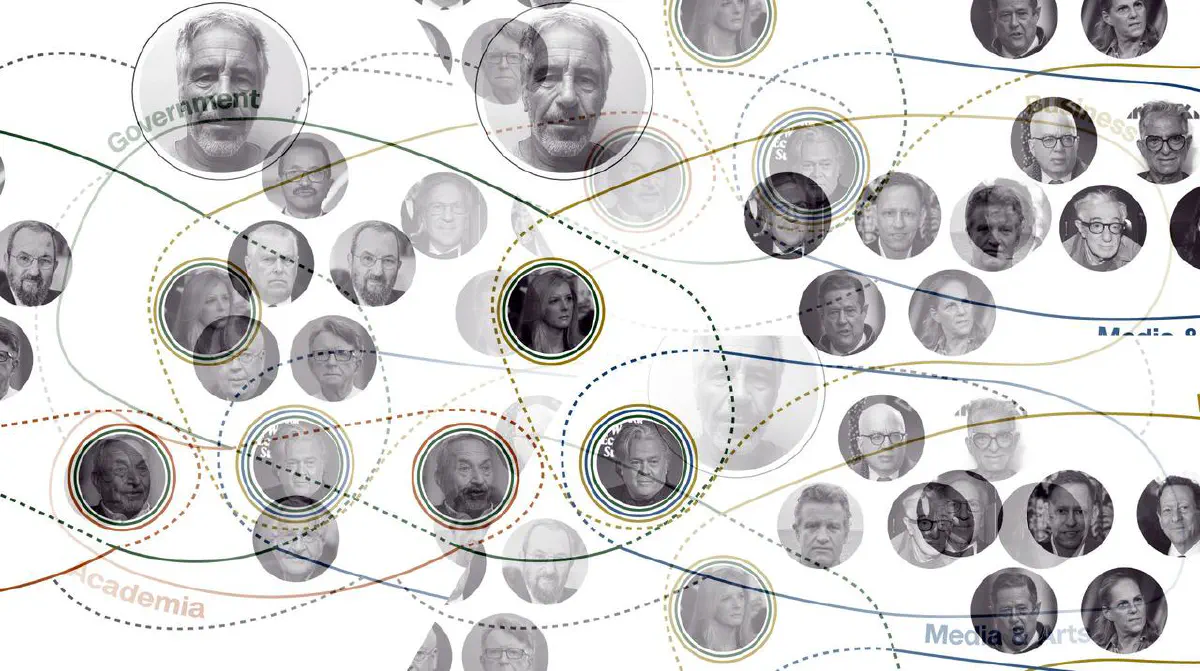
Research tools. Epstein AI Notebook · Epstein Exposed network app · Al Jazeera visual guide · Crimecentrals: Power, Secrecy and the Failures That Enabled Abuse · Interactive graphs for 1.32M documents · Epstein Archive (404 Media) · jmail.world · Epstein Secrets · Wired: He Built the Definitive Epstein Database
Primary documents. The Non‑Prosecution Agreement · DOJ release · OPR report · Draft federal indictment · Victims’ challenge to the NPA · CHS memos EFTA00090314 and EFTA01683612
Reporting. Miami Herald editorial · “He belongs to intelligence” · UN: Nobody should evade justice · NPR: DOJ withheld Trump‑related files · Byline Times: In Putin’s Orbit · Birthday book in pictures · Inside the Manhattan lair · Birthday book (Wikipedia) · Barak: a collector of people · Wexner accuses Epstein · Wexner “naive” and “conned” · FBI interest in Wexner · Leon Black rape allegation · Wyden on Black · Art deals, loans, LLCs · Mossad’s Blackmail Mastermind? · Zeteo on the Israel connection · The Epstein Accords, Part One · CNN: a million new conspiracy theories
Underlying analyses. The New Republic and Channel 4 News on release volume; the OPR 2020 report on Acosta; FBI documents EFTA00090314, EFTA01683612, EFTA00964912, EFTA01748314; Al Jazeera’s February 2026 Israel investigation; Dropsite News’s Epstein–Israel series (Sept–Nov 2025); the Dossier Center on Belyakov; Jacobin on Carbyne/Thiel (March 2026); Zeteo (Prem Thakker, Feb 2026); Times of Israel on the Barak emails; NYT on Maria Farmer (Dec 2025) and DOJ non‑prosecutions (March 2026); Bloomberg on the Villafaña indictment and money‑laundering probe (Oct, Dec 2025) and on Dubin (Feb 2026); NY Post on the passport; NYT on bin Sulayem; CBS on Saudi Arabia; Reuters on the Gulf network; National Today and IBTimes UK on the DEA memo; Byline Times Edition 83 and the Bannon investigation; Politico on the Russian briefings; Wyden’s releases (July 2025–March 2026); Business Insider on JPMorgan and Black; Hyperallergic on Black; Yahoo on Wexner and the FBI; Burleigh and Chenoweth, “The Epstein Accords”.