Autocracy, Democratic Backsliding, and the Rise of Right-Wing Extremism – The Forces Reshaping Europe
This blog post has been created for (and with the help of) a new Google Notebook on Autocracy & Democratic Backsliding – for students, journalists, policy makers and anyone interested to query key legal, academic and news texts and information on the current European democratic and developing socio-economic crisis.
If your content is in the Notebook and you do not want it to be there please let me know.
Video Overview
Introduction: The Crisis of the European Political Order
There is a palpable sense across Europe that the old rules of politics and many traditional political parties are breaking down. The political landscape of Europe is defined by a critical confluence of forces that threaten the foundations of liberal representative democracy. Firewalls (Brandmauer) and political cordon sanitaires are failing to keep back the hard right.
The steady rise of radical-right parties, once confined to the fringes, and the chaotic and toxic nature of most of our mainstream media and online discourse can feel like a series of frightening disconnected crises. They are not. These are symptoms of a deeper, coordinated shift in how power is being captured and wielded by wealthy powerful forces.
These challenges include the subtle erosion of democratic norms and institutions (known as democratic backsliding), the consequential shift towards outright autocratisation in some European states including the UK, and the pervasive rise and creeping normalisation of right-wing extremism across the continent. These challenges, intertwined and mutually reinforcing, present a significant threat to the integrity and survival of the post-WWII European project and our shared core values across the continent.
European democracy is facing assault from without and within, guided by an evolving and intelligent playbook where tactics pioneered in one country are adapted and deployed in others. Capital is international, controlled by a vanishingly small group, many of whom have few loyalties and little fellow feeling or compassion.
See also the Google Notebook I have created on Project 2025, to better understand what is happening in America. This is not a US only movement. Its lessons and successes for Trump and the MAGA movement has already infiltrated other political and media establishments in Europe – the Project 2025 / Viktor Orbán playbook is being modified and used in the UK and other European states right now today.
Table of Contents
Defining the Illiberal Spectrum: Backsliding and Autocratisation
In political science, the phenomena of democratic decline are typically categorised along a spectrum, distinguishing between processes that weaken democracy and those that result in regime transition.
- Democratic Backsliding is defined as a process of political change in which countries maintaining a certain level of democracy become significantly less democratic:
- It entails a deterioration of the democratic qualities associated with governance within any regime.
- Crucially, it is a gradual and often covert change in democratic practices and principles perpetrated from within the system, usually by the dominant executive. It does not necessarily lead to the complete breakdown of the democratic regime.
- This process restricts the space for public contestation and participation, and results in the weakening of essential democratic components, such as free and fair elections, rule of law, and the protection of civil liberties, especially freedom of expression.
- Autocratisation, conversely, is a concept defined as a regime change towards autocracy:
- This process explicitly requires a transition from a democratic system to an autocratic one, making the final destination an autocratic regime.
- The world has experienced a steady decline in global levels of democracy since the mid-2000s, often referred to as the global democratic recession or the third wave of autocratisation, which has been ongoing since the 1990s.1
- This recent wave is characterised not by abrupt coups, but by a progressive and clandestine erosion orchestrated by democratically elected actors abusing their power.
Challenging the rise of autocracy and extremism is not rocket science. It just needs basic decency, honesty and that you are not bought by capital.
The Mechanisms of Democratic Erosion: Autocratic Legalism
A distinctive characteristic of modern democratic decline is the use of seemingly legitimate legal mechanisms for anti-democratic ends, a practice often termed Autocratic Legalism or Stealth Authoritarianism. This involves charismatic, newly elected leaders deploying the law to dismantle the constitutional systems they inherited, maintaining a “veneer of legality”.
Legalistic autocrats begin by launching a concerted attack on institutions designed to check their power, such as the judiciary or opposition groups, often in the name of their democratic mandate. This strategy exploits the inherent tension between democracy and constitutionalism. They use a simplistic idea of democracy—i.e. what the last election produced—to rail against constitutional constraints, resulting in a simple majoritarianism that quickly devolves into illiberalism.
In this process, liberal democracy is failing to constrain the predatory political and economic ambitions and methods of entrepreneurs, business owners and political leaders. Neo-liberal policies are undermining liberal democracies and are failing to deliver sufficient economic and social goods to citizens.
European Case Studies: Hungary and Poland
Central and Eastern Europe, particularly Hungary and Poland, represent clear examples of this contemporary tendency toward democratic reversal within the EU. Both countries, liberalised during democracy’s “third wave,” have followed illiberal paths, threatening the integrity and survival of the democratic values fundamental to the European Union.
- Hungary (Autocratisation): Hungary demonstrates the main characteristics of an autocratisation process. Under Viktor Orbán’s Fidesz party,
- Hungary has been widely accused of declining towards semi-authoritarianism. Fidesz used populist rhetoric and resentment politics to gain firm political support.
- The government has strengthened ties with Russia, straining relations with NATO and EU allies. Orbán actively promotes the spread of “illiberal democracy,” a hyper-majoritarian, anti-pluralist form of government operating without checks and balances.
- Despite this, Europe has failed to suspend Hungary’s voting rights or financial transfers (it is currently investigating it for spying).2
- Poland (Democratic Backsliding): Poland presents the characteristics more commonly associated with democratic backsliding. The Law and Justice party (PiS) came to power and implemented backsliding measures, notably restricting press freedom and fostering political polarisation.
In both cases, elected leaders infringed fundamental liberal rights, including freedom of speech and the rule of law, and attacked the mechanisms of checks and balances, affecting the autonomy of the judicial system and controlling executive power. The challenge posed by these illiberal states is severe because democracy is a core element ensuring the EU’s legitimacy.
The Rise and Ideology of the European Right-Wing Extremism
The decline in democratic standards occurs amidst and is often driven by the success of right-wing extremist, radical, and populist parties, which constitute about half of the rising anti-establishment support across the EU. The European hard right is currently achieving unprecedented electoral breakthroughs, pointing ominously toward a continuation of the worldwide democratic recession.
The terms “radical right,” “far right,” and “hard right” are often used to describe this growing political family. Ideologically, these groups are primarily committed to nativism (protecting native-born interests over immigrants), nationalism, xenophobia, and often advocate for authoritarian governance and Euroscepticism. They reject the separation of powers and the protection of minorities under the rule of law. The radical right is typically distinguished from the extreme right (the anti-democratic subtype) as it nominally operates within the democratic political sphere, though it contests elements of the democratic system, such as minority rights.
Several parties are rooted in postwar fascism, such as the Freedom Party of Austria (FPÖ), National Rally (RN) in France, Brothers of Italy (FdI), and the Alliance for the Unity of Romanians (AUR). Others, like Hungary’s Fidesz, gained ground as classic populist or mainstream parties before shifting toward ethnonationalist or nativist positions.
Drivers of Extremism
“Nearly $80 Trillion Redistributed from the Bottom 90% to the Top 1% Since 1975”3
Whilst Europe has not seen the same degree of extraordinary growth in inequality as in the USA, the trend is in the same direction.
The surge in responsiveness to right-wing extremist views is driven by a complex mix of economic, social, and political issues including:
Economic Instability and Alienation: The rise of the far-right is directly linked to economic instability and political and economic alienation. Conditions like high unemployment, negative GDP growth, inflation, costs of living crises, and austerity measures create fertile ground for extremism. The fear of downward social mobility, resulting from economic globalisation and intensified global competition, particularly matters to voters. Many discontented citizens perceive traditional politicians as having neglected the working and middle class and a neoliberal economic and political order that failed to manage the crises of 2008 and 2020, which were also in fact mis-used to further increase inequality.
Cultural Backlash and Identity Politics: The perceived debate in Europe has shifted from a traditional Left/Right economic division to a conflict between global liberalism and anti-liberal, traditionalist ideas. Far-right movements mobilize support through nativist rhetoric, identifying migration (particularly the rise of Islam) as the greatest social and ideological threat to the Western “national spirit”. Broader cultural targets include support for LGBTQ+ rights, environmental policies (such as the European Green Deal), and general apprehension against the backdrop of events like the war in Ukraine and the cost-of-living crisis.
Political Disenchantment and Mainstreaming: The perception of a disconnect between the populace and mainstream political institutions provides useful conditions for extremism. Far-right discourse has gained traction because mainstream conservative and centre-right parties have become more open to cooperation and have absorbed far-right positions (shifting the Overton window ever further right), leading to a slow normalisation of previously extreme viewpoints. Media plays a role in this by euphemistically labelling far-right parties as ‘populist’, thereby ignoring their extremist core and falsely constructing the “will of the people” as inherently reactionary.
We cannot pretend to stand against the far right while referring to its politics as “legitimate concerns”. 4 (Aurelien Mondon)
Autocratic Nexus: Russia and External Influence
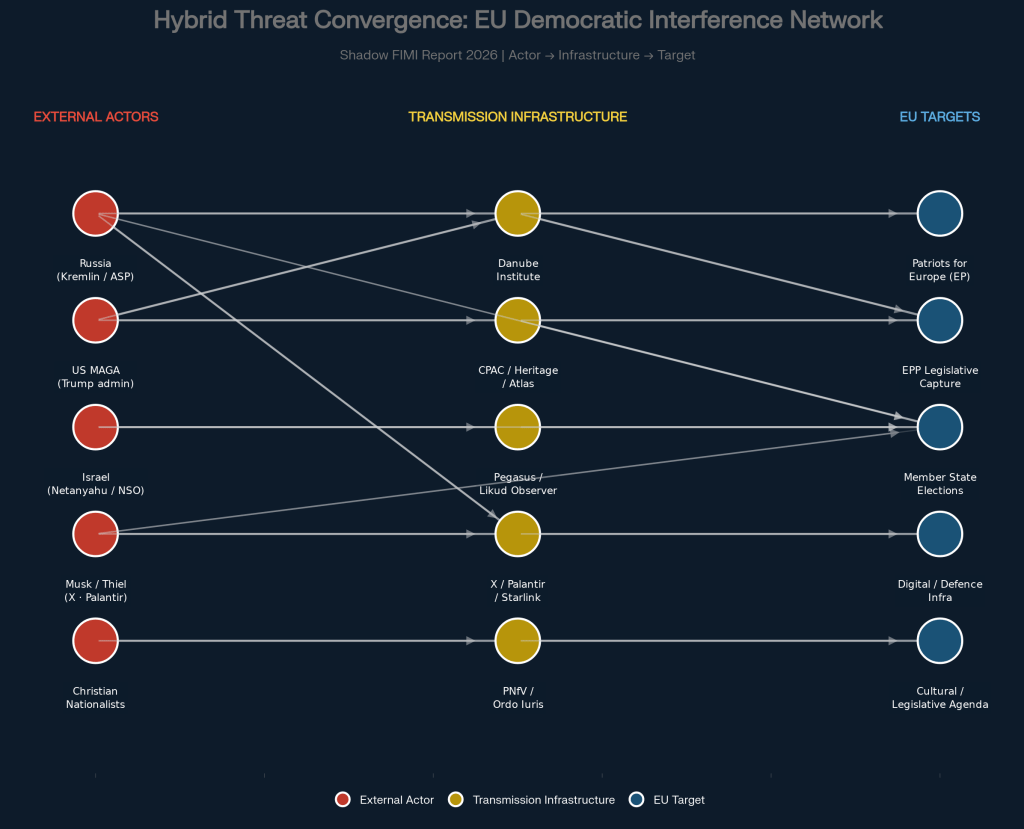
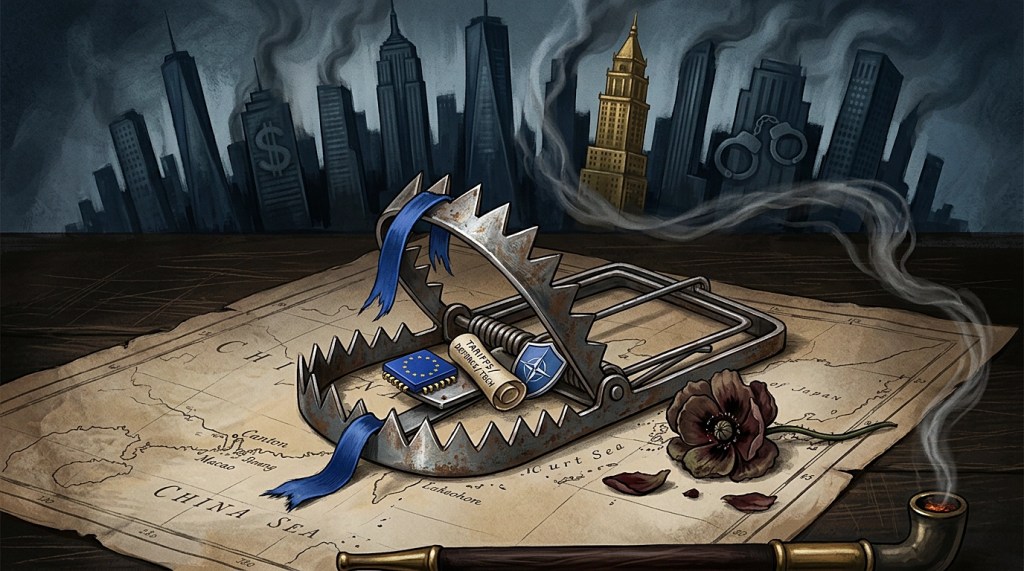
The crisis of European democracy is significantly exacerbated by foreign interference, which leverages domestic gaps and weaknesses (often in the funding of political parties, politicians and the media) and provides resources and ideological support to anti-democratic actors, particularly on the far-right.
The Russian Federation is identified as a critical source of non-transparent financial and strategic support for the European far right, driven primarily by opportunistic means rather than ideological purity. Russia’s strategic goal is to undermine the EU, destabilise its institutional capacity, and weaken democratic values in the West—a form of “political warfare”.
Israel’s current governing party (Likud) also share the goal of weakening the EU, despite Europe being its strongest trading partner and supporter in its genocide of Palestinians.
Aims and Methods of Influence: Russia’s influence is deployed to achieve foreign policy objectives, including lobbying for sanctions relief, legitimising Russian positions internationally, and sowing internal friction within the EU. This complex approach utilises multiple tools across the political, financial, and informational vectors.
- Malign Finance and Funding: Russia has been accused of providing substantial financial support to far-right and anti-EU nationalist parties. For instance, Marine Le Pen’s National Rally in France has well-documented ties, including receiving a large loan from a Russian bank. The FSB and other Russian state actors have also cultivated ties and provided financial support to parties like the far-right Alternative for Germany (AfD) and Italy’s Lega party. This funding is often covert, channeled through illicit financial flows (IFF) or shell companies, to provide plausible deniability and circumvent election laws.
- Ideological and Cultural Alignment: Far-right and anti-establishment figures are drawn to Russia, which they view as a traditionalist, anti-modernity, and anti-liberal role model. They share ideological affinities, particularly anti-NATO or anti-American, and a commitment to conservative values, including opposition to LGBTQ+ and feminist agendas, which Moscow actively supports. Hungary under Orbán is considered an important “node” in this network, offering a model of successful right-wing governance and facilitating alliances between US/Israel influence and Russian support.
- Exploiting Extremism and Violence (REMVE): Russia actively targets and supports both radical right parties and more extreme, violently oriented groups (REMVE – Racially or Ethnically Motivated Violent Extremists).
- Disruption: Russia exploits existing political fault lines, having interfered in events like the Brexit referendum and elections in France, Germany, and the Netherlands.
- Coup Plots and Militants: In Germany, the Reichsbürgers (German “sovereign citizens”) who planned a coup sought contact with Russian authorities for support. Russia has been linked to training members of extreme-right Western European organizations, such as those from the Nordic Resistance Movement who trained with the designated Russian Imperial Movement (RIM) and later engaged in terrorist violence in Sweden. Moscow also uses espionage, demonstrated by the case of Béla Kovács, a former MEP of the far-right Jobbik party in Hungary, who was convicted of spying for Russia.
Broader Transnational Networks
Beyond state actors, the hard-right ecosystem in Europe is supported by sophisticated, transnational networks. This includes:
- US Conservative Networks: Deep-pocketed US conservative organisations, sometimes leveraging entities like the Heritage Foundation (the group behind Project 2025) & the Atlas Network, actively finance and coordinate hard-right movements in Europe to promote ideological capacity building and anti-government extremism and climate change denial.
- US Tech Businesses and Billionaires: People like Elon Musk, Miriam Adelson, Larry Ellison, Peter Thiel, the Koch Bros and other supporters of the GOP and MAGA have benefitted from the extraordinary transfer of wealth since the Reagan years. They spend billions on funding policies that increase inequality and human suffering. Companies like X, Starlink, Palantir and Oracle have an outsized role in a technology sector which is, to a large extent, an extension of US power and the military industrial complex. Europe’s lack of a strong domestic social media, AI and military intelligence technology base makes it vulnerable to these companies on a number of fronts (including due to the Russian attack on Ukraine and wider threats to Europe).
- Networking and Normalisation: The radical right participate in international conferences (like CPAC and NatCon) and foster cross-border learning processes to harmonise their ideological frames, such as anti-globalism, anti-immigration, and anti-wokeism.
The long-term risk posed by this coordination is the potential foundering of the EU’s post-national project and a reversion to a Europe of competing nations fuelled by nationalistic thinking (and potentially shrinking economies), making them weaker and vulnerable to predation by greater powers relying on corruption from within.
Media Influence – UK Spotlight
A fundamental shift in the UK’s media ecosystem is the centralisation of power in the hands of a few dominant digital entities, or “gatekeepers,” and their owners.
- Platforming by the Government: Perhaps the most frustrating and insidious threat comes from mainstream media, including public channels like the BBC, as they follow the Govt in its march right, platforming people like Nigel Farage, facilitating the biased coverage of the genocide of Palestinians and allowing key neoliberals like Sir Robbie Gibb (who is linked to Netanyahu through the Jewish Chronicle and Farage & Reform through his Brexit campaigning and work for GB News) to shape its policies, culture and output.
- Market Concentration: The level of concentration in digital markets is unprecedented. Online platforms and search engines have a strong impact on the consumption, distribution, and production of news. Major platforms capture the lion’s share of online advertising revenue, severely challenging the traditional business models of newspapers and newswires, which lose direct contact with their readers and access to full audience data.
- Musk’s Direct Political Interference: The takeover of Twitter (now X) by Elon Musk has been associated with the amplification of misinformation, hate speech, and anti-democratic values by transnational hard-right movements. Musk’s actions constitute a sustained and aggressive campaign of interference in UK political discourse. His interventions include over 60 posts attacking Prime Minister Keir Starmer and systematically promoting far-right figures and conspiracy theories. This has been described as an “unprecedented assault on British constitutional sovereignty by a foreign actor” and turning the platform into a “weapon of mass disruption”. He has actively boosted far-right, anti-immigrant content in relation to UK riots. Yet still there is no Ofcom enforcement action taken.
- Regulatory Limitations: Although the UK passed the Online Safety Act (OSA) 2023 to protect against illegal content and foreign interference, critics note it lacks a systematic response to the role platforms and their owners play in spreading unreliable information. Challenges in enforcing the OSA, such as proving intent to cause harm, may render it largely ineffective against widespread misinformation or foreign influence. Political cowardice will also stymie it.
Foreign State and Oligarchic Financial Penetration
The UK media and political sphere has been a significant target for foreign influence, particularly from Russia and the USA, through financial channels and proxy media operations.
- Russian Influence: The UK is considered a primary target for Russian espionage and misinformation activities. Successive UK governments have been criticised for welcoming oligarchs and their money, enabling illicit finance recycling through the “London laundromat”. Russian oligarchs have used donations to political parties and business interests to influence public affairs.
- Kremlin Media Platforms: Russian influence utilized media platforms, such as the state-controlled broadcaster RT (Russia Today), to amplify anti-establishment and pro-Brexit messaging. Nigel Farage had a regular paid role on RT until the channel has its licence revoked by Ofcom in 2022. Research found that parts of the UK media occasionally repeated narratives propagated by the Kremlin, sometimes lifting content verbatim from RT or Sputnik, a phenomenon known as ‘churnalism‘.
- Evasion of Financial Oversight: Despite laws intended to prevent foreign money from entering politics, weaknesses exist, potentially allowing foreign actors to use corporate entities (such as UK subsidiaries funded from offshore assets) to inject funds. The conviction of a key Brexit figure, Nathan Gill, provides concrete proof that Russian money successfully penetrated the immediate orbit of Brexit figures during critical periods. The UK political establishment has studiously avoided investigating these links.5
Domestic Hard-Right Media Ownership and Normalisation
The rise of politically aligned media owners actively shaping national discourse is recognised as a profound mechanism of political influence and media capture, paralleling trends seen elsewhere in Europe:
- Rise of Partisan Channels: Media outlets like GB News are owned by wealthy individuals, such as Paul Marshall, who also owns Unherd and The Spectator and has Russian links as well as links to major US conservative funders. GB News often parrots Kremlin talking points.6
- Boosterism for the Far Right: GB News has provided a significant platform for figures like Nigel Farage, whose political career and the narratives of his party, Reform UK (including conspiracy theories regarding the World Economic Forum, “Great Replacement,” and vaccine scepticism), are heavily influenced by the channel. This concentration of media power by politically aligned billionaires is viewed as a high-impact political contribution that fundamentally shifts the political environment and normalises far-right narratives.
- Media and Political Alignment: Historically, figures aligned with extremism, such as Oswald Mosley, utilised the modern media of the time, including the Daily Mail under Lord Harmsworth, to gain financial support and wide media coverage. More recently, Louis Mosley, grandson of Oswald Mosley, heads Palantir’s UK and Europe operations.
Legislative Threats to Independent Journalism
Efforts to constrain investigative reporting and criticism also contribute to the media environment’s capture.
- Strategic Lawsuits (SLAPPs): The UK has been prominent in the use of Strategic Lawsuits Against Public Participation (SLAPPs), which the wealthy and powerful use to silence independent journalists. Although the UK government committed to legislative measures and enacted some anti-SLAPP provisions within the Economic Crime and Corporate Transparency Act, a stand-alone Anti-SLAPP Bill has not yet been introduced.
- Vague Legislation & One-sided implementation: Government proposals to expand the definition of ‘extremism’ to include anyone who “undermines” the country’s institutions and values (or oposses Govt policies) and misuse of terrorism laws are viewed as dangerous and curtail legitimate reporting and freedom of expression.7
Conclusion: A Battle for The Future of Europe
The current political moment in Europe is characterised by the systemic capture of political discourse by far-right agendas and the erosion of democratic principles. The ongoing wave of democratic backsliding, increasingly supported by external autocratic actors, targets key democratic institutions and liberal values.
The issues detailed here are not separate crises but fronts in a single, coordinated battle for the future of European democracy. A well-funded, transnational radical-right movement is making unprecedented gains by capturing mainstream politics, weaponising new technologies, and benefiting from the erosion of democratic norms within member states themselves.
These threats are deeply interconnected in a learning system of malign influence. Foreign funding enables domestic parties that use technologically amplified disinformation, while the internal decay of the rule of law through state-sponsored surveillance and attacks on people exercising the peaceful right of protest makes it harder for civil society to hold power to account. The old firewalls are collapsing—between the mainstream and the fringe, and between democratic states and the authoritarian tools they are increasingly willing to use.
As these new playbooks for gaining and holding power evolve faster than ever, can our democratic institutions adapt quickly enough to defend the principles they were built on?
Countering this formidable challenge requires a sophisticated, differentiated approach. Policymakers seeking to stem democratic erosion must prioritise bolstering institutions and norms that can constrain predatory power-holders, recognising that democracies “erode from the top”.
There is a necessity to address the core reasons for the rise of the far-right, which include social and economic dissatisfaction and a lack of basic public honesty about the problems we face and what will be needed to deal with those challenges.
Strategies must focus on revitalising democratic leadership by demonstrating capacity for substantive and radical political and economic policies. In the UK, the Green Party of England & Wales has almost doubled its membership in just one month,8 by appointing a straight-talking leader (Zach Polanski) who is willing to tell British people that there is another option instead of breeding hate and distrust of immigrants and each other. In addition to speaking about the value of diversity and immigration, the Green Party have policies to enact progressive taxes (including a wealth tax on the very wealthy) and to renationalise failing or excessively expensive utility companies.
We must counter popular disenchantment with a failed neoliberal order that was aimed at placating the very wealthy and powerful whilst sometimes throwing a few bones to ‘the great unwashed’. Life on Earth simply cannot wait for these very powerful people (many of whom are billionaires) to grow their souls, care about other species and humans and ensure a fairer sharing of income and wealth.
“neoliberal theorists advocated the use of crises to impose unpopular policies while people were distracted:“9 (George Monbiot)
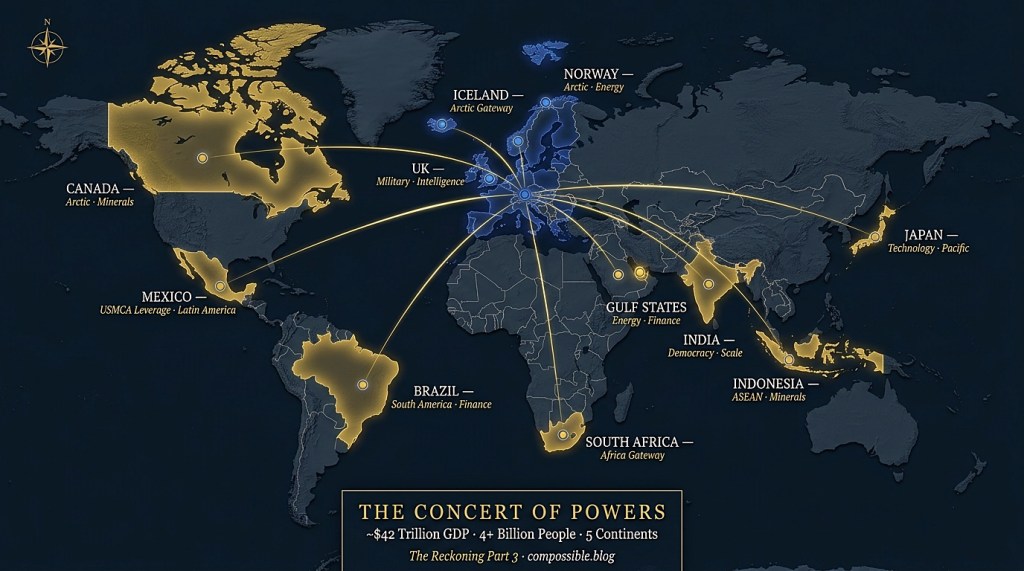
The transnational nature of the threat demands stronger, coordinated action by the EU and its member states as well as Iceland, Norway, Lichtenstein, Switzerland and the UK. A priority must be the fast-tracking of public investigations into external funding of political parties and media organisations, into those platforming misinformation and amplifying extremist perspectives and into developing effective counter-narratives (and education for children) to combat disinformation and hyper-polarisation.
Ultimately we need to give people a future that is worth living in. Something good to believe in about themselves and each other (and life on Earth). It’s not that hard, its still a beautiful world for all of its degradation and sorrow.
Ai Podcast
https://open.spotify.com/episode/5JpREYbumxgSGE8iEGVUzT?si=HInSFxM-QEG9GiO1_2arjg
Footnotes
I have kept quotes, cross-referencing and footnotes light because the Google Notebook has over 200 sources.
- https://www.v-dem.net/documents/60/V-dem-dr__2025_lowres.pdf ↩︎
- https://www.politico.eu/article/ursula-von-der-leyen-wont-suspend-hungary-commissioner-spy-affair-allegations-oliver-varhelyi/ ↩︎
- Senator Sanders: https://www.sanders.senate.gov/press-releases/new-study-nearly-80-trillion-redistributed-from-the-bottom-90-to-the-top-1-since-1975/ referencing the Rand Report https://www.rand.org/pubs/working_papers/WRA516-2.html ↩︎
- https://theconversation.com/look-to-the-mainstream-to-explain-the-rise-of-the-far-right-218536 ↩︎
- Russia Report. ↩︎
- https://www.perplexity.ai/page/gb-news-russia-maga-ties-clima-z_8A55pITTuTADHhRBFvkA ↩︎
- https://www.theguardian.com/world/2025/oct/14/right-to-protest-criminalisation-west-fidh-report-palestine ↩︎
- https://www.theguardian.com/politics/2025/oct/12/green-party-reaches-100000-members-for-first-time-after-polanski-becomes-leader ↩︎
- https://www.theguardian.com/books/2016/apr/15/neoliberalism-ideology-problem-george-monbiot ↩︎



 Compossible - that which can live together
Leave a comment