Part 1: What Europe Can Learn From China and the Mathematics of Human Survival
The fourth article in the European Reckoning series.
Read the previous (somewhat more polemical) articles here:
Europe Is On The Menu (February 2025),
The Union of Europe is Finally Born (March 2025),
The Rape of Europa (October 2025).
“Since the fall of the Berlin Wall, Europe has no longer been strategically important for the US. The Balkans conflict masked this change. The main objective of US foreign policy is to break up Europe.” 1
(Chirac, 2003)
Plus ça change, plus c’est la même chose.
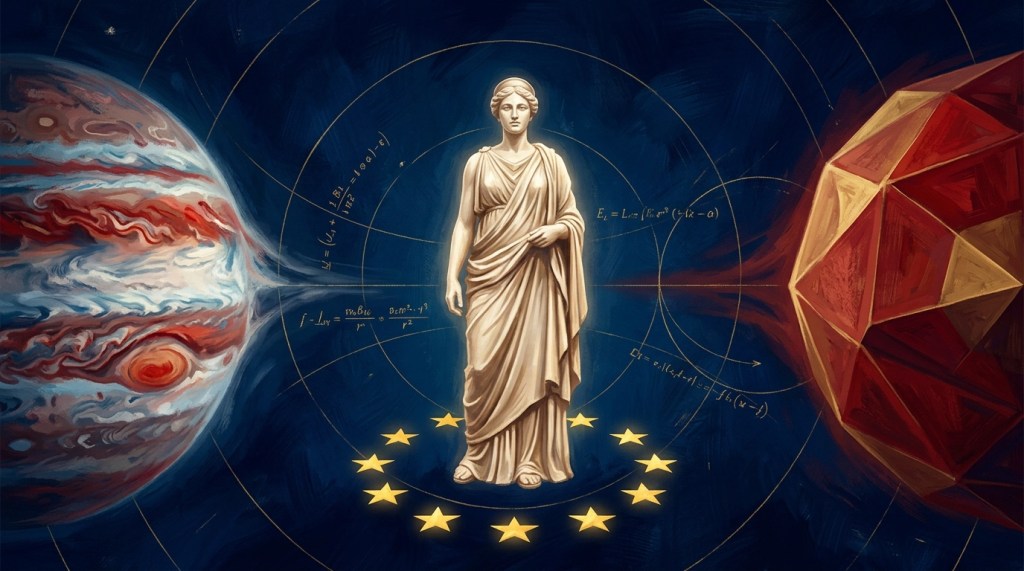
Introduction
It is 1971. China is poorer on a per capita basis than most of sub-Saharan Africa. Its military is inferior to both superpowers by every measure. It is internationally isolated, diplomatically marginalised. By every conventional strategic analysis it is a minor power with limited options. It had just emerged from the Cultural Revolution, which killed over one million people and systematically destroyed its intellectual class and industrial managers as well as its foreign policy apparatus. It had been expelled from the United Nations in favour of Taiwan. It had no significant trading relationships with the West. Its military, while large, was technologically primitive compared to either superpower.
Henry Kissinger flies secretly to Beijing, because the United States of America needs China as a balance against the Soviet Union. Within a year, both US and Soviet superpowers are bidding for Chinese alignment. The Soviet Union maintained approximately 45 divisions — over a million troops — along its Chinese border following the 1969 Sino-Soviet border clashes. The Soviets were genuinely afraid of a scenario in which a hostile China aligned with American technology, capital, and strategic support.
This produced the extraordinary situation where both superpowers simultaneously competed for the alignment of a country that was a fraction of either’s economic and military power. The leverage was not generated by anything China did or offered. It was generated by each superpower’s fear of what the other superpower might gain from Chinese alignment. Within a decade, China has extracted from both the price of a commitment it never actually made. The leverage came entirely from the credible uncertainty about which way it might tilt.
Europe in 2026 has a larger economy than China did in 1971. A more sophisticated regulatory architecture. A more developed institutional framework. Better technology, better infrastructure, better normative capital. And it has spent over thirty years signalling its alignment to the US so clearly that neither Washington nor Beijing has really needed to compete for its support. That was a dreadful error as all can see.
On this journey we must also re-assess whether a revised reset relationship with Russia (post-Putin) is in European and Russian interests and what that might look like whilst we preserve Ukrainian and European integrity and sovereignty.
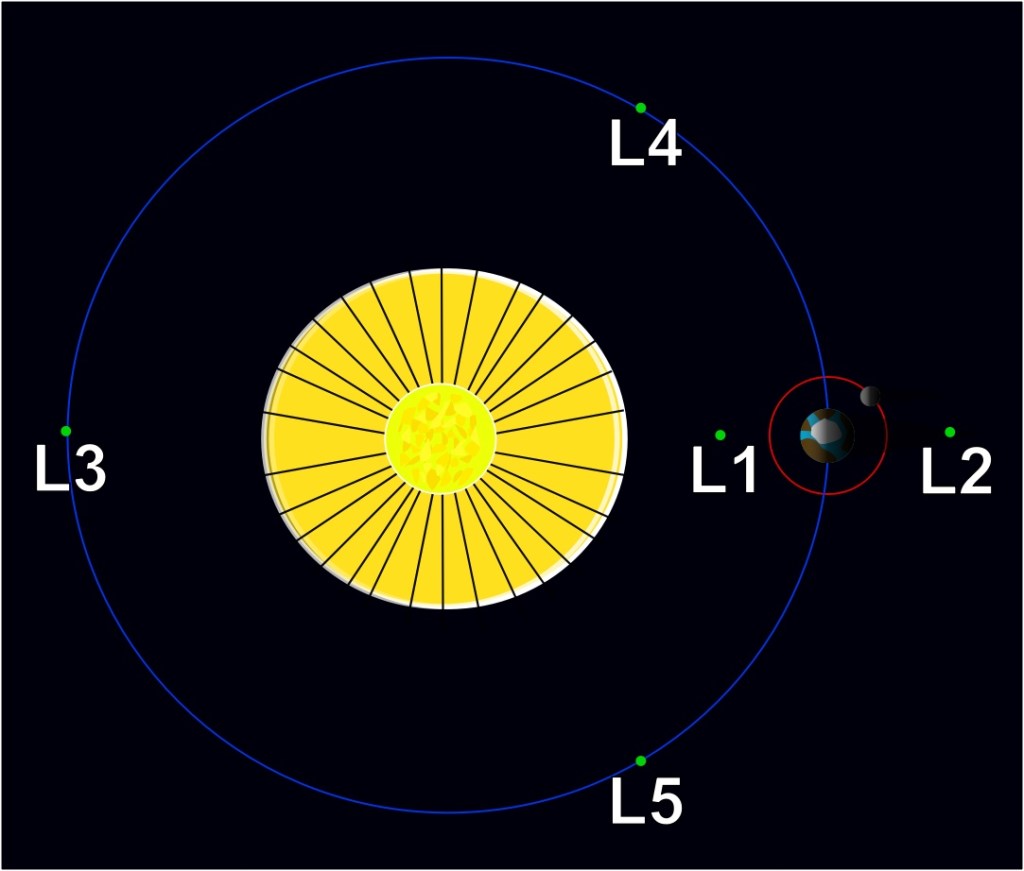
This article is also about the Lagrange point2 – the specific stable position available to a less weighty body between two dominant ones, and it requires diplomatic subtlety, strategic discipline and a foreign policy of credible ambiguity. The current moment is perhaps the last available window for Europe to occupy a strong stable orbit before the US-China binary system fully locks. I also ask what planetary boundary science adds to these calculations for all of us (not just Europeans).
European strategic autonomy is not merely regional self-interest but a precondition for the global governance architecture the planet requires to remain habitable. The world requires a stable federation of Governments, and Europe is the leader in overcoming its violent history to successfully (more or less) manage such a diverse structure.
China found its Lagrange point from a position of weakness. Europe has never tried to have its own clear foreign policy, but it can do it from a position of comparative genuine strength compared to China in the 1970’s and in doing so it will create opportunities for economic growth in the space between superpowers and for a safer world for other countries.
Part 1: What I Have Covered So Far
In February 2025, I wrote that ‘Europe is on the menu’. The leopards were already in the room and the masks were off. NATO had long been a Trojan Horse – US defence for Europe was more of a shackle than a shield and this dependency architecture had been deliberately built by the US to perpetuate itself. US foreign policy for decades has been to keep Europe weak and dependent on it. Trump’s demand for European rearmament was only designed to flow to American companies rather than to build European independence and strength (including to defend itself against Russian aggression). I suggested we headed towards a brutal world of superpowers as imagined by Orwell — barely distinguishable oligarchic protection rackets maintaining power through managed conflict.
In March 2025, I argued that the galvanising shock of watching Zelenskyy humiliated by “mafia thugs — terrorists in suits” in the Oval Office might be the moment Europe finally woke from its geopolitical sleep. I called for urgent European-Chinese realignment. I argued that empathy (the ability to perceive, experience or share in the interests of others – to walk in their shoes for a moon) also has strategic ROI. I warned about the dearth of game theory-based strategy from our largely ineffectual European politicians and I noted that Europe was just starting to emerge from Operation Deep Sleep (a post WWII geopolitical hibernation).
In October 2025, I argued that Europe needed to fast track its efforts to achieve greater technological autonomy and military capability and explored how its good will and normative capital – its desire for international cooperation, alignment and consistency and safety on international law – was its primary strategic asset deep within its DNA. Weaponising this normative capital is the path to genuine leverage against the predators surrounding it.
It is now March 2026. On March 8th, European Commission President Ursula von der Leyen addressed EU ambassadors in Brussels. She correctly named the crimes of the Iranian regime and rightly acknowledged that the rules-based order faces “existential questions.” She refused to pretend Europe can simply withdraw from the world. These were acute observations.
But von der Leyen answered the existential question by changing the subject and declining to state what Europe’s answer to the erosion of international law actually is. No invocation of the UN Charter. No call for ceasefire with Iran. No demand for legal process. A leader who correctly identifies an existential question but refuses to answer it is not demonstrating strategic clarity. These international principles have never faced greater pressure, but that means we cannot blink or flinch if we want to ensure the rest of the world sees our value in this area. Europe must be a watchword and shorthand for trust, cooperation, respect, diversity and rule of law (transparency and stability).
Three days earlier, EU High Representative Kaja Kallas delivered the Churchill Lecture in Zurich and said explicitly: “Today, the chaos we see around us in the Middle East is a direct consequence of the erosion of international law…Without restoring international law..with accountability, we are doomed to see repeated violations of the law, disruption and chaos”. Von der Leyen missed a beat by declining to apply that very framework three days later.
The EU’s two most senior foreign policy figures did not speak with one voice on the most fundamental question of our era. Likewise we saw Canadian Prime Minister Mark Carney rendered unintelligible by his reluctant support for the illegal American-Israeli aggression against Iran. This was all the more striking given that he had recently outlined how we need to adapt to the new predatory world order where “the strong do what they can and the weak must suffer what they must” by refusing to follow the lawlessness of might is right.
Despite what might be considered an overly polemical style (which was used in attempt to sting myself and readers out of the complacency I have seen throughout the European political sphere) I dare to say: the February article was right about almost everything structural as proven by what we have seen happen since; the March 2025 article was right about the need for re-alignment with China but it lacked a sharper game theoretic framework and mechanisms to achieve it; and the October 2025 article correctly identified what was being sacrificed and what Europe needs to build over the next 5 years.
However, what none of the previous articles on Europe had was the analytical framework to explain why Europe is stuck with an outdated view of the world or what the geometry for an escape vector looks like. The issue lurking beneath all of my articles is why any of this matters in the longer term and I mean more than just for European self-interest and strategic survival.
Anyway, that is what this long series of articles seeks to address. Wish me luck.
Part 2: The Existential Stakes
Before we get into the geopolitics, we need to consider what science tells us about our current planetary health trajectory.
The Stockholm Resilience Centre’s September 2025 Planetary Health Check confirmed that seven of nine planetary boundaries have now been breached. Climate change, biosphere integrity, land system change, freshwater use, biogeochemical flows, novel entities, and ocean acidification. Only ozone depletion and aerosol loading remain within safe limits.
The planetary boundaries define the safe operating space for human civilisation – the conditions within which the Holocene stability that enabled agriculture, cities, and complex society exists. Breaching seven of them simultaneously does not mean immediate collapse but it means the system is operating outside of parameters within which human civilisation developed, and beyond which non-linear, self-reinforcing cascade (domino) effects become increasingly probable.
“We are witnessing widespread decline in the health of our planet. But this is not inevitable. Failure is a choice.”
(Johan Rockström)
That’s correct, we are choosing our own long-term failure as a species. Planetary boundary breaches are failures of collective action on a global scale. They happen because no institution has the ability to make and enforce the path that physics and biology tell us are required to protect all of us and many other complex species on Earth.
The European Leadership Network’s NEVER report identifies four categories of existential risk whose intersections are the real danger: nuclear catastrophe, climate breakdown, biological threats, and artificial intelligence. These are obviously not unrelated independent risks. Nuclear war causes nuclear winter which accelerates climate breakdown. Climate breakdown increases pandemic risk through habitat disruption. AI accelerates all four simultaneously by compressing decision cycles, lowering the technical barrier to engineered pathogens, and enabling autonomous weapons systems that operate faster than human intervention or supervision.
“Multipolarity without multilateralism — transnational threats are becoming more difficult to manage. A vacuum in global governance is building.”
(WEF’s 2026 Global Risks Report )
JPMorgan’s geopolitical analysis reaches the same conclusion: climate change, global health, cybersecurity, nuclear non-proliferation, and AI governance require structured cooperation frameworks with agreed metrics, inspection rights, and enforcement mechanisms. Such mechanisms are absent today, leaving systemic risks under-governed as the need for them grows.
Toby Ord, in The Precipice, estimates the probability of existential catastrophe this century at approximately one in six under current international structures.
The question is: can planet Earth remain habitable for humans without something that functions like world government in these specific domains?
In the short term: probably yes, with increasing costs. In the medium term: probably not without governance architecture in at least four domains. In the long term: certainly not.
The compounding risks from climate breakdown, engineered pathogens, autonomous weapons, and potentially misaligned artificial general intelligence creates a landscape in which civilisational collapse over a century-long period approaches certainty without collective world governance mechanisms.
The ozone layer issues shows us that we can reverse decline. The Montreal Protocol is the only international environmental agreement that has reversed a planetary boundary breach and it did because it included trade sanctions against non-parties, making defection costly enough that universal compliance became the rational choice (rather than allowing a Prisoner’s Dilemma game where everyone’s most rational choice is worse for all collectively).
Planetary wide problems are solvable, not solving them is a choice.
This is the context within which this article must be read and understood. Developing and maintaining European strategic autonomy and geopolitical stability within a bipolar world order is not merely regional self-interest or European civilisational pride.
At this specific moment in history, it is about whether the institutional architecture, as pioneered by Europe, that makes adequate global governance eventually achievable is preserved and whether European can rally its allies around the world through this current period of maximum danger – or whether the EU is dismantled, piece by piece, by the combination of American geopolitical interests and aggression and Chinese strategic capture or dominance.
The article makes clear the folly of European appeasement to an American administration that is indistinguishable from a large network of overlapping criminal enterprises.
Europe must learn to play the game its own way, in the space between superpowers. We must learn to monopolise possession of the high ground and the narrative, of leadership in regulation and coordination of the middle powers around the world (Brazil, Canada, Mexico etc.) working the relationships with China and the US with maximum ambiguity for European interests and to make the world safer for the other middle powers and other countries too.
In short, Europe must follow the Spanish way (of football) and play geopolitical tiki-taka.
“No to war…[Spain] will not be complicit in something that is bad for the world – and that is also contrary to our values and interests – simply out of fear of reprisals”3
(Pedro Sanchez)
To be continued….
Footnotes
These articles are created with the Assistance of AI tools including Claude, Gemini and Notebooklm.






 Compossible - that which can live together
Leave a comment