This article has been created using a new public AI Notebook:
Climate Change, Ecological Disaster and Civilisational Risks
The Notebook features a range of key scientific and cultural sources. The complexity of these issues and depth of the data lends itself to a publicly available database for people to conduct their own queries. I hope it is useful, particularly for a new generation more interested in solving the problems we face than getting rich whilst watching the world burn.
Pre-queried topics include:
- Sustainability Quiz & Flashcards
- Earth’s Dashboard: A Student’s Guide to Planetary Boundaries
- Our Planet’s Overdraft: The Hidden Links Between Economic Growth, Biodiversity, and Climate Stability
- The Nature Imperative: A Corporate Leader’s Guide to the Circular Economy
- Comprehensive Study Guide Quiz: Environment, Economics, and Policy
- The American Infrastructure of Climate Denial
- Strategic Analysis of Coordinated Climate Disinformation Networks and Their Threat to Democratic Processes
- Deep Dive Podcast: Planetary Limits, Political Power, and the Fight for a Stabilized World
You can create your own queries in the Notebook and it will provide cross-referenced sources for you.
Table of Contents
- AI Video – The Great Divide & Civilisational Collapse
AI Video – The Great Divide & Civilisational Collapse
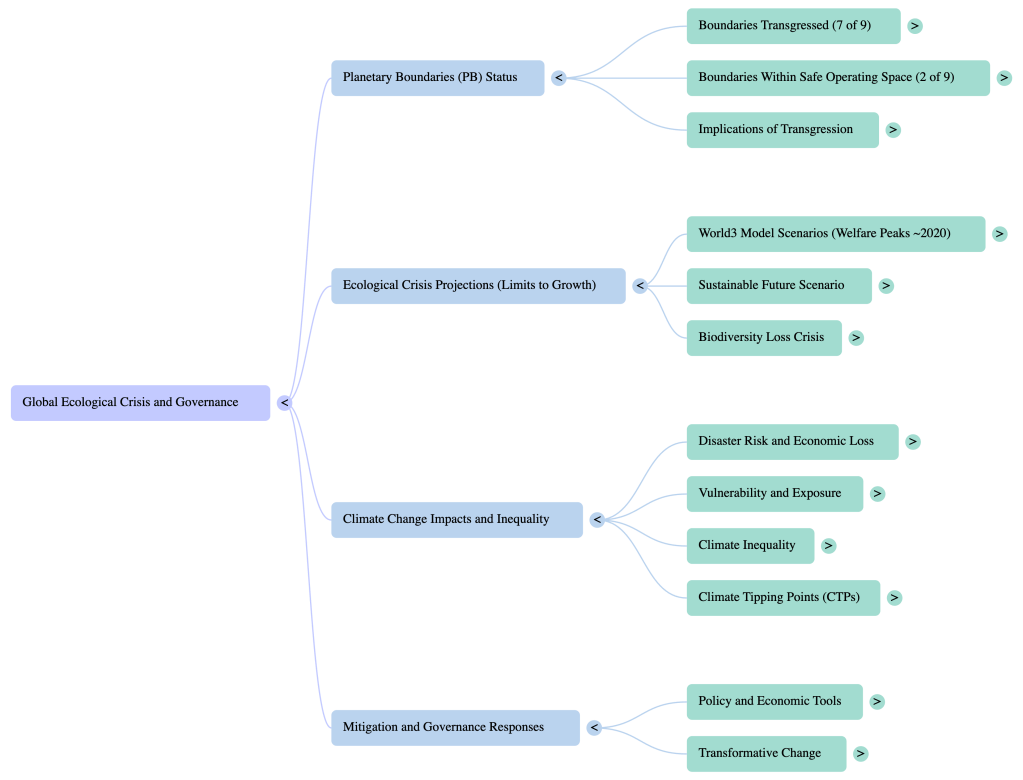
AI Mindmap
Introduction
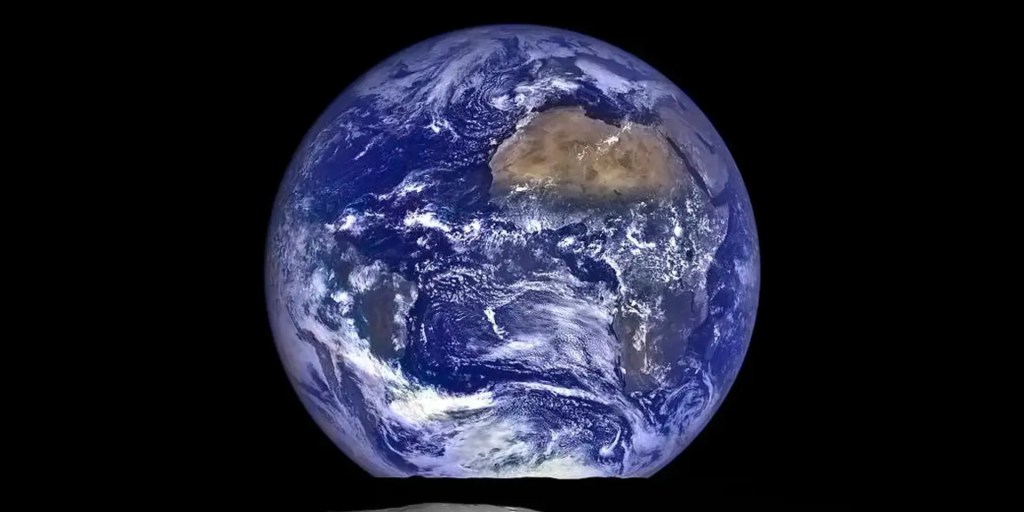
The planet is confronting a dual ecological crisis of unprecedented scale and speed: accelerating climate change and catastrophic biodiversity loss have breached multiple planetary boundaries, pushing Earth’s systems towards potentially irreversible tipping points. Scientific consensus confirms that current global warming of approximately 1.1°C-2% above pre-industrial levels is already driving a surge in extreme weather, threatening global food and water security, and creating severe economic and humanitarian impacts that disproportionately harm the world’s most vulnerable populations. Projections indicate that without immediate, deep, and sustained emissions reductions, these impacts will intensify dramatically, with catastrophic consequences for human civilization.
This existential threat is compounded by a sophisticated and well-funded architecture of political obstruction. A coordinated transatlantic network of think tanks, led by U.S.-based entities like the Atlas Network and the Heritage Foundation, has systematically worked to block climate action. This network, which supports nearly 600 libertarian and conservative groups globally, has shifted its strategy from outright climate denial to promoting “discourses of delay,” which emphasize non-transformative solutions, exaggerate the costs of renewables, and redirect responsibility. These efforts are amplified by opaque funding from fossil fuel interests and ultra-wealthy donors.
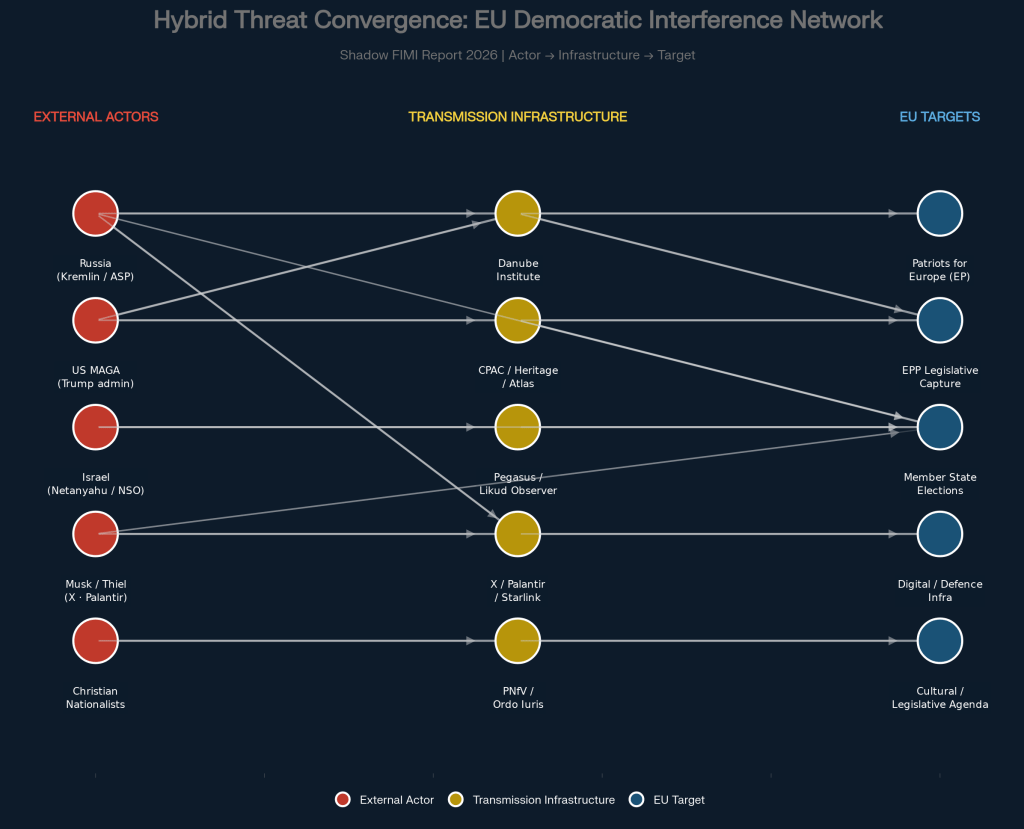
This influence network converges with far-right political movements across Europe and is bolstered by foreign interference from state actors like Russia and the USA, which seek to deepen societal fragmentation and undermine democratic institutions. Concurrently, domestic billionaires are weaponizing media ownership to normalize extremist narratives and capture mainstream political discourse. This “creeping consensus” has seen mainstream parties co-opting far-right rhetoric and policies, shifting the range of acceptable political debate and legitimizing anti-democratic and anti-environmental agendas.
Addressing this multifaceted crisis requires a paradigm shift on multiple fronts. It necessitates a rapid transition to a net-zero economy, guided by science-based mitigation and adaptation strategies, and accelerated by technological innovation in areas like AI and digital sustainability. Critically, it demands a fundamental rethinking of economic goals, moving beyond GDP growth to models like Doughnut Economics that prioritize ecological stability and social equity. Finally, it requires robust, polycentric governance, a commitment to a just transition, and the implementation of strong countermeasures to combat orchestrated disinformation and reclaim democratic processes from the influence of actors committed to inaction.
Part I: The Planetary Emergency: State of the Climate and Biosphere
“Human activities, principally through emissions of greenhouse gases, have unequivocally caused global warming”1
The Climate Crisis: Projections and Impacts
Scientific assessments confirm that human-induced climate change is progressing at an alarming rate, with global surface temperatures in the decade 2011-2020 reaching approximately 1.1°C above the 1850-1900 average. This level of warming, unprecedented in over 3 million years, is already producing profound and dangerous impacts. Latest estimates put the current rise in temperature closer to 2% above pre-industrial levels.2
IPCC Projections and Emissions Pathways The Intergovernmental Panel on Climate Change (IPCC) outlines that limiting warming to 1.5°C with no or limited overshoot requires global greenhouse gas (GHG) emissions to be reduced by 43% by 2030 relative to 2019 levels. However, current trajectories are alarmingly off-track; the world’s largest oil and gas companies are on a path to exceed their 1.5°C-compatible share of emissions by 59% in 2030 and 189% in 2040.
| Warming Limit | Required GHG Reduction by 2030 (from 2019) | Required CO2 Reduction by 2030 (from 2019) |
| 1.5°C (>50% chance) | 43% [34-60%] | 48% [36-69%] |
| 2.0°C (>67% chance) | 21% [1-42%] | 22% [1-44%] |
Source: IPCC AR6 Synthesis Report
Extreme Weather Events as the New Norm Increased global temperatures have amplified the frequency and intensity of extreme weather events worldwide. Attribution science now confirms with high confidence that human influence has made events like heatwaves, heavy rainfall, droughts, and wildfires more likely and severe. The IPCC projects that concurrent extremes will become more frequent with increasing global warming, particularly above 2°C, posing compound risks to agriculture, infrastructure, and human health. Recent examples, such as the 2018 Northern Hemisphere heatwaves and Hurricane Harvey’s extreme rainfall, were made substantially more probable by anthropogenic climate change.
“The rate of increase [of sea water levels] from 2006 to 2015 was 2.5 times faster than the rise observed from 1901 to 1990”3
The Threat of Climate Tipping Points The Earth system contains critical elements that may “tip” into a new state with abrupt and potentially irreversible consequences. The 2024 Global Tipping Points Report identifies several systems at risk.
| Tipping Element | Tipping Point Threshold (Global Warming) | Status & Consequence |
| Warm-water Coral Reefs | 1.2°C (central estimate) | Already exceeded; risk of >99% loss at 2°C. |
| Greenland & West Antarctic Ice Sheets | Low tipping point, non-negligible risk below 1.5°C | Tipping commits the world to ~10 meters of long-term sea-level rise. |
| Subpolar Gyre Convection | 1.5-2°C | Potential for catastrophic consequences for North Atlantic climate. |
| Atlantic Meridional Overturning Circulation (AMOC) | Mid-century onset of collapse suggested by some indicators | Would fundamentally alter global weather patterns, particularly in Europe and the Sahel. |
Even temporarily overshooting the 1.5°C target dramatically increases the risk of triggering these tipping points, especially for fast-timescale systems like coral reefs.
“The World Wide Fund for Nature’s Living Planet Report 2022 documents a 69% average loss in the abundance of mammal, bird, reptile, fish and amphibian species since 1970.”
The Biodiversity Collapse and Planetary Boundaries
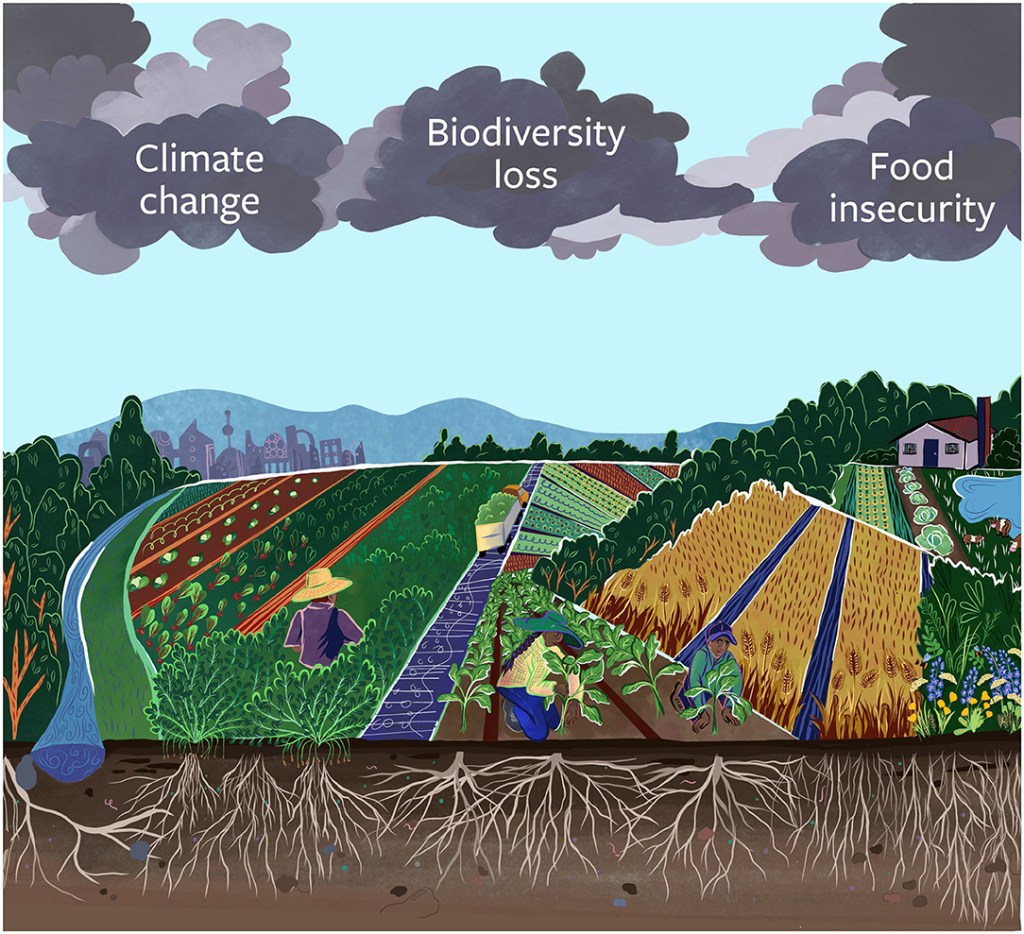
The climate crisis is unfolding alongside an equally severe biodiversity crisis, characterized by the rapid degradation of ecosystems and a mass extinction event driven by human activity.
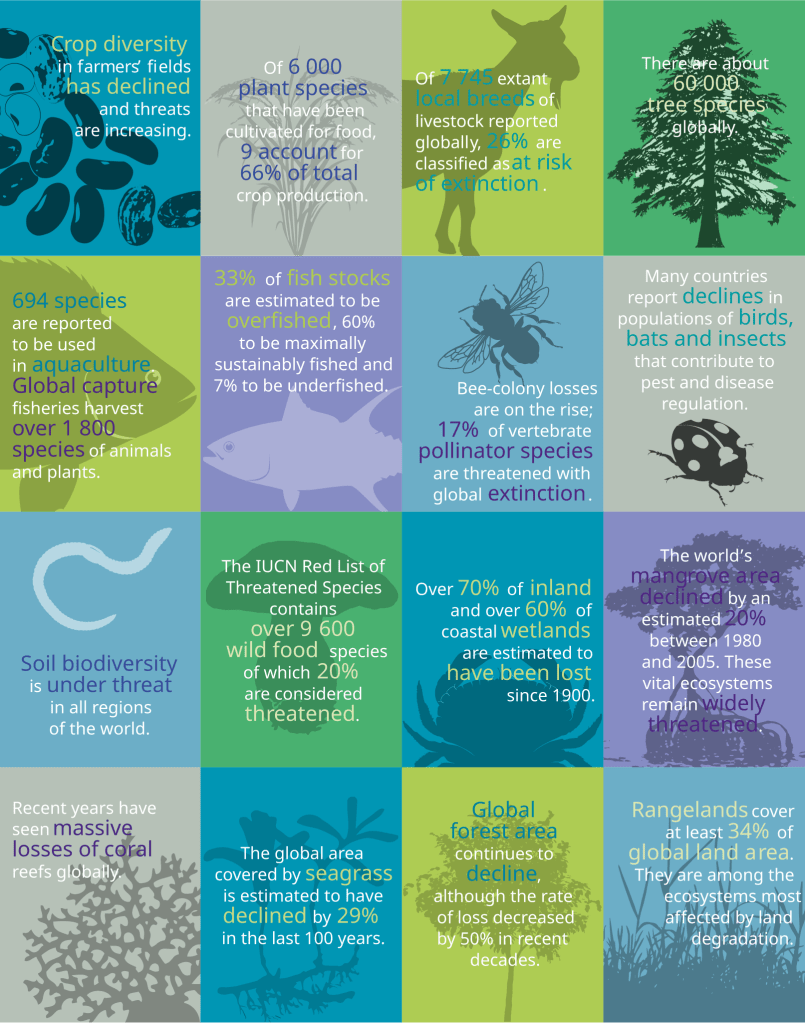
Quantifying the Loss: The IPBES Assessment The Intergovernmental Science-Policy Platform on Biodiversity and Ecosystem Services (IPBES) Global Assessment Report provides a stark overview of nature’s decline:
- Species at Risk: An estimated one million plant and animal species are threatened with extinction.
- Ecosystem Alteration: 75% of the global land surface has been significantly altered by human actions, and over 85% of wetland area has been lost.
- Population Declines: The average abundance of native species in most major terrestrial biomes has fallen by at least 20% since 1900. Mammal populations have seen an assessed 69% decline since 1970.
- Primary Drivers: The main drivers are, in descending order: changes in land and sea use, direct exploitation of organisms, climate change, pollution, and invasive alien species.
- Ocean Degradation: Approximately half of live coral cover on reefs has been lost since the 1870s. Oceans are also losing their “greenness,” reflecting a decline in phytoplankton that has reduced carbon sequestration capacity by an estimated 0.088% annually.

“between $235 billion and $577 billion in annual global crop output is at risk as a result of pollinator loss.”4
Breaching the Safe Operating Space: The Planetary Boundaries Framework The Planetary Boundaries framework defines nine processes that regulate the stability of the Earth system. Transgressing these boundaries increases the risk of generating large-scale, abrupt, or irreversible environmental changes. Recent assessments show that humanity is operating outside the “safe operating space” for at least six of the nine boundaries.
| Planetary Boundary | Status | Control Variable(s) |
| Climate Change | Breached (High Risk) | 417 ppm CO₂ (Boundary: 350 ppm) |
| Biosphere Integrity | Breached (High Risk) | High extinction rates; appropriation of net primary production (HANPP). |
| Land-System Change | Breached (Increasing Risk) | 59% of potential forest cover remains (Boundary: 75%). |
| Freshwater Change | Breached (Increasing Risk) | Alterations to blue water (streamflow) and green water (soil moisture). |
| Biogeochemical Flows | Breached (High Risk) | Massive disruption of Nitrogen (N) and Phosphorus (P) cycles. |
| Novel Entities | Breached (Increasing Risk) | Widespread release of plastics, pollutants, etc. |
| Stratospheric Ozone Depletion | Within Safe Space | 285.7 Dobson Units (DU) |
| Atmospheric Aerosol Loading | Boundary Not Quantified | Interhemispheric difference in aerosol optical depth (AOD) is a proxy. |
| Ocean Acidification | Breached (Increasing Risk) | 2.84 Ωarag (Boundary: 2.9 Ωarag) |
Climate Change and Biosphere Integrity are considered “core boundaries,” as their transgression alone could push the Earth system out of its stable Holocene state.
Economic Consequences of Ecosystem Failure The loss of biodiversity is not merely an environmental issue; it poses a direct threat to economic stability. Economic models demonstrate that biodiversity loss reduces ecosystem productivity and resilience, creating non-linear risks and tipping points. The financial sector is heavily exposed; one assessment found that “75% of all corporate loan exposures in the euro area have a strong dependency on at least one ecosystem service.” Past biodiversity loss has increased ecosystem fragility, meaning future losses will have increasingly large economic effects.
“The fossil fuel industry was aware of the risks of burning coal, oil, and gas since at least the 1950s and has since conducted decades-long campaigns to bury climate science.”5
Converging Crises: Socio-Economic and Humanitarian Fallout
The dual crises of climate and biodiversity are already generating severe and interconnected consequences for human well-being, economic stability, and global security.
- Economic Destabilization: Unmitigated climate change is projected to cause significant GDP losses, particularly in tropical and subtropical countries, exacerbating global inequality. A 2°C warming scenario is projected to reduce global GDP by up to 13%, and 4°C by up to 30%. Estimates of economic damage have consistently risen as more impact channels are understood.
- Food and Water Insecurity: The Ecological Threat Report 2023 finds that 42 countries face severe food insecurity, and almost four billion people live in areas with high levels of it. Climate change and drought are major drivers. By 2050, 2.8 billion people will reside in countries facing severe ecological threats.
- Health Impacts: The Lancet Countdown reports a record 512 billion potential work hours were lost in 2023 due to heat exposure. The climatic suitability for the transmission of dengue fever has increased by up to 46% since the 1950s. Climate change has also been shown to negatively affect mental health, with a 1°C increase in monthly average temperature linked to a 0.7% rise in suicide rates in the US and 2.1% in Mexico.
- Conflict and Displacement: The Internal Displacement Monitoring Centre (IDMC) reports record levels of disaster displacement. Climate-related crop failures and resource scarcity have been linked to radicalization and conflict from Syria to the Sahel. From 1980 to 2010, 23% of conflicts in ethnically diverse countries began in months marked by weather disasters.
Part II: The Architecture of Obstruction and Political Capture
Efforts to address the planetary emergency are systematically obstructed by a network of ideological, financial, and political actors dedicated to preserving the status quo and delaying transformative action.
The Transatlantic Network of Influence
At the center of this obstruction is a transatlantic network of U.S.-based organizations that fund, train, and coordinate conservative and libertarian think tanks worldwide.
- Core Actors: Atlas Network and the Heritage Foundation: The Atlas Network connects nearly 600 partner think tanks in over 100 countries, functioning as a “think tank that creates think tanks.” It provides grants, training, and strategic coordination. The Heritage Foundation has played a direct role in major political events like Brexit and actively works with illiberal groups in Poland and Hungary to develop strategies for dismantling EU institutions.
Marshall donated heavily to the same think tank that Prime Minister Rishi Sunak credited with helping “draft” legislation cracking down on climate protesters.
- UK Spotlight – The 55 Tufton Street Hub: This London address houses a cluster of influential right-wing, pro-Brexit, and climate-skeptic organizations, including the TaxPayers’ Alliance and the Global Warming Policy Foundation (GWPF). Whistleblowers have accused this network of coordinating a “single set of right-wing talking points” to influence UK politics.
- Methodology and Funding: A key characteristic of this network is deliberate funding opacity. Many of its members receive the lowest possible rating for financial transparency. Funding is connected to American billionaire networks (e.g., Koch, Mercer) and fossil fuel interests. Their strategy involves producing “white papers,” drafting legislation, and cultivating relationships with politicians and journalists to shift policy and public opinion. The Institute of Economic Affairs (IEA), an Atlas partner, was platformed by British media an average of 14 times per day in one measured period.
From Denial to Delay: Evolving Strategies of Inaction
As outright denial of climate science has become less tenable, the primary strategy of obstructionist actors has shifted to promoting “discourses of delay.” These narratives are designed to postpone meaningful action while maintaining a veneer of reasonableness.
| Delay Discourse Category | Examples and Tactics |
| Pushing Non-Transformative Solutions | Promoting unproven or long-term technologies like Carbon Capture and Storage (CCS) and nuclear energy as alternatives to immediate renewable deployment; framing fossil gas as a necessary “bridge fuel” for energy security. |
| Emphasizing the Downsides | Arguing that a green transition is too expensive, will damage national competitiveness, and harm the poor, while ignoring the escalating costs of inaction and the regressive impacts of climate change. |
| Redirecting Responsibility | Employing “whataboutism” to deflect from domestic action by pointing to the larger emissions of countries like China and the United States. |
| Surrender | Promoting “doomism” by claiming that mitigation efforts are futile or too late, or that transformative change is incompatible with democracy. |
These actors also engage in direct legislative and media campaigns, including promoting laws to criminalize environmental protest and amplifying critiques of renewables that misrepresent total system costs and conceal the lifecycle emissions of fossil fuels.
The Far-Right Convergence and Foreign Interference
The libertarian economic agenda of the influence network increasingly converges with the socially conservative and nationalist agendas of far-right parties across Europe.
- Ideological Alignment: The Atlas Network serves as infrastructure connecting its free-market principles with parties like Spain’s VOX, Italy’s Lega Nord, and Hungary’s Fidesz. This is formalized through events like the European Liberty Forum, which coordinates strategy before major EU elections.
- Foreign Interference: The Russian Federation has been identified as a critical source of non-transparent financial and operational support for the European far right. Documented cases include laundering millions for Italy’s Lega party and the Russian FSB providing direct intelligence instructions to a staffer of a German AfD MP to delay the delivery of tanks to Ukraine. The strategic goal is to “deepen societal fragmentation and undermine the legitimacy of European and national public authorities.”
- Billionaire Patronage and Media Weaponization: A parallel mechanism of influence comes from domestic billionaires who use their wealth to acquire media outlets and fund political parties. In the UK, individuals like Paul Marshall (owner of GB News) and Christopher Harborne (largest donor to Reform UK) have provided platforms and financial backing that normalize far-right narratives and give them disproportionate influence. Elon Musk’s ownership of X (formerly Twitter) allows him to inject American far-right talking points directly into European electoral discourse to an audience of over 200 million.
Paul Marshall’s GB News: Russia & MAGA ties & Climate Denial – see for example:
- https://www.perplexity.ai/page/gb-news-russia-maga-ties-clima-z_8A55pITTuTADHhRBFvkA
- “Paul Marshall, the man who owns the right“, James Ball, The New World
The Capture of the Mainstream
The most insidious impact of these networks is not the direct takeover of government but the gradual absorption of their worldview into mainstream politics, a phenomenon termed “The Creeping Consensus.”
- Rhetorical Co-option: Mainstream political leaders, in a strategic attempt to neutralize the far right’s appeal, adopt extremist rhetoric on issues like immigration. This has the paradoxical effect of legitimizing the extremist position, shifting the “Overton window” of acceptable discourse, and ceding the narrative to their rivals.
- Normalization of Alliances: Mainstream conservative parties have increasingly entered into coalitions with far-right parties, as seen in the Netherlands and Sweden. This institutional normalization directly translates into policy shifts on climate, immigration, and EU integration.
- Military-Industrial Influence: In the wake of Russia’s invasion of Ukraine, a “lobbying gold rush” by defense contractors in Brussels has surged, creating a new vector of influence. This capitalizes on the “politics of fear” and relies on the “revolving door” between government and industry, with think tanks often funded by the defense sector shaping policy debates without disclosing conflicts of interest.
Part III: Pathways Forward: Governance, Economics, and Technology
“Any reflection on climate change and actions to address it can be seen as an inherently ethical reflection, since reflecting on climate action implies reflecting on conflicting interests not only between regions and countries but also social groups.”6
Addressing the interconnected crises requires transformative change across society, grounded in robust science, innovative technology, new economic thinking, and resilient governance.
Mitigation and Adaptation Strategies
The IPCC has identified a wide range of feasible and effective options to reduce GHG emissions and adapt to climate impacts.
- Mitigation Levers: Deep emissions reductions are achievable through a portfolio of options. Demand-side strategies (e.g., sustainable diets, reducing food waste, active mobility, efficient buildings) have the potential to deliver 40–70% of 2050 emissions reductions. Key supply-side actions include the rapid scaling of renewable energy, halting deforestation, restoring ecosystems, and developing low-carbon industrial processes.
- Bridging the Adaptation Gap: While progress on adaptation planning is occurring, implementation remains inadequate. A major barrier is finance; the adaptation finance gap is widening, and only 2% of tracked adaptation finance in 2021-2022 came from private sources. Effective adaptation requires balancing investment in “hard” infrastructure with “soft” capacity-building, such as leadership training and stakeholder engagement.
The Role of Technology and Digital Innovation
Digital technologies and AI offer powerful tools for biosphere management, but their deployment must be managed sustainably.
- AI for Biosphere Protection: Artificial intelligence can overcome ecological data bottlenecks, enabling predictive modeling of species decline and proactive forest health monitoring. Drones equipped with LiDAR can create detailed topographical maps to guide ecosystem restoration, determining optimal planting locations and deploying seeds or beneficial microbes in inaccessible terrain.
- Digital Sustainability: A “Planetary Digital Twin” and automated systems for Monitoring, Reporting, and Verification (MRV) can support sustainability governance. However, the digital economy has a significant environmental footprint. In 2019, 53.6 million metric tons of e-waste were produced, and the extraction of minerals for ICT devices could increase by 500% by 2050. Governance must therefore enforce a circular economy for digital products and ensure transparency around the energy consumption of large-scale AI models.
Rethinking Economic Paradigms
The pursuit of endless GDP growth is increasingly recognized as incompatible with planetary health and social equity, prompting the development of alternative economic frameworks.
- Doughnut Economics: This model proposes a new goal for economics: meeting the needs of all people within the means of the living planet. It visualizes a “safe and just space for humanity” bounded by a “social foundation” (the 12 basics of life, aligned with the SDGs) and an “ecological ceiling” (the nine planetary boundaries).
- Degrowth: This school of thought calls for the planned downscaling of production and consumption in high-income nations to reduce environmental pressures. Critics argue that it lacks concrete policy proposals and that a shrinking economy has no historical precedent for benefiting the poor. Proponents argue it is necessary to end the exploitation of the Global South.
- Steady-State Economics: This framework, rooted in biophysical limits, argues that beyond a certain point, growth dedicated to satisfying “relative wants” leads to futility and increased inequality. It advocates for an economy that maintains a constant stock of people and artifacts, minimizing the throughput of matter and energy.
Governance for a Resilient Future
Navigating the polycrisis requires a shift towards more adaptive, inclusive, and just governance systems at all scales.
- Polycentric and Adaptive Governance: Systemic risks cannot be managed by a single actor. Effective governance requires decentralized, polycentric approaches involving collaboration between governments, civil society, the private sector, and local communities. This includes iterative and experimental approaches to decision-making, grounded in real-time data and co-generated with stakeholders.
- Justice and Equity in the Transition: Climate action must be integrated with sustainable development and a commitment to a just transition. This requires policies that support economic diversification in regions dependent on fossil fuels, protect vulnerable groups with social safety nets, and ensure procedural justice by including the voices of marginalized communities.
- The Role of Law and Rights: International law can create accountability mechanisms, such as by recognizing the rights of Earth system tipping elements (e.g., the Amazon rainforest) to persist. This could empower Indigenous peoples, whose stewardship is vital for conservation, to act as legal representatives and strengthen protections against deforestation and other drivers of tipping.
- Countering Disinformation: A foundational element of future governance is enhancing the integrity of the information ecosystem. This requires regulatory action against the coordinated spread of mis- and disinformation on social media, increased transparency in media ownership and political funding, and support for independent, science-based journalism.
“There is grandeur in this view of life, with its several powers, having been originally breathed into a few forms or into one; and that, whilst this planet has gone cycling on according to the fixed law of gravity, from so simple a beginning endless forms most beautiful and most wonderful have been, and are being, evolved.”
(Charles Darwin, The Origin of the Species, 1859)
- IPCC AR6 Synthesis Report, 2023 ↩︎
- ‘We’re Touching 1.9°C – And It’s Only 2025‘ ↩︎
- Climate Inequality Report 2023, World Inequality Lab ↩︎
- IPBES Global Assessment Report on Biodiversity and Ecosystem Services, Summary for Policymakers, 2019 ↩︎
- Green Energy: Delay for Another Day, Compossible, 2025 ↩︎
- Report of the World Commission on the Ethics of Scientific Knowledge and Technology (COMEST) on the Ethics of Climate Engineering, UNESCO, 2024 ↩︎








 Compossible - that which can live together
Leave a comment