The Blueprint for an Authoritarian Regime

“a systemic, ruthless plan to undermine the quality of life of millions of Americans, remove critical protections and dismantle programs for communities across the nation, and prioritize special interests and ideological extremism over people.”1
(Democracy Forward)
The following article has been researched manually largely based on sources you can find and review here:
It has been prepared and compiled using AI tools including:
- Google Gemini Deep Research
- Perplexity AI Deep Research
- Google Notebook LLM
- ChatGPT
If you are looking for a good human drafted overview, prepared prior to Trump’s second administration, I recommend:
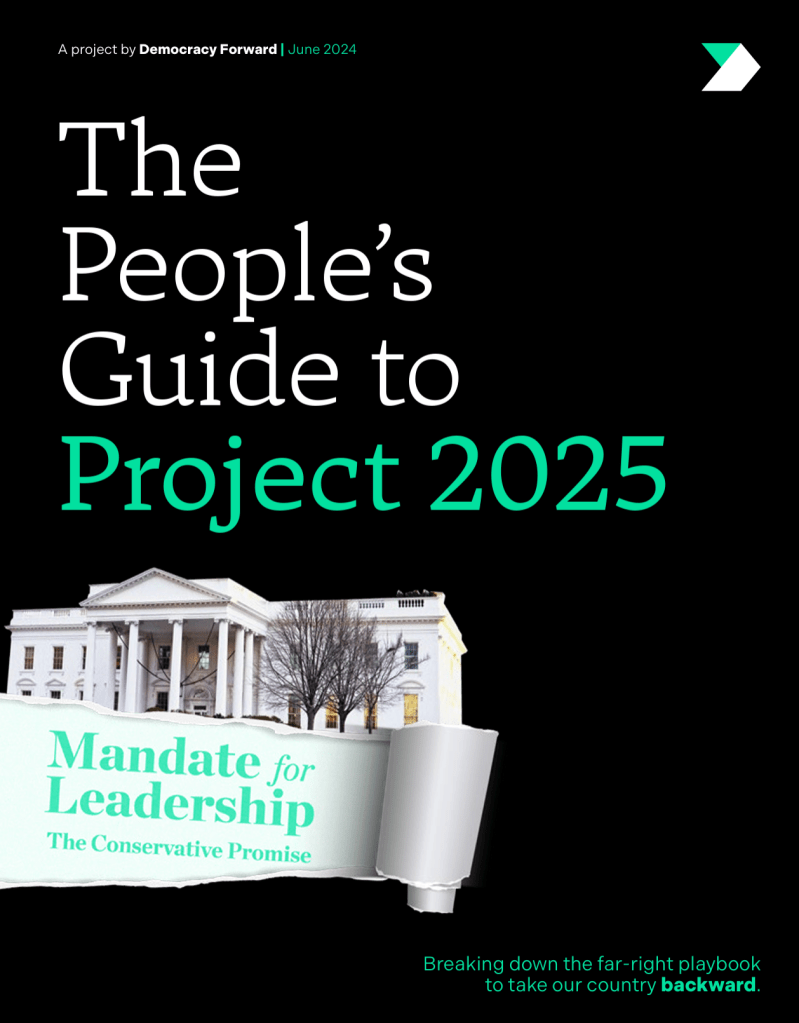
If you would like to read my human written companion piece, see:
AI podcast (based on most of the material used for my research on Project 2025):
A Google notebooklm with crucial sources that you can query is available here
AI Video
Table of contents
- Project 2025 Key Pillars
- The Secrecy and Intent of the 180-Day Takeover Playbook
- Who is funding the Authoritarian Takeover?
- Impact of Project 2025
- Correlation Between Trump’s Second Administration’s Actions and Project 2025
- International Dimensions and Geopolitics
- Conclusion: A Reshaping of American Governance
- Footnotes
Project 2025, also known as the 2025 Presidential Transition Project, is a collaborative effort led by the Heritage Foundation and over 100 conservative organizations.
Its primary aim is to support a second Trump administration, to rapidly reshape the federal government beginning on January 20, 2025. This initiative is centered around the ‘Mandate for Leadership: The Conservative Promise,’ a comprehensive policy handbook designed to ‘deconstruct the Administrative State’. The goal is complete deconstruction of the US federal system.
“For many decades, there have been efforts to advance radical proposals to weaken America’s middle class, stripping them of fundamental freedoms and subverting the rule of law, most notably by capturing the U.S. Supreme Court. But the Project 2025 blueprint makes those prior efforts look quaint. Project 2025 unabashedly promotes the wholesale violation of norms and laws, consolidating enormous power in a president and trampling on Congress’ constitutional role—to take away Americans’ long-cherished freedoms and opportunities.
Not only would this authoritarian playbook make it easier for a far-right executive branch to weaken the independence of public agencies, install political cronies throughout the government, punish people it disagrees with, and control what news the media can report, but it would also allow the government to eliminate abortion access, health care choices, overtime pay, educational opportunities, and countless other programs that benefit communities and families.“2
(Center for American Progress)
Project 2025 Key Pillars
Project 2025 operates on four key “pillars”:
- The Mandate for Leadership 2025: The Conservative Promise: The extensive policy document.
- An army of loyalists: Building a database of conservative loyalists who can be vetted and placed in government positions, potentially numbering around 20,000 individuals. This recruitment process may involve a “political litmus test” and ideologically biased questionnaires.
- The Presidential Administration Academy: An online training programme designed to indoctrinate would-be employees with the project’s ideology.
- The 180-Day Playbook: An unpublished implementation plan that provides agency-by-agency transition strategies for the first six months of a new administration.
The overarching goal is to enable a future far-right administration to take swift action. The Heritage Foundation describes it as a ‘second American Revolution’.
The Secrecy and Intent of the 180-Day Takeover Playbook
A key component of Project 2025 is the ‘180-Day Playbook,’ a secret strategic plan for the first six months of a new administration. This plan, which is largely kept secret, aims to facilitate rapid implementation of the ‘Mandate for Leadership’. This secrecy is intentional, aiming to move quickly and overwhelm opposition, with the stated intention to ‘bring quick relief to Americans’ from what Project 2025 sees as ‘devastating policies’.
The playbook is a key instrument in Project 2025’s strategy to “march into office and bring a new army: aligned, trained, and essentially weaponized conservatives ready to do battle against the deep state“.
Who is funding the Authoritarian Takeover?
Analysis of campaign finance data reveals that a relatively small number of affluent individuals and well-established conservative organizations constitute the dominant funding base for these entities.
Super Political Action Committees (Super PACs) and groups operating with undisclosed (“dark money”) funding emerge as significant vehicles for channeling substantial financial contributions.
The Heritage Foundation stands as a central pillar in the funding and operation of Project 2025, further illustrating the interconnectedness within the conservative political ecosystem.
The Supreme Court’s decision in Citizens United in 2010 significantly altered the campaign finance landscape, leading to the rise of Super PACs and a surge in outside spending in elections . This decision effectively invalidated many limits on independent political spending by corporations and unions, paving the way for the increased influence of large donors and outside groups
A significant portion of the funding for Project 2025 and its advisory groups comes from a network of billionaire family fortunes. Since 2020, foundations linked to the Bradley, Coors, Koch, Scaife, Seid, and Uihlein families have contributed over $120 million to organizations involved in Project 2025.
Notably, foundations associated with Charles G. Koch have given at least $9.6 million to 15 Project 2025 groups, while the Uihlein family’s Ed Uihlein Foundation has donated at least $13.4 million to 13 different groups.
Barre Seid, an industrialist, made a substantial $1.6 billion gift to a nonprofit controlled by Leonard A. Leo, which has also served as a major source of funding for Project 2025.
Additionally, the Shell USA Company Foundation, associated with the Shell oil company, has donated to at least fourteen groups on Project 2025’s advisory board, including The Heritage Foundation itself.3
Donor-advised funds like DonorsTrust and Donors Capital Fund serve as major conduits for funding right-wing organizations, distributing substantial grants to groups involved in policy advocacy, litigation, media, and climate denial . These funds often obscure the original sources of the donations, contributing to the “dark money” ecosystem in political finance.
According to data from OpenSecrets.org, the top individual donors to Donald Trump include:
- Miriam Adelson, a casino magnate, is primarily motivated by her strong support for Jewish and Israel-related causes, contributing over $132 million to aid Trump’s election efforts in 2024
- Timothy Mellon, a reclusive railroad magnate, emerged as the top individual donor to Trump, contributing at least $197 million. While once holding more liberal views, Mellon’s strong opposition to government regulations on business seems to heavily influence his political giving. Interestingly, he also contributed $25 million to support Robert F. Kennedy Jr.’s presidential run.
- The billionaire shipping supply magnates Richard and Elizabeth Uihlein are another example of high-profile ideological donors whose business success, particularly during the COVID-19 pandemic’s e-commerce boom, has enabled significant political contributions.
- Ken Griffin, the billionaire founder of the Citadel hedge fund, also contributed significantly, giving $100 million in the 2024 cycle.
- Other notable individual donors include Christy Walton, Jeff Yass and Elon Musk.
- Elon Musk’s financial involvement stands out, with reports indicating he spent more than a quarter of a billion dollars, totaling $277 million, to support Donald Trump and other Republican candidates . The majority of Musk’s spending was channeled through his own America PAC, to which he contributed $239 million. This substantial contribution positions Musk as the largest individual donor in the 2024 election cycle across both major parties.
SpaceX emerges as the leading organizational contributor, with a total contribution of $276,275,595.
Other prominent organizational donors include Securing American Greatness, contributing $67,558,284; Building America’S Future, with $23,640,000; and America First Action/America First Policies, donating $21,558,703 Additional significant organizational contributors include Hendricks Holding Co., Bigelow Aerospace, Uline Inc., and Energy Transfer LP.
The funding of Donald Trump, the Republican Party, and Project 2025 represents a complex and interconnected financial ecosystem. This analysis reveals that a relatively small number of wealthy individuals and well-established conservative organizations serve as the primary sources of financial support for these entities.
The concentration of wealth in political funding raises important questions about equity and influence. The role of less transparent funding mechanisms, such as “dark money” groups, presents challenges for public understanding and accountability. Some of the people and groups behind Project 2025 and the Heritage Foundation are also linked to the Atlas Network (a think tank of think tanks which sponsors ‘free market’ dominance of democratic systems, climate denial, changes in laws to punish environmental protestors and worse).
Impact of Project 2025
The central goals of Project 2025 are to consolidate executive power, implement a sweeping right-wing policy agenda, and reshape the federal government in line with a conservative and Christian nationalist ideology.
A key element is the ‘unitary executive theory,’ which aims to place the entire executive branch under direct presidential control. Wide ranging changes to personnel aims to embed loyalists within the nonpartisan civil service, and roll back gains made by the civil rights movement.
Impact on Government
- Politicisation of the Civil Service: A central tenet of Project 2025 is the plan to replace merit-based federal civil service workers with individuals demonstrating loyalty to the president and the conservative agenda. The project calls for reinstating executive order 13957, the “Schedule F” order, which was designed to strip civil service protections from approximately 50,000 career nonpartisan public servants, making it easier to fire or pressure them to comply with the president’s plans.
Dismantling and Restructuring of Federal Agencies: Project 2025 proposes the abolishment or significant restructuring of several federal agencies:
- Department of Education: the aim is to eliminate it or significantly reduce its role to a mere “statistics-gathering agency”. This would involve gutting federal education funding, sanctioning discrimination against LGBTQ+ students, diverting taxpayer funds to private schools, and codifying book bans and classroom censorship on a national level. Removing $18 billion in federal funds for schools in low-income areas.
- Department of Education: the aim is to eliminate it or significantly reduce its role to a mere “statistics-gathering agency”. This would involve gutting federal education funding, sanctioning discrimination against LGBTQ+ students, diverting taxpayer funds to private schools, and codifying book bans and classroom censorship on a national level. Removing $18 billion in federal funds for schools in low-income areas.
- Similarly, there are proposals to “reform” the U.S. Agency for International Development (USAID) and scale back its global footprint, potentially even dissolving it by executive order.
- The Corporation for Public Broadcasting, which funds NPR and PBS, would see its federal funding eliminated.
- For the Department of Justice, the project envisions a “vast expansion” in the number of political appointees and closer White House oversight, with the director personally accountable to the president. This raises concerns about the weaponization of the DOJ against political opponents and the undermining of its independence in law enforcement decisions.
- The project also calls for the White House’s Office of Information and Regulatory Affairs (OIRA) to review and potentially block rules and guidance issued by independent agencies, further limiting their autonomy.
- The FCC could be manipulated to assail media companies reporting negatively about the administration, potentially through the revocation of broadcast licenses.
Specific Sector Impacts:
- Education: Beyond dismantling the Department of Education, the aim is to make education “unaffordable and unwelcoming“. Proposals include undermining the government’s ability to deliver for people by cutting programmes like Head Start, which serves over 1 million children.
- Healthcare: Aims to unravel the civil rights movement’s gains and benefit white nationalists and religious bigots. It calls for restricting access to medication abortion, potentially by reviving the Comstock Act. The plan also proposes overhauling the tax system in ways that could harm low-income families’ access to healthcare and economic security.
- Environment and Energy: It advocates for a significant reduction in environmental regulations to favour the expansion of fossil fuel production. It broadly aims to roll back climate change policies, removing climate change efforts from governmental considerations like foreign aid and agricultural regulation. It calls for “unleashing all of America’s energy resources” by increasing oil and gas drilling and opposing policies supporting renewable energy.
- Foreign Policy: An “America First” foreign policy, demanding the State Department ensure American citizens’ interests are prioritised and threatening punishments for officials who don’t “faithfully implement the President’s policy”. It also denounced the World Health Organization (WHO), mirroring actions taken in a previous Trump administration to withdraw from the organisation.
- Military: Ending DEI programs in the military and eliminating what it terms “Marxist indoctrination” and “divisive critical race theory programs”.
Impact on Law
Project 2025’s proposals aim to weaken checks and balances, politicising the justice system, and promote a specific ideological interpretation of the law:
- Weakening Checks and Balances: To create an “imperial presidency” with almost unlimited power. Critics argue this would make it easier for a far-right executive branch to weaken the independence of public agencies, install political cronies, punish dissenters, and control information.
- Justice and law: Calls for a DOJ “above all loyal to the President” and envisions a “vast expansion” in the number of political appointees within the department. Project 2025 aims to reshape the justice system by appointing conservative judges and ensuring the Department of Justice is closely aligned with the president’s agenda, potentially leading to politically motivated actions
- Erosion of the Rule of Law: Critics warn that Project 2025’s agenda is designed to undermine the very notion of the rule of law in the United States. The willingness to violate norms and laws to consolidate power, as outlined in the blueprint, is seen as a hallmark of authoritarian regimes.
Impact on Civil Liberties
Project 2025’s agenda poses a significant threat to a wide range of civil liberties and human rights, disproportionately affecting marginalised communities.
- Rollback of LGBTQ+ Rights:
- The project proposes removing federal non-discrimination protections for LGBTQ+ individuals, potentially mandating discrimination and enforcing a hierarchical, gendered vision of society.
- The insistence that ‘sex’ is a fixed biological fact signals an intent to roll back recognition of transgender and gender non-conforming individuals’ rights.
- Restrictions on Abortion Access and Reproductive Rights:
- It advocates for reviving the Comstock Act to ban the mailing of abortion medications and materials and for reversing the FDA’s approval of mifepristone. It also aims to eliminate coverage of emergency contraception, representing a fundamental restructuring of American society along conservative religious lines with profound implications for individual freedoms.
- The goal is to enact policies supported by the Christian right that would severely restrict or outright ban abortion.
- Threats to Academic Freedom and Free Speech:
- Donald Trump has laid out plans to radically defund and “gag” universities in the name of “free speech,” aiming to remove power from universities and punish so-called “woke” ideology, which has chilling implications for free speech globally.
- Control of information extends to proposing the elimination of federal government funding for the Corporation for Public Broadcasting and converting the U.S. Agency for Global Media and the Voice of America into propaganda outlets.
- Potential for Increased Surveillance and Suppression of Dissent:
- Concerns exist that the emphasis on law and order and the expansion of executive power could lead to increased government surveillance and restrictions on the freedoms of speech and protest.
- Reports suggest potential plans to invoke the Insurrection Act to quell protests raise serious concerns about the militarisation of domestic law enforcement and the suppression of dissent.
- The project’s aim to identify and remove civil servants who might push back against potentially illegal or inappropriate instructions further suggests a desire to eliminate internal checks on executive overreach.
- Impact on DEI Programs and Civil Rights Protections: Proposes significant changes to policies related to racial justice and diversity, equity, and inclusion (DEI) programs, with the aim of ending DEI initiatives across federal agencies and potentially prosecuting “anti-white racism”. Trump’s administration has already taken steps in this direction by signing an Executive Order ending “radical and wasteful government DEI programs” and rescinding policies requiring federal contractors to promote affirmative action and diversity. Project 2025 aims to roll back civil rights protections across multiple fronts, potentially legalising discrimination.
- Concerns Regarding Voting Rights and Immigration: Project 2025 could lead to measures that disenfranchise voters and suppress voter turnout. In the area of immigration, the project outlines plans for mass deportations, an end to birthright citizenship, and the dismantling of the asylum system. Previous actions by the Trump administration, such as reviving immigration policies from his first term and considering declaring a state of emergency over immigration, align with a hardline approach that Project 2025 would likely reinforce.
Correlation Between Trump’s Second Administration’s Actions and Project 2025
Despite Trump’s attempts to distance himself from Project 2025 during his campaign, claiming he had “nothing to do with [Project 2025]” and finding some of its ideas “absolutely ridiculous and abysmal“, the reality of his administration’s actions suggests a significant alignment. Paul Dans, the former leader of Project 2025, even cheered Trump’s agenda as being “beyond my wildest dreams“.
Some key areas where Trump’s second administration’s actions align with Project 2025 proposals:
Executive Actions and Policy Changes:
Centralisation of Executive Power and the “Unitary Executive Theory”: Trump’s actions, such as the abrupt firing of military officers and the strong assertion of executive authority, reflect this principle of centralised control. His reported belief that Article Two of the US Constitution grants him the “right to do whatever as president” aligns with the maximalist view of presidential power underpinning Project 2025. The appointment of Russell Vought, a key architect of Project 2025 who believes checks on presidential power are illegitimate, as head of the OMB further solidifies this centralisation.
Immigration: Trump has swiftly revived many of his first-term immigration policies and introduced new ones. This includes declaring a national emergency at the border, restarting the practice of making asylum seekers wait in Mexico, promoting third-country asylum agreements, expanding expedited removal processes, increasing scrutiny of work permits, and revoking deportation protections granted by Biden. There are concerns these policies will lead to the wrongful detention of US citizens. Trump also issued a “sweeping order” on his first day back, indicating that the government would only recognize two unchangeable sexes, male and female, questioning the existence of transgender people.
Dismantling DEI Efforts: Trump has begun to dismantle and disrupt diversity, equity, and inclusion (DEI) efforts at the federal level. This is seen as a move away from ensuring equal opportunity and a potential return to discriminatory practices. The NSA has even planned a “Big Delete” of websites and internal network content containing words like “privilege,” “bias,” and “inclusion”. An executive order has also reportedly been signed ending DEI programmes in the military, aligning directly with Project 2025’s call to “abolish newly established diversity, equity, and inclusion offices and staff” in the military.
Environmental Policy: Trump, a known climate change denier, has recommenced rolling back environmental regulations in line with Project 2025’s agenda to “purge climate action from the federal government”. His administration is reconsidering the finding that greenhouse gases are harmful to public health and has taken aim at pollution limits on power plants, cars, and waterways. He has also reopened the Arctic National Wildlife Refuge for oil and gas drilling and revoked Biden’s ban on new offshore oil and gas development. The administration has halted federal projects for offshore wind farms and paused land leases for wind farm projects. Reconsidering the harmfulness of greenhouse gases.
Foreign Aid: Trump signed a sweeping executive order shutting off funding for foreign aid programs, leading to a court fight and allegations that the administration may have broken the law in crippling USAID. The USAID headquarters even had its name removed from the building. Over 90% of USAID foreign aid contracts have been cut.
Bribery Law Enforcement: Trump has halted the enforcement of the US law banning bribery of foreign officials, directing the Justice Department to pause prosecutions under the Foreign Corrupt Practices Act.
Attacks on Critics and Legal Opposition: Trump issued an executive order targeting the law firm Perkins Coie, potentially barring their lawyers from federal buildings, including courthouses, raising concerns about silencing legal opposition.
Appointments and Personnel:
- Purging the Bureaucracy and Replacing Civil Servants with Loyalists: Replacing career civil servants with loyalists is a key Project 2025 goal. Trump’s administration has reportedly begun this process replacing non-partisan federal employees with partisan loyalists and is considering reissuing his Schedule F executive order, which would make it easier to fire career officials and replacing career civil servants with political appointees dedicated to the president’s agenda. This effort is facilitated by the personnel database compiled by Project 2025 to recruit lower-level administration staffers.
- Russell Vought: A key figure in Trumpism and the architect behind Project 2025’s “Playbook,” Russell Vought has taken over as the head of the Office of Management and Budget (OMB). Vought believes in a “radical constitutionalism” and that checks on presidential power are illegitimate.
- Elon Musk’s Involvement: Elon Musk’s influence is significant, with some sources suggesting he is acting as a “federal CEO” with unilateral control over sensitive government programs. There are reports of Musk’s aides locking workers out of OPM computer systems, including a vast database of federal employee data. Musk’s support for a potential carve-up of Ukraine and threats to withdraw Starlink services have also been noted. His United States DOGE Service is celebrating deletions from federal agencies’ websites. Peter Thiel’s concept of a “CEO” running the government with Trump as “chairman of the board” appears to be influencing this approach.
- Politicization of Agencies: There is a move to replace non-partisan federal employees with partisan loyalists, potentially by reissuing Trump’s Schedule F executive order. This could undermine the government’s ability to deliver services effectively.
- Department of Justice: Trump has appointed Ed Martin, an election denier and champion of January 6th insurrectionists, as acting US Attorney in Washington, raising concerns about the punishment of prosecutors who worked on January 6th investigations. It allows the DOJ to be closely overseen by the White House and its director to be personally accountable to the president. The plan envisions a “vast expansion” in the number of political appointees at the DOJ to ensure the president’s agenda is promoted.
- CISA: Employees within the Cybersecurity and Infrastructure Security Agency (CISA) tasked with securing elections have been placed on administrative leave, jeopardizing election security.
- Military: Trump has abruptly fired military officers amid pushback against DEI initiatives, asserting his executive authority strongly in his second term.
Erosion of Democratic Norms and Institutions:
- Disregard for Law and Courts: The administration has shown a willingness to disregard legal norms and court orders. The Supreme Court’s ruling on presidential immunity is seen as undermining democracy and potentially shielding Trump from accountability.
- “CEO-Dictator” Model: The idea of running the government like a rogue corporation, bypassing Congress and the courts, is a significant concern.
- Attacks on Media and Education: There are suggestions of closing down liberal or mainstream media organizations and universities.
- Pardons: Trump has issued pardons for those convicted in connection with the January 6th attack, suggesting a lack of accountability for actions aimed at overturning democratic processes.
- Great Replacement Theory: Trump is openly promoting the Great Replacement Theory, framing non-white immigration as an existential threat. This has historical parallels to dangerous ideologies.
- Mafia State Autocracy: Some sources describe the US under Trump as resembling a mafia state, characterized by impunity, where loyalty is the key and policies are the president’s personal property.
International Relations:
- Antagonizing Allies: Trump has continued to antagonize allies like Denmark and Canada.
- NATO: There are concerns about dissolving NATO under Trump. His Pentagon choice in the past has been critical of NATO.
- Ukraine: Trump’s return has raised questions about the continuation of Western support for Ukraine, especially if the US withdraws. He has even gone as far as to blame Ukraine for Russia’s invasion.
- Israel and Palestine: Trump has met with Israeli Prime Minister Netanyahu and discussed plans for Gaza, including the idea of the US “owning” it and developing it, a move described as “ethically and morally repugnant” and a continuation of the ethnic cleansing of Palestinians. He has also stated, “If you love America, you should love Israel”. The Abraham Accords, brokered during his first term, are now seen by some as flawed in bringing lasting peace.
- Russia: Concerns about Trump’s ties to Russia and Putin persist, with some even claiming the KGB recruited him. There are accusations of him regurgitating Kremlin propaganda.
Resistance and Concerns:
- Various organizations are actively mobilizing to challenge Project 2025’s implementation. The American Civil Liberties Union (ACLU) has committed to “use all of the tools at its disposal – from advocacy to litigation to community organizing – to defend our democracy” against what it describes as an extremist manifesto.
- In the environmental sphere, legal scholars at UC Berkeley’s Center for Law, Energy and the Environment are studying how to counter Project 2025’s plans to erode U.S. climate and environmental protections.
- The implementation of Project 2025’s proposals would likely face significant legal and constitutional hurdles. Constitutional law experts like Professor David Schultz of Hamline University have noted that most of the proposals would require action by both the courts and Congress, potentially taking years to implement.
- The administration’s actions, particularly regarding USAID, have faced legal challenges. Some legal challenges are already underway, as far-right groups work to implement Project 2025 proposals through court cases across the country. These include lawsuits challenging access to reproductive medications, overtime pay regulations, Medicare drug price negotiations, and parental consent requirements for contraception.
- Experts and commentators are drawing parallels to democratic backsliding in other countries like Hungary and warning about the authoritarian nature of Trump’s agenda.
- There is a pervasive sense of crisis and a fear that the dismantling of democratic governance may become irreversible.
International Dimensions and Geopolitics
The implementation of Project 2025’s international agenda could have profound geopolitical consequences, potentially leading to a more unstable and fragmented global order. The risk of the US becoming a “rogue state” has even been raised.
- Sources indicate concerns over dissolving NATO under Trump. This aligns with a potential shift towards a more transactional approach to alliances, where the US might withdraw if it deems its interests are not sufficiently served. The denouncement of the World Health Organization (WHO) in Project 2025 foreshadows a potential distancing from multilateral health initiatives.
- America first: The core of Project 2025’s foreign policy is the principle of “ensur[ing] that the interests of American citizens are given priority“. Trump’s reported antagonisation of allies like Denmark and Canada exemplifies this potential for strained relationships.
- Approach to Geopolitical Conflicts: In the war in Ukraine, Trump’s reported views is that the US and Russia should be allowed to carve up Ukraine and his tendency is to blame Ukraine for Russia’s invasion. This raises serious concerns about continued Western support for Ukraine and the potential for a significant shift in Europe’s geopolitical landscape.
- Trade and Economic Policy: Proposals that could restrict free trade, potentially leading to trade disputes and impacting global economic stability. The focus on an “America First” economic policy could see a resurgence of protectionist measures.
- Impact on International Human Rights Law and Organisations: Part of a broader anti-rights agenda promoted by the Heritage Foundation, aiming to weaken international human rights law and prioritise national security and sovereignty. The Trump administration’s previous establishment of the Commission on Unalienable Rights, which attempted to redefine and weaken international human rights by prioritising religion and property, aligns with this stance. The US being added to the CIVICUS Monitor Watchlist due to declining civil liberties already signals a negative trend in this area.
- Relationship with International Partners and Adversaries: A more authoritarian US could find its relationships with democratic allies strained due to shared values being undermined. Conversely, it might find common ground with other authoritarian regimes based on shared approaches to governance and disregard for democratic norms. This could lead to a realignment of global power dynamics. The US might be less inclined to support democracy promotion efforts abroad, potentially leading to democratic backsliding in other nations.
- Comparison with Authoritarian Regimes Globally: Critics frequently draw parallels between Project 2025’s goals and the trajectory of democratic backsliding in countries like Hungary and Turkey, where leaders have consolidated power and weakened democratic institutions. The admiration expressed by some on the American right for Viktor Orban’s autocratic rule and Christian nationalism in Hungary underscores this comparison. The US could increasingly resemble these types of autocratic regimes.
- Impact on Global Governance and International Law: A US that disregards international law and norms could undermine the rules-based international order that has been in place since World War II. This could lead to a more chaotic and less predictable global landscape, where great power competition intensifies and international cooperation becomes more difficult. The flouting of international law by a major power like the US could set a dangerous precedent for other nations.
Conclusion: A Reshaping of American Governance
- Project 2025 represents a comprehensive and ambitious blueprint for transforming American governance along far-right, potentially authoritarian lines. It aims to consolidate unprecedented power in the executive branch and fundamentally alter the relationship between the government, citizens, and the rule of law.
- Critics warn that Project 2025 could lead to increased economic inequality, harm workers by attacking overtime pay and student loan programmes, and destabilise the economy through the politicisation of the Federal Reserve and restrictions on free trade.
- Polls suggest that most Americans oppose the policy changes planned by Project 2025 leaders, indicating a potential disconnect between the project’s radical agenda and public sentiment.
- The strong correlation between the actions of Donald Trump’s second administration and the principles and proposals of Project 2025, despite his public disavowal, suggests a significant level of influence and a concerted effort to implement this vision. The project’s international dimensions point towards a more isolationist and transactional foreign policy, potentially destabilising global alliances and norms.
- The vision laid out by Project 2025 is not merely a set of policy recommendations. It is a “one-in-a-hundred-year deep gut renovation” of the federal government with the potential to reshape the very fabric of American society and its place in the world.
- The influence of groups like the Heritage Foundation and individuals like Russell Vought, combined with the unprecedented role of figures like Elon Musk, suggests a coordinated effort to fundamentally alter the nature of American governance.
- The potential impact on government, law, and civil liberties is profound, raising concerns about the weakening of checks and balances, the weaponization of government agencies, the erosion of individual rights, and the undermining of democratic norms.
- Geopolitically, a more authoritarian United States could lead to significant shifts in international relations, affecting human rights, foreign policy, and the global balance of power.
Footnotes
- https://democracyforward.org/ ↩︎
- https://www.americanprogress.org/ ↩︎
- For more on the links between energy companies, billionaires and Project 2025 see this Perplexity Deep Research Report – which you can use as a launch pad for further research. ↩︎







 Compossible - that which can live together
Leave a comment