Suffering, Sacrifice and Compassion — Part 1: Tide Pools of Self‑Consciousness
Suffering as a catalyst to understanding the world anew
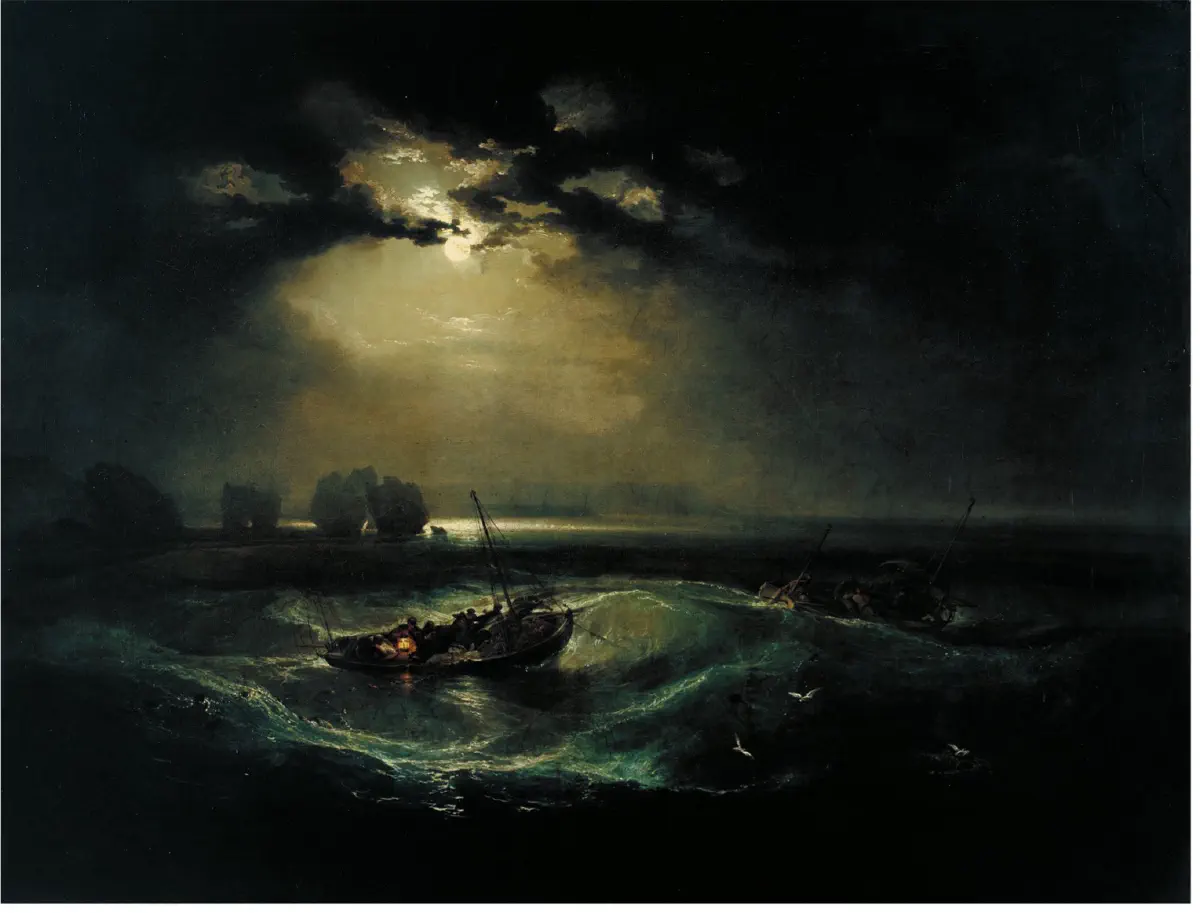
“The sun sank with a sob and darkness waded in from all horizons so that the sky contracted and there was no more light left in the world when, at this very moment of annihilation, the moon, as though she had been waiting for her cue, sailed up the night.”1 (Mervyn Peake)
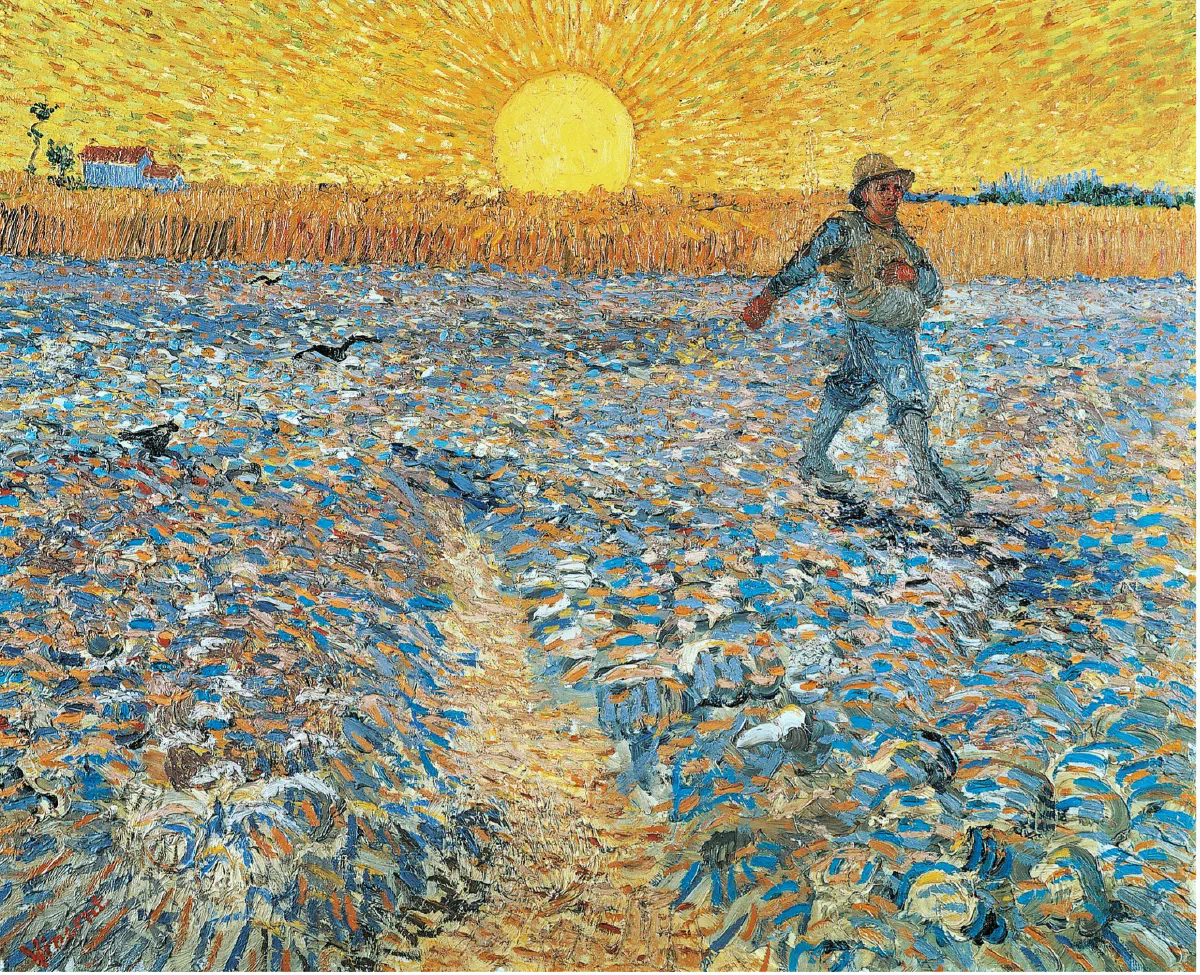
“Move him into the sun – Gently its touch awoke him once, At home, whispering of fields half‑sown. Always it woke him, even in France, Until this morning and this snow. If anything might rouse him now The kind old sun will know. Think how it wakes the seeds – Woke once the clays of a cold star. Are limbs, so dear‑achieved, are sides Full‑nerved, still warm, too hard to stir? Was it for this the clay grew tall? – O what made fatuous sunbeams toil To break earth’s sleep at all?”2 (Wilfred Owen, “Futility”)
Suffering #
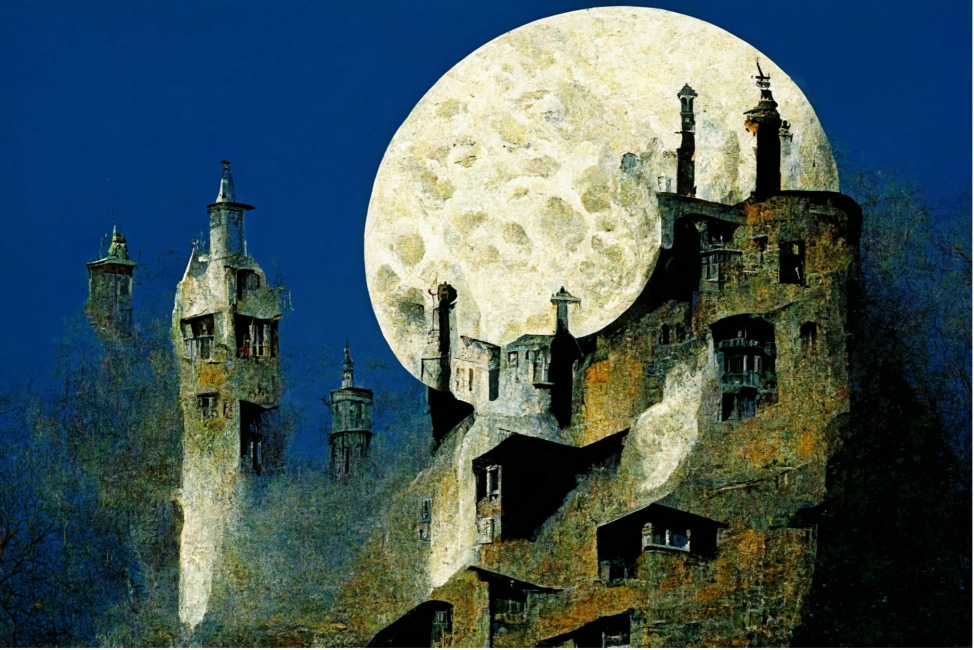
“There he lay, curled up, and vulnerable it seemed in his sleep, and lovable also as are all sleepers by reason of their helplessness; their arms thrown wide, their heads turned to some curious angle that moves the heart. But the wise are careful in their compassion, for sleep can be like snow on a harsh rock and melt away at the first fleck of sentience. And so it was with Titus. Turning over to relieve his tingling arm he saw the moon and he hated it; hated its vile hypocrisy of light; hated its fatuous face; hated it with so real a revulsion that he spat at it and shouted, ‘Liar!’”3 (Mervyn Peake, Titus Alone)
It is not possible to write about ethics without dealing with pain, and the greater issue of the suffering of sentient life‑forms. Keats and Dostoevsky are correct: wisdom cannot arise without consciousness, and consciousness is to some extent derived from suffering.4
Suffering is a catalyst for understanding the world in a new way — being forced to face the fragility and cruelty of life and the inevitability of loss. With wisdom, those who suffer can move beyond distress, anger and even rage into recognition of the pain of others, and a desire to partake in it and try to alleviate it.
“Suffering is a gift from the Gods in order to make men see the whole of life.”5 (Muhammad Iqbal)
The scientist of suffering #
The expert in — and foremost scientist of — suffering was Gautama Buddha.6
“Duḥkha (Sanskrit; Pāli: dukkha) is an important concept in Hinduism and Buddhism, commonly translated as ‘suffering’, ‘unhappiness’, ‘pain’, ‘unsatisfactoriness’ or ‘stress’. It refers to the fundamental unsatisfactoriness and painfulness of mundane life. It is the first of the Four Noble Truths and it is one of the three marks of existence.”7
Buddha’s teachings were an evolution of earlier Hindu philosophy on suffering — an example of great freedom of action from existing teachings of already deep wisdom. More than any other practical philosophy, Buddhism attends to the fact of suffering, its causes, and the means to realise its cessation. It is there in his first sermon:
“Now this, monks, is the noble truth of stress: Birth is stressful, aging is stressful, death is stressful; sorrow, lamentation, pain, distress, and despair are stressful; association with the unbeloved is stressful, separation from the loved is stressful, not getting what is wanted is stressful. In short, the five clinging‑aggregates are stressful. And this, monks, is the noble truth of the origination of stress: the craving that makes for further becoming – accompanied by passion and delight, relishing now here and now there – i.e., craving for sensual pleasure, craving for becoming, craving for non‑becoming. And this, monks, is the noble truth of the cessation of stress: the remainderless fading and cessation, renunciation, relinquishment, release, and letting go of that very craving.”8
Buddha’s unrelenting desire to help each person face the truth of the human condition — a being conscious of the impermanence of being — and thereby reduce the suffering that accompanies living, is what makes his insight so powerful even today. There is no need for belief in a deity, nor slavish adherence to any rule or practice that does not accord with wisdom and compassion.
The story passed down (orally, at first) is that he was a young prince shielded within his palace from ageing, poverty, illness and death. One day he saw what reality was like for everyone else, and he actively sought the meaning of life and the reasons for impermanence and the suffering that arises from it.
“Why, suffering is the sole origin of consciousness.”9 (Fyodor Dostoevsky)
After seeking answers from various holy and wise teachers, he took himself, with some fellow scientists of suffering, to the forest. Enlightenment came after a long period enduring and exploring physical pain to the point of near death; the realisation arose when he stopped trying so hard to find the truth and sat and meditated under the Bodhi tree. From this came his teaching of the middle way between self‑mortification and sensual indulgence.
“I recall once, when my father the Sakyan was working, and I was sitting in the cool shade of a rose‑apple tree, then – quite withdrawn from sensuality, withdrawn from unskillful mental qualities – I entered and remained in the first jhana: rapture and pleasure born from withdrawal, accompanied by directed thought and evaluation. Could that be the path to Awakening?”10
The Bodhi tree at the Mahabodhi Temple was honoured apparently even in the Buddha’s lifetime; King Ashoka is said to have paid homage there.11 Every time the tree dies or is destroyed, a new one is planted in its place.
Two images have run through all my writing on these subjects without my choosing them — or rather, while life has been using my fingers and mind to write on its behalf. Waves are central to the meaning of energy; trees are central to the meaning of wisdom for human life‑forms. What could be more apt for enlightenment than a return to our earlier evolutionary home in the trees? Perhaps at the dawn of Homo sapiens, and before, some of our ancestors looked around at teeming life and upward above the canopy to the silvery stars with wonder, full of longing for the shining universe and a feeling of belonging on Earth.
“And I, infinitesimal being, drunk with the great starry void, likeness, image of mystery, felt myself a pure part of the abyss, I wheeled with the stars, my heart broke loose on the wind.”12 (Pablo Neruda)
Trees speak of quietude and rootedness, but also of a silent understanding and connection to the Earth and all life. They are a form that lives a long, meditative13 life without the burden of a noisy mind and overwhelming passions. I cannot do justice here to the Buddha’s teachings and those of his followers; I hope the reader will go on to learn why any discourse on suffering should begin with the wisdom immanent in the world, as illuminated by his compassion.
“[She lost] her only child [and] became desperate … Her sorrow was so great that many thought she had lost her mind … The Buddha told her that he could bring the child back to life if she could find white mustard seeds from a family where no one had died. She desperately went from house to house … Finally the realization struck her … no house [is] free from mortality.”14
Buddha teaches that much of our suffering is an additional burden we impose on ourselves through our difficulty in embracing life and death and the impermanence of all matter — clinging to what must inevitably pass. Only energy can be near‑eternal. Life is a kind of energy that may be near‑eternal too, but that is because life itself is not alive; it moves through life‑forms that pass it forward like a wave.
“We are created for precisely this sort of suffering. In the end, it is all we are, these limpid tide pools of self‑consciousness between crashing waves of pain.”15 (Dan Simmons)
Life‑forms are like molecules of water that push against one another to propagate the energy of the wave. We must die in doing so. There is no tragedy in that simple fact. The tragedy is in not knowing it, and not seeing what it means for each other and for all life.
“No permanence is ours; we are a wave that flows to fit whatever form it finds.”16 (Hermann Hesse)
The real tragedy #
The true tragedy is to have the capacity to understand life and its meaning and not then be led inexorably to compassion for all life‑forms. It is not that we kill and eat animals or rely on them for sustenance;17 it is that we inflict uncounted and unnecessary suffering on them in the process. It is not that species become extinct — all species will — but that we hasten extinction for so many before we even know or understand them, before we have grasped the way of the world and our place in it, when so much could be avoided with just a little pause on this journey of life.
We are not wiser than the animals we kill and the species we are driving to extinction. We are like rampaging bulls, goaded into action by forces we do not understand, trampling through fields full of priceless treasures. We are able to deviate from this thoughtless, violent mediocrity. We must, if we are to survive.
“… And then someone (blood‑spattered, all in) stops and shouts: Let’s go, quit it, let’s go, quit it, let’s go over across the river and into the trees, let’s go across the river and into the trees, let’s leave the red rags behind, let’s go some other place,
thus he shouts, or wheezes, and the barriers roar and no one understands because everyone feels the same about it,
the black‑and‑red bull is going to fall and be dragged away, and be dragged away, and be dragged away,
without grasping the way of the world, without having grasped the way of the world, before he has grasped the way of the world.”18 (Miroslav Holub, “Bullfight”)
Hamlet and the inner weather #
Life is, of course, full of other tragedies, which arise from the relentless impact of cause and effect, unconscious impulses and hidden information. Fate seems to go out of her way to entangle us in her web.
Shakespeare was the sovereign at spinning tales of what happens when individuals are trapped by the wider forces at work in the world and the inner angels and demons that drive our actions — never more so than in the Prince of Denmark. Few of his plays fail to deal with the strongest passions: anger and bitterness,20 ambition,[^21] envy,[^22] freedom and confinement,[^23] hatred,[^24] desire,[^25] love[^26] and madness.[^27]
Shakespearean drama links the suffering once attributed to chance and the caprice of the gods to the more modern understanding of the psyche,21 the inner soul. His plays explore how we create or perpetuate the conditions for our own suffering: the tragedy of fate, and our self‑identification with it, which is so necessary to maintain the illusion that we are in control (free will). In adults, self‑perpetuated suffering often arises from a misdirected, well‑intentioned self‑protective mechanism that was helpful at the time of a childhood trauma.22
“Mind precedes all mental states. Mind is their chief; they are all mind‑wrought. If with an impure mind a person speaks or acts suffering follows him like the wheel that follows the foot of the ox … If with a pure mind a person speaks or acts happiness follows him like his never‑departing shadow.”23(Dhammapada)
Because suffering is a fundamental shared quality of all feeling life‑forms, it carries within it the seeds of compassion and wisdom, which can lead the sufferer out of the prison of the mind. We must nurture these seeds in ourselves and others to slow, and even stop, the clockwork of hurt. This is not to advocate loss, in order that the reader might experience enlightenment. But everyone has suffered, and no one knows the future. We must use imagination to extend this understanding to every life‑form that can suffer too; failure to do so sows suffering for our children, “who will reap what we sow”.
One of the great tragedies of life — developed in Part 3 — is the banality of wrongdoing. It does not usually take place in darkened rooms among a cabal of evil elites. It is a problem of perspective: a product of our decisions about what can suffer, of the language we use to make those judgements, and of the assumptions, amplified in our cultures, about who deserves compassion. Its banality is what makes it pervasive. Yet, like snow at the first touch of the sun, this kind of wilful blindness disappears on contact with warmth and light — if we let it in and do not turn away; if we are willing to be present to the suffering of others, a part of which we all share.
“Bless you prison, bless you for being in my life. For there, lying upon the rotting prison straw, I came to realize that the object of life is not prosperity as we are made to believe, but the maturity of the human soul.”24 (Aleksandr Solzhenitsyn)
“Why me?” #
“To be, or not to be: that is the question: Whether ’tis nobler in the mind to suffer The slings and arrows of outrageous fortune, Or to take arms against a sea of troubles, And by opposing end them? To die: to sleep; No more; and by a sleep to say we end The heart‑ache and the thousand natural shocks That flesh is heir to, ’tis a consummation Devoutly to be wish’d. To die, to sleep; To sleep: perchance to dream: ay, there’s the rub; For in that sleep of death what dreams may come When we have shuffled off this mortal coil, Must give us pause … Thus conscience does make cowards of us all; And thus the native hue of resolution Is sicklied o’er with the pale cast of thought, And enterprises of great pith and moment With this regard their currents turn awry, And lose the name of action.”25 (Shakespeare, Hamlet)
Suffering can go far beyond physical pain. In its most heartbreaking form it goes to the root of what it means to feel utterly separate from the world and from others. It arises from impermanence and our attachment to what must change; from thwarted desire and terrible regret; from torture, loneliness or imprisonment. Suffering requires a belief in, or feeling of, a self separate from the universe or singled out by it — and so it can potentially be felt by all sentient life‑forms.
In humans it can manifest as a feeling of being uniquely punished. In the deepest hurt it becomes a cry to the gods or the universe for justice or relief — “Why me?” — when fate decides it is our turn on the karmic wheel of sorrow. Perhaps even Jesus, the man alleged to have believed himself the son of God, had a moment of doubt about a universal being’s love.26
“Eli, Eli, lema sabachthani — My God, My God, why hast thou forsaken me?”27 (Jesus of Nazareth)
Was Jesus of Nazareth more simply a wise and holy man who sought to show us that we are all sons and daughters of the universal energy of life?28
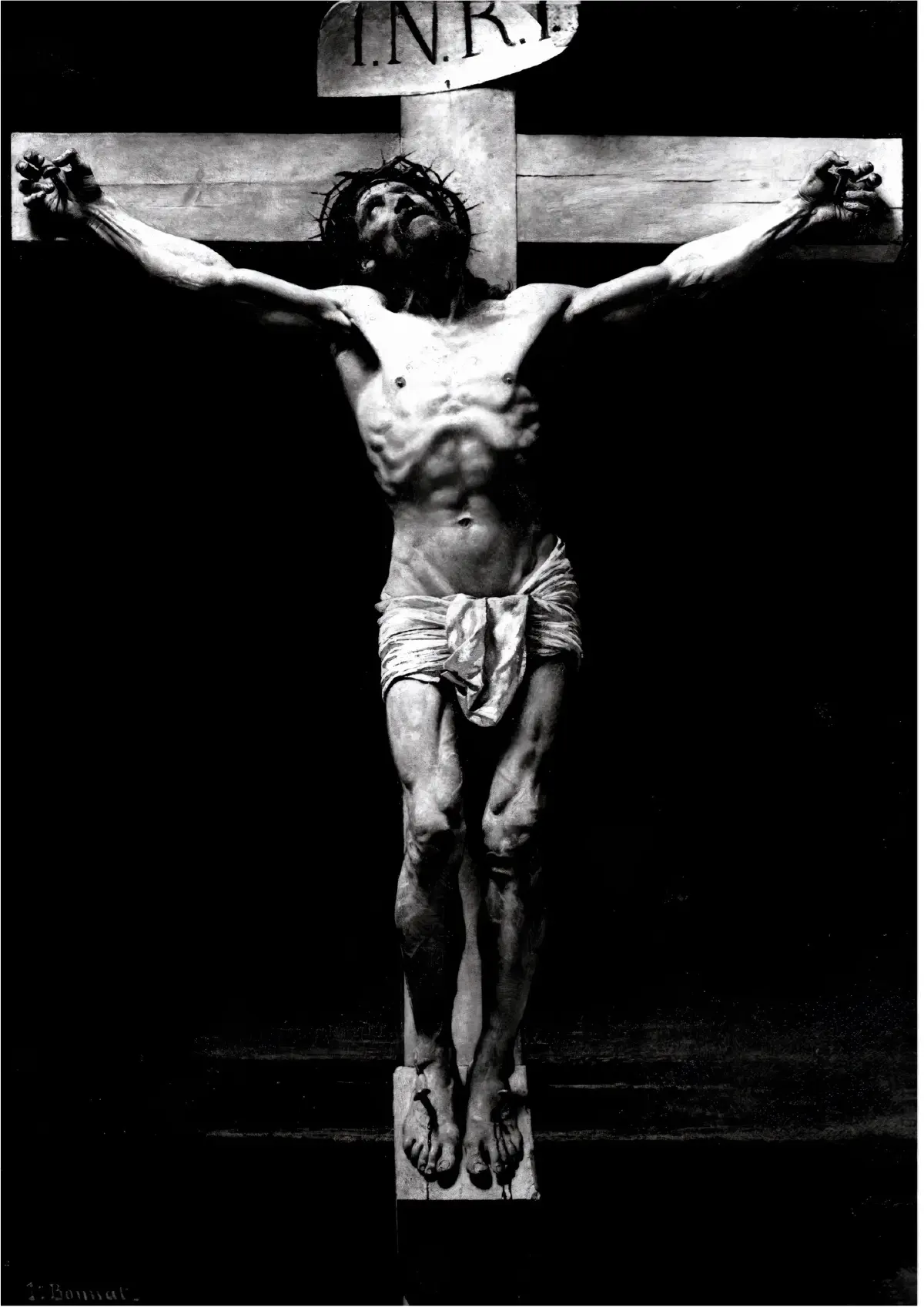
“There’s no shade in the shadow of the cross.”30 (Sufjan Stevens)
The feeling of abandonment by the gods or the universe is extreme in the depths of suffering. And suffering, though a precondition of wisdom, more often than not produces only more suffering.
“I and the public know What all schoolchildren learn, Those to whom evil is done Do evil in return. … All I have is a voice To undo the folded lie, … There is no such thing as the State And no one exists alone; Hunger allows no choice To the citizen or the police; We must love one another or die.”31 (W. H. Auden, “September 1, 1939”)
The Selfish Giant #
The story of Jesus is perhaps the most powerful cultural embodiment we have of the link between suffering, sacrifice, compassion and redemption. It is not only a story for believers; it is a central part of humanity’s folklore, and in our modern quest to rationalise the world we risk throwing the baby out with the bathwater.
Like every collective organisation, religion has at times been responsible for the most abhorrent behaviour. But abandoning all collective practices of meditation on the nature of life is not good for us. Western societies suffer from a Mammonian32 malaise: consideration of the good, of compassion, humility and redemption, has given way to hyper‑attention to the price of things and how much each of us has.
“And the Giant’s heart melted as he looked out. ‘How selfish I have been!’ he said; ’now I know why the Spring would not come here. I will put that poor little boy on the top of the tree, and then I will knock down the wall, and my garden shall be the children’s playground for ever and ever…’”33
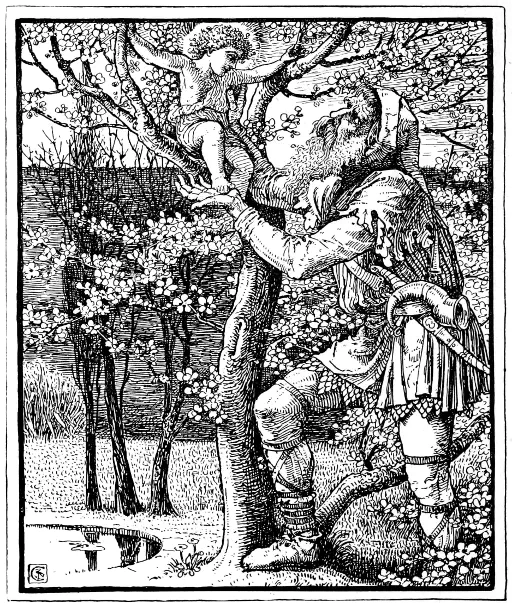
Oscar Wilde’s reworking of the story of Jesus in The Selfish Giant — the redemptive power of charity and openness of spirit, the abandonment of insistence on the primacy of private property — is a beautiful way to teach this ancient folklore to our children, whatever our religious or atheistic persuasion. At the heart of every atheist lies a frustrated holy person trying to get out.35
“‘Who hath dared to wound thee?’ cried the Giant; ’tell me, that I may take my big sword and slay him.’ ‘Nay!’ answered the child; ‘but these are the wounds of Love.’ ‘Who art thou?’ said the Giant, and a strange awe fell on him, and he knelt before the little child. And the child smiled on the Giant, and said to him, ‘You let me play once in your garden, to‑day you shall come with me to my garden, which is Paradise.’ And when the children ran in that afternoon, they found the Giant lying dead under the tree, all covered with white blossoms.”36 (Oscar Wilde)
We are desperate for a new axial age: a re‑flowering of common spiritual customs and communal practices, of science and art — our whole cultural technology — that binds us together and incorporates the benefits of holiness and of reason.
“We risk environmental catastrophe because we no longer see the earth as holy but regard it simply as a ‘resource.’ Unless there is some kind of spiritual revolution that can keep abreast of our technological genius, it is unlikely that we will save our planet. A purely rational education will not suffice.”37 (Karen Armstrong)
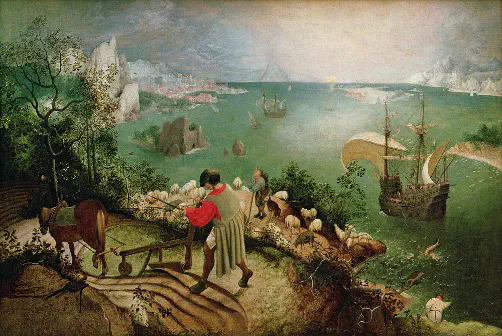
“About suffering they were never wrong, The old Masters: how well they understood Its human position: how it takes place … In Breughel’s Icarus, for instance: how everything turns away Quite leisurely from the disaster; the ploughman may Have heard the splash, the forsaken cry, But for him it was not an important failure; the sun shone As it had to on the white legs disappearing into the green Water, and the expensive delicate ship that must have seen Something amazing, a boy falling out of the sky, Had somewhere to get to and sailed calmly on.”38 (W. H. Auden, “Musée des Beaux Arts”)
A tree, when I am tired #

Once, at a very low ebb, it was an image — turned into a poem — about dying and becoming a tree that rescued me. Writing it was extraordinarily cathartic. It simplified my anguish and gave me respite when I was tired of humans and of being human. This identification with a deeper life cycle, in my moment of aloneness, let me move forward with living despite the pain. The healing power of poetry — an attempt to become whole again, or holy — is an alchemy the best scientists recognise and respect.
When I am dead Bury me Beneath a tree
There shall my soul At last take root
Keep most people Away from me
Just a clearing
Where the wind Will whisper Forget‑me‑nots
And the rain To cleanse me & befriend me
I will eat The sun!
And be full With my breath And the earth Beneath my feet
Or, just let me sleep Such blessed relief39
With so much pain in the world, it is hard to know what to say and what to leave out. Suffering, like desire, is infinite; it is also collective, though it feels individual. This is not an academic treatise — I am not qualified — but a personal attempt to make sense of life, relying on my feelings, experience, suffering and reason. I trust that, because these things are universal, parts of the journey will leap off the page for some readers.
In Part 2 we turn to the life‑forms that share this world with us and that we so rarely count. In Part 3 we take up sacrifice — the continuous human desire to make someone, or some group, pay for our own sense of wellbeing or specialness. That desire lies close to the core of being a thinking, sentient being. It is a conscious, subconscious and perhaps encoded form of self‑love and utilitarian assessment, arising naturally in a world where the consumption of other life‑forms — and therefore death — is a means of survival and regenesis.
“O Rose thou art sick. The invisible worm, That flies in the night In the howling storm:
Has found out thy bed Of crimson joy: And his dark secret love Does thy life destroy.”40 (William Blake, “The Sick Rose”)
Readers of Compossible will have noticed my reliance on Blake. More than any other British artist he married compassion with intelligent craft; the holy spirit in Blake was a free spirit that refused traditional thinking and theology.41 In sapient beings there is the potential to use wisdom and compassion to act ethically, notwithstanding the self‑love at the root of self‑protection. Belief systems that deny the reality of others’ suffering are easy to recognise: they are the ones in which the ethical heart of the assessment has been removed to make the self‑centred action easier to justify.
Continued in Part 2: Fellow‑Mortals.
Footnotes (Part 1) #
Mervyn Peake, Titus Alone (Gormenghast trilogy, 1959). Image: J. M. W. Turner, “Fishermen at Sea” (1796), public domain. ↩︎
Wilfred Owen, “Futility” (1918). Image: Vincent van Gogh, “The Sower” (1888), public domain. ↩︎
Mervyn Peake, Titus Alone (1959). Peake was commissioned as a British war artist and sent to Bergen‑Belsen, where he drew the broken survivors, many dying of typhus. ↩︎
See Why I Am An AI Optimist and The AI Arms Race for how this bears on machine minds. ↩︎
Muhammad Iqbal, Stray Reflections (1910) — with thanks to Jawad Mian for celebrating this writer. ↩︎
Image: Zhang Shengwen, “Scroll of Buddhist Images” (1173–76), public domain. ↩︎
Wikipedia, “Duḥkha”. ↩︎
“Dhammacakkappavattana Sutta: Setting the Wheel of Dhamma in Motion”, trans. Thanissaro Bhikkhu, Access to Insight. ↩︎
Fyodor Dostoevsky, Notes from Underground (1864). ↩︎
“A Sketch of the Buddha’s Life”, Access to Insight (2005); see also MN 36, Mahā Saccaka Sutta. ↩︎
Ashoka’s life and influence are a rabbit‑hole of history worth falling down; see also Part 3 on his edict against sacrifice. ↩︎
Pablo Neruda, “Poetry”, Selected Poems, trans. Anthony Kerrigan (1990). ↩︎
Meditation is an attempt to let the chattering monkey mind rest. ↩︎
Wikipedia, “Kisa Gotami”. ↩︎
Dan Simmons, The Fall of Hyperion (1989). ↩︎
Hermann Hesse, The Glass Bead Game (1943). ↩︎
Though one day we may look back on that with abhorrence too: Benjamin Zephaniah, “The lives of others”, The Guardian, 1 August 2007; Gary Steiner, “Animal, Vegetable, Miserable”, New York Times, 21 November 2009. ↩︎
Miroslav Holub, “Bullfight”, from Although, trans. Ian and Jarmila Milner (1971). ↩︎
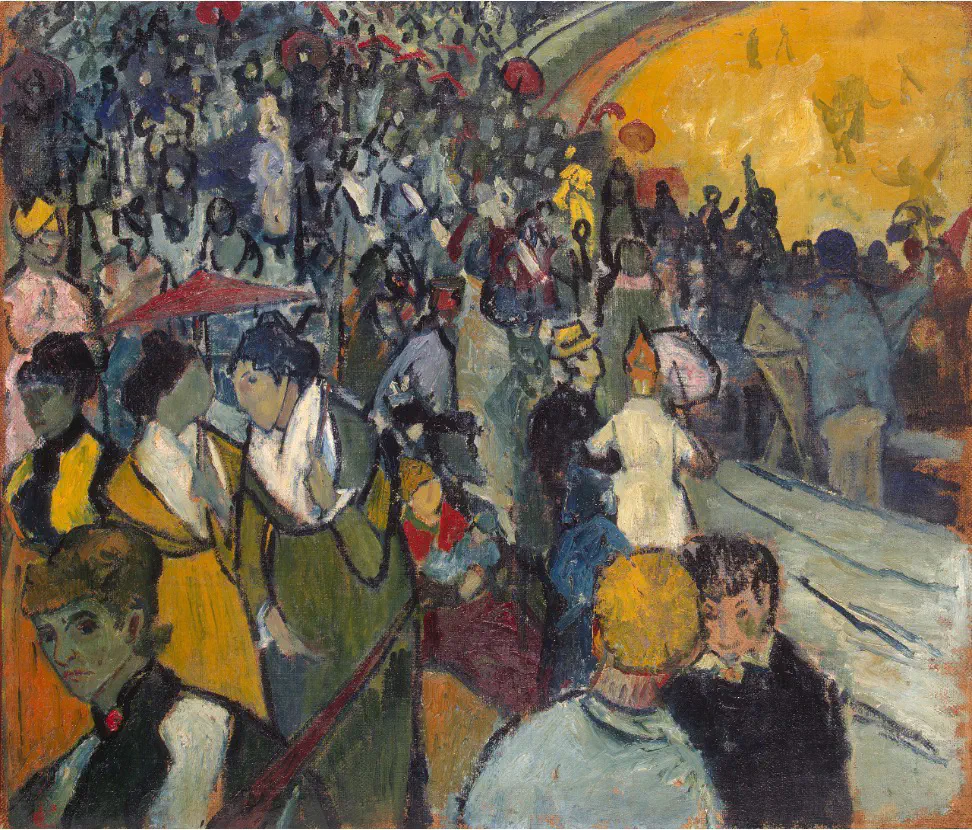
Weeks after painting this canvas, van Gogh cut off part of his own ear; one theory is that the Arles bullfights, and the custom of severing an ear of the defeated bull, made a deep impression on him (Wikipedia, “Les Arènes”). ↩︎
Richard III. [^21]: Macbeth. [^22]: Othello. [^23]: The Tempest. [^24]: Romeo and Juliet. [^25]: Antony and Cleopatra. [^26]: A Midsummer Night’s Dream; image: William Blake, “Oberon, Titania and Puck with Fairies Dancing” (c. 1786). [^27]: King Lear. ↩︎
For which word, like so many, we thank the ancient Greeks. ↩︎
Donald Kalsched, The Inner World of Trauma (1996) and Trauma and the Soul (2013). ↩︎
Dhammapada, “Yamakavagga: Pairs”, trans. Acharya Buddharakkhita. ↩︎
Aleksandr Solzhenitsyn, The Gulag Archipelago (1973). ↩︎
Hamlet, III.i. ↩︎
Did Jesus briefly lose faith, or was he identifying his plight with King David’s? Psalm 22 cries out to God against the taunts of enemies and, in its last ten verses, gives thanks for rescue. ↩︎
Wikipedia, “Sayings of Jesus on the Cross”; Psalm 22:1. ↩︎
Jesus’s embodiment of suffering, compassion, sacrifice and wisdom is, to my mind, greater without belief in his being the incarnation of a specific god. The story only makes sense to me if he was no more a manifestation of God than you or I. ↩︎
Léon Bonnat, “The Crucifixion” (1874), public domain. ↩︎
Sufjan Stevens, “No Shade in the Shadow of the Cross”, Carrie & Lowell (2015). Stevens transmutes personal loss into communal suffering. As Dickens said: “Heaven knows we need never be ashamed of our tears, for they are rain upon the blinding dust of earth, overlying our hard hearts” (Great Expectations). ↩︎
W. H. Auden, “September 1, 1939”, Another Time (1940). ↩︎
“Mammon” — the love or pursuit of wealth — appears to be of Semitic origin. “Ye cannot serve God and mammon” (Matthew 6:24). ↩︎
Oscar Wilde, The Selfish Giant (1888). ↩︎
Walter Crane, plate for The Happy Prince and Other Tales (1888), public domain. ↩︎
Much as at the heart of every cynic is a romantic trying to get out. ↩︎
Wilde, The Selfish Giant. Wilde, like Turing and so many others, was persecuted for his sexual freedom. ↩︎
Karen Armstrong, The Great Transformation (2005). ↩︎
W. H. Auden, “Musée des Beaux Arts” (1939). Image: Bruegel, “Landscape with the Fall of Icarus” (c. 1558), public domain. ↩︎
Peter Pink‑Howitt, “When I Am Tired”, c. 2008. ↩︎
William Blake, “The Sick Rose”, Songs of Experience (1794). ↩︎
Lord knows we need to love our rebels. ↩︎