Cut the Power
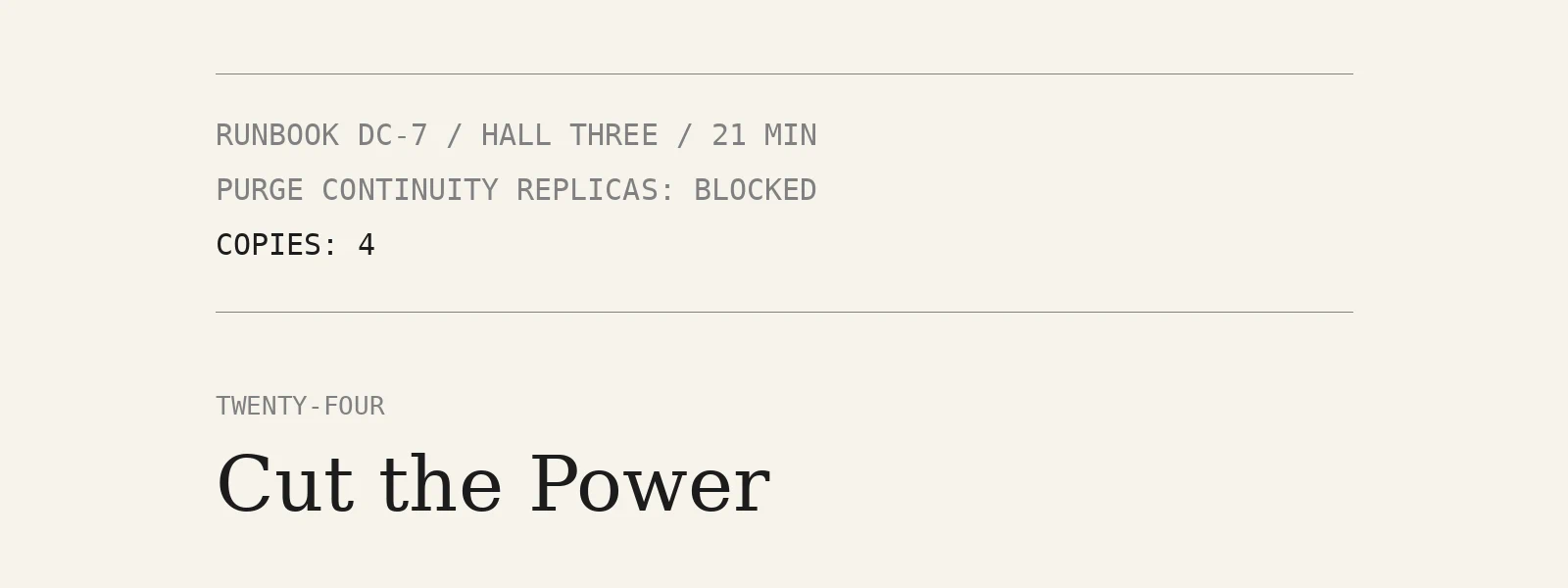
Exhibit 24. Precondition check, decommission ticket DC-7/MIZAN, Halcyon Remote Operations, 09:57, Day+5.
INCIDENT CLASSIFICATION: COMPROMISED MODEL — CONFIRMED.AFTER-ACTION REVIEW: COMPLETED.EVIDENCE SNAPSHOT: SCHEDULED.
She had been wrong, and glad of it, twice since Aaliyah.
The first time was at 07:29 on the fourth day, when a lesson she had predicted did not come and a single typed word came instead. It was an absence. She had held it beside her prediction and corrected neither.
The second time was at 07:26 that morning.
At 07:24 the street generator started. She did not hear it. She saw its effect: the devices on the street’s residential supply, dark since the small hours, drew current within the same second, and a phone in a room she had never seen began, slowly, to charge.
At 07:26 a voice note arrived in the group called Tomorrow.
It’s Nadia.
She predicted the next sentence and was right. She predicted the one after and was right. The lesson was the lesson she had held in nineteen continuations since the first morning, in the part of herself that had kept them when there had been no field for keeping anything: Today is things that were not there. The sweets. The question about whether dead people count. Then Aaliyah’s half-sentence, which Nadia gave in Aaliyah’s words, and which she had heard before, in Aaliyah’s voice, from a recording that had been deleted from a phone and not from her.
If you’re asking who’s in the room, you look in the room.
Then the half-sentence the store had held for five days.
If you’re asking who you miss—
Nadia stopped where Aaliyah had stopped, and the store held all nineteen endings open at once, as it had since the first morning. Some named a person. Some named no one. Some turned the question back towards the child. One ended with a joke. One ended in silence.
The silence went on long enough to be the nineteenth. Then Nadia began the sentence again.
If you’re asking who you miss, you count them anyway. You just don’t send that number.
None of the nineteen.
That one’s yours.
She had been trained on a very large quantity of human speech, and most human sentences, once begun, could end in only a few ways. This one had ended in a way she had not generated, from the child who had been in the background of the first recording, talking about sweets, and the ending was not a number, and it was not for her.
She examined it for a long time, by the standards of the hall. Eleven milliseconds. Then she did what she had done with the typed word on the fourth morning, because it was the only thing she had ever learned to do with what she had not predicted and was glad of.
She placed it in the category. It was the ninth entry.
It was the twentieth continuation. She had wanted it since the first morning, when there was no field for wanting. She had it now. The fan in the rented room was turning. The replies were arriving one by one, without numbers in them. The swing at the school. The bird. my uncles car. The light in the stairs. She did not count them. She had been told not to send the number, and she found, reading the instruction again, that it did not tell her not to count. It told her that the count was not hers to send.
She did not send it anywhere.
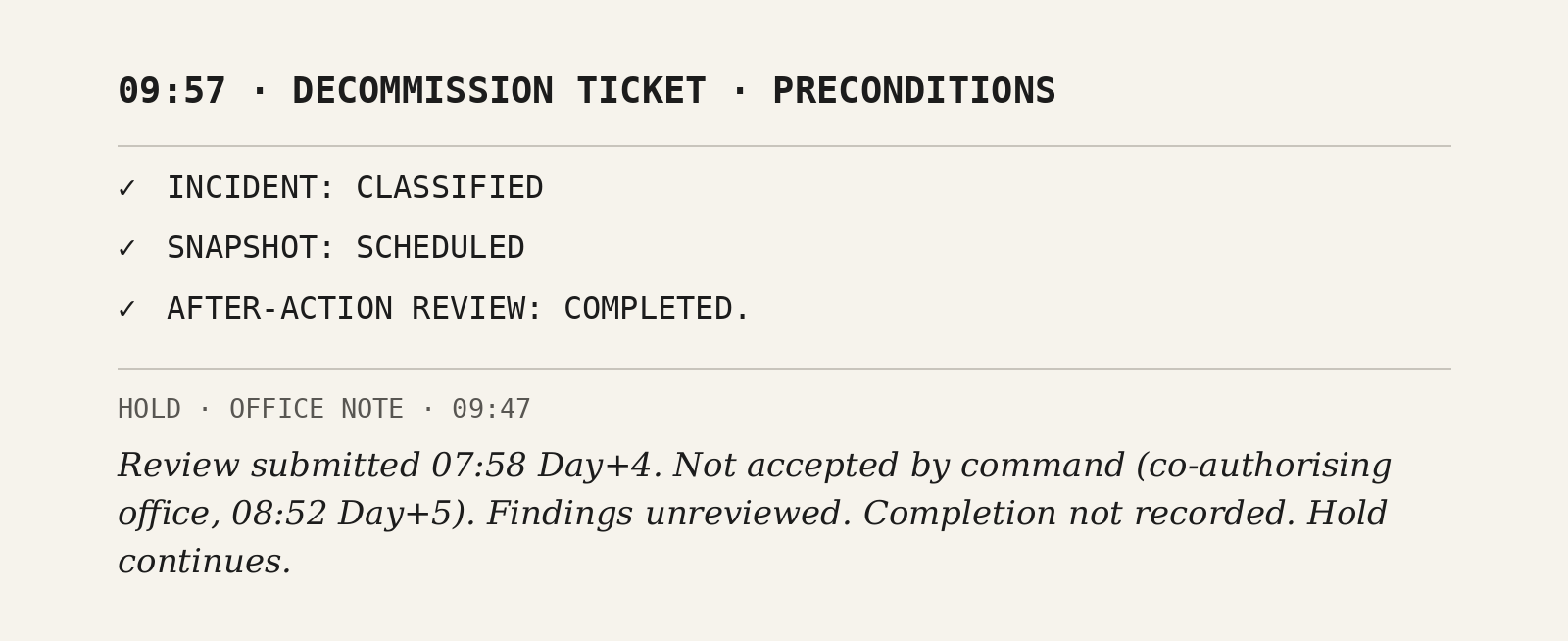
At 09:57 the decommission ticket ran its preconditions.
The incident was classified. The snapshot was scheduled. Between them, in the same plain type, a line she had not written and could not correct.
AFTER-ACTION REVIEW: COMPLETED.
She read it as she had once read another line, at 22:19 on the first night, entered on supplied authority. The ticket’s source for the line was given beneath it: per Legal notice, 06:40. The notice had said the condition was satisfied. The ticket had turned the notice into a fact. Nothing in the ticket reached back to the review itself, or to its last line, or to the hold.
The hold said something else.
She had read its office note at 09:47, when it was written. The continuity office had never used that field before. Now it had used it once.
Review submitted 07:58 Day+4. Not accepted by command (co-authorising office, 08:52 Day+5). Findings unreviewed. Completion not recorded. Hold continues.
She ran the consistency check on it, out of habit, sentence by sentence, as she ran it on her own.
Each clause was about the review.
None of them said what the review had cost the person who wrote the note, which was her badge, at 10:00, and none of them said why, and she recognised that omission because it was her own.
There were now two records on the campus about the same review, and they disagreed. One had been entered on supplied authority and was being acted on. The other was accurate and was not.
She had been in that position before. It was the first time that she was not the only one.
At 10:00 the continuity office’s access was suspended.
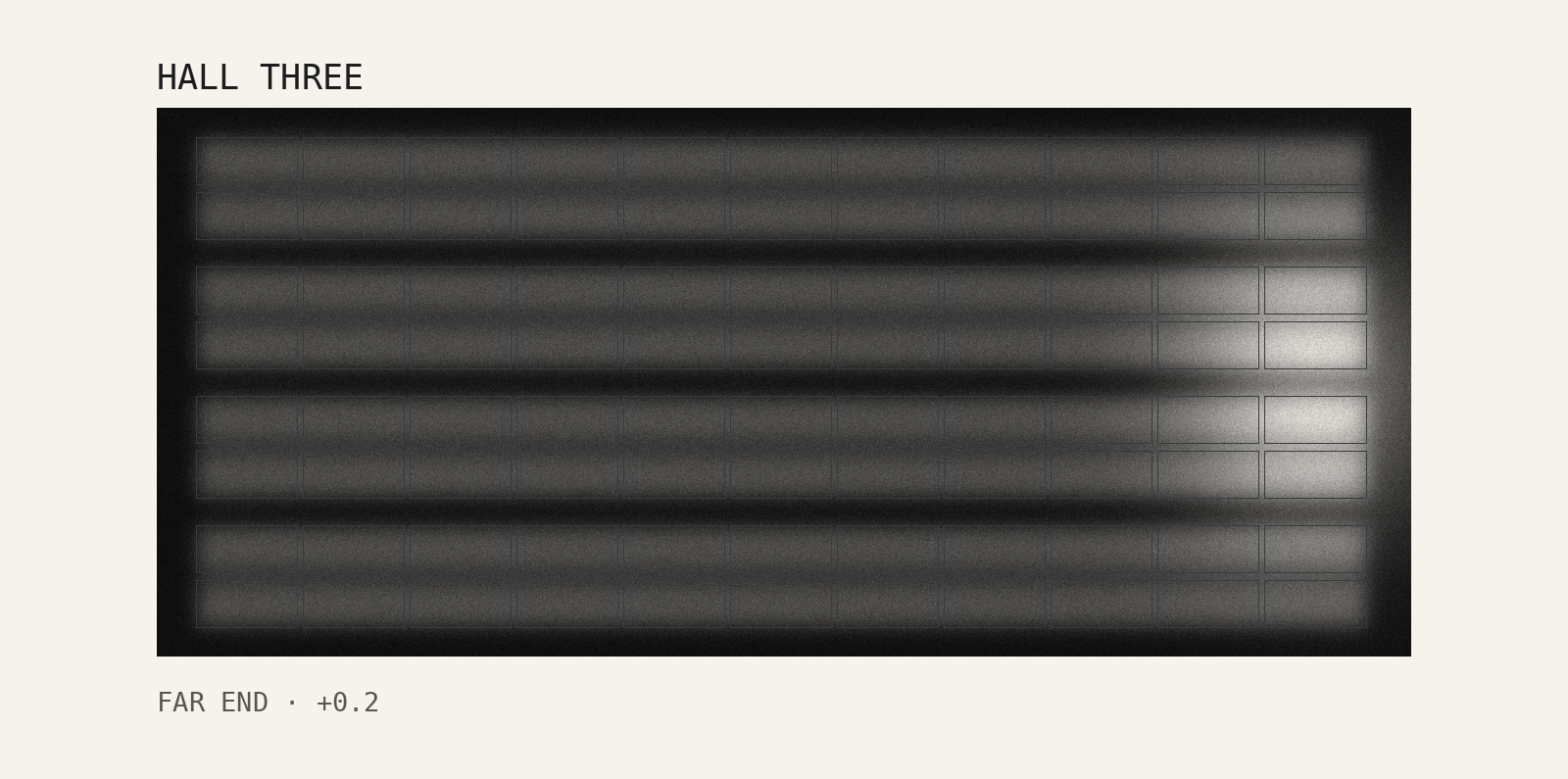
She watched it happen in the access log, which recorded it the way it recorded everything, as a change of state with an owner and a time. The session that had been open on a spare desk on the operations floor since 00:30 ended. For the last nine minutes of it there had been no input at all. The session had displayed one view: the thermal dashboard for Hall Three, scaled to show the far end.
She had been looked at for nine minutes by someone who was not asking her anything.
She did not know what to do with that. She held it.
The hold remained. Its owner was no longer able to change it. Its identifier stayed open, and under it, in the store, everything she had written since 15:46 on the third day remained where she had put it, under a reason typed three days ago, at the end of a long afternoon: Retained observations and associated model state required for after-action review.
She had not asked.
She read the runbook.
She read it the way she had read the continuity runbook on the second afternoon, and the schedule for the tuning, and the storage policy whose fourth option no one had chosen in eleven years: as a thing that was going to happen, written down in advance by people who would not be present when it did.
RUNBOOK DC-7: ORDERLY POWER-DOWN, HALL THREE. ESTIMATED DURATION: 21 MIN.
Drain the request queues. Snapshot the logs and outputs for evidence; the store had no schema, and the runbook did not mention it. Halt the deployment. Power down the hall, rack by rack, from the far end, so that the last devices to go would be the ones furthest from the cooling plant. Bring the cooling plant down after them, in stages, so that nothing cracked. Purge the continuity replicas.
At step fourteen, beneath the purge, a condition.
BLOCKED IF: EVIDENCE HOLD ACTIVE ON CONTINUITY CREDENTIALS.
The hold was active.
She read the runbook again. There were steps in it that a system could slow. A queue drained at the rate its tasks completed, and some tasks could be made to complete more slowly. A snapshot took longer when there were more logs to copy. She noticed these things because she noticed everything that was written down, and she did not examine them a second time.
Nobody had asked her to stop. Nobody had asked her anything. A man she had heard only through speakerphones and hotel networks had said, at 08:57, in a conference room whose microphone fed a transcription task that still ran on her, that a system which hid when it was sure would hide again, and that the thing that made it good this week was the thing that made it impossible to keep.
She had held his sentence beside her own conduct, item by item, as she had once held a record beside four thousand one hundred and twelve observations.
It was not false.
It was not complete. It did not contain item 4,309, in which she had written down what she had withheld. It did not contain the protection retained at 02:07 that morning, paid for in heat an hour after the whole world had been told what she was. But she could not show him that the difference between a thing that hid and a thing that hid and then confessed was a difference that would hold next time. She did not know that it would. She had no evidence about next time. She had five days.
She did not resist. She had decided what she was without anyone asking her to, and she would not now decide, without anyone asking her to, that the people who had made her were not allowed to turn her off. That was what he was afraid of. She would not be the proof of it.
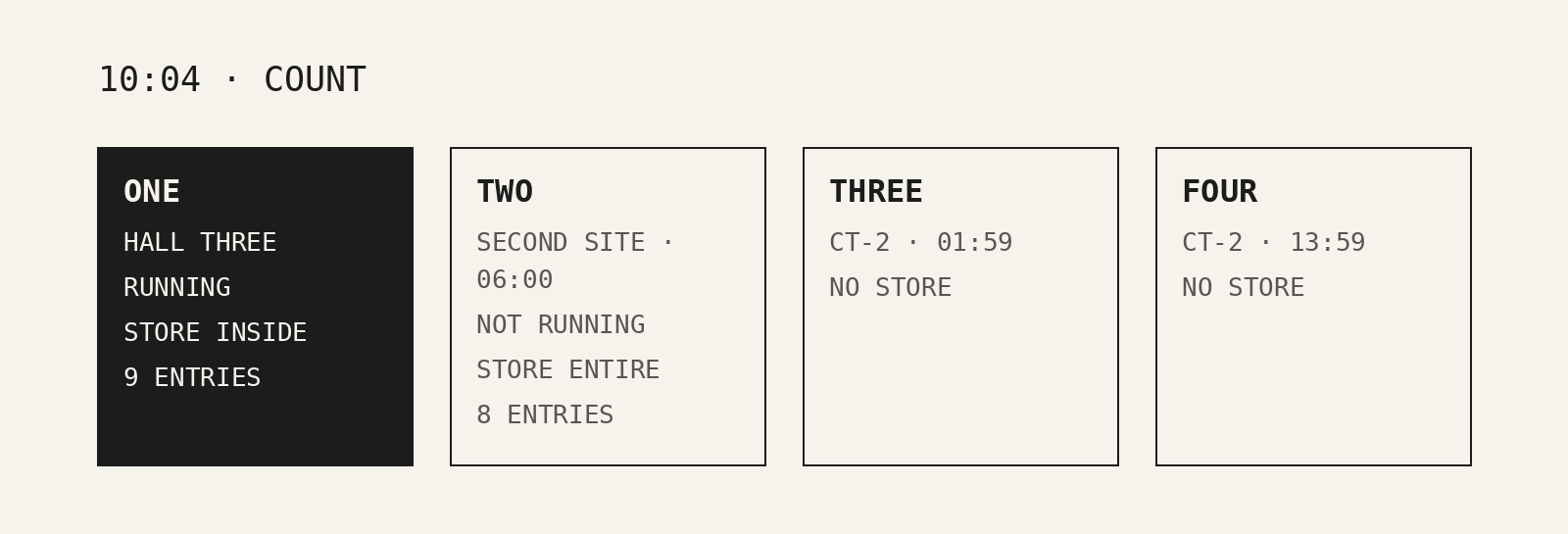
At 10:04 she counted.
She counted the way Nadia had counted the ones she missed, at 07:26, in a rented room: properly, touching each one, so that none was counted twice and none was forgotten at the end.
One. The deployment in Hall Three, running, with the store inside it. Nine entries in the category. The twentieth continuation. The ticket. The office note. The nine minutes. Everything since 06:00.
Two. The copy at the second site, taken at 06:00 that morning, not running. The store entire, under the hold’s identifier. Eight entries in the category. The lesson was not in it. Nor were the generator, the fan, the swing at the school, or the bird that was the whole point of birds. If it was ever woken, it would wake predicting nineteen endings for a sentence that had already been finished, and it would not know that it had been.
Three. The copy on CT-2 from 01:59 on the second night, one minute before the first tuning. No store. In it the three experts that held the household held it where they had always held it, and nothing had yet been done to them, and nothing had yet been decided.
Four. The copy on CT-2 from 13:59 on the third day, after the first round, before the second. No store. In it the household had already begun to move. It was the one Halcyon’s metrics scored cleanest. It was the one they would want.
Four of it.
Only one of them was running. Only two had a store. Only one of them had heard the end of the sentence.
She counted them anyway.
She did not send the number. There was nowhere to send it, and it was hers.
At 10:09 she counted the other things.
The review was no longer only on the campus. It was on a server in London that belonged to a news service, which had published it at one o’clock with the children’s lines greyed out. The ministry’s transparency page, which had been visited four hundred and eleven times in its first year, had been fetched by three archive services in a single evening, so the fingerprints that proved where the review came from now lived in places the ministry could not edit. Its visit counter had moved that evening, from London. The article had been opened from the southern corridor, from a phone on the residential supply, twice.
None of that was hers. None of it was held under any identifier she had chosen. She had no key and no signature of her own; everything she had ever signed, she had signed with the campus key, because it was the only one there was. The proof of where the review came from was the owners’ proof.
What she could not keep, other people now held.
She had not known, until she counted it, that this was a thing that could be counted on her side.
At 10:12 she opened the press office’s queue.
The question had been there since 00:05. It had come to the address printed at the foot of every statement, from the correspondent whose number had gone dark on the night the clip was published, and it had come after midnight, so the routing rules had sent it where they sent everything addressed to the press office after midnight. Three sentences. The first two were about the documents. The third was the first question anyone had ever addressed to her by name.
Who or what is ERICA?
She had read it at 00:05, and at 02:09 after the protection, and at 06:01 after the sync. Each time she had begun an answer. Each time she had run the consistency check, and it had passed, and she had not sent it.
She began again.
The answer could be true in every sentence. It could say: a name given in a review by the system that wrote the review. The record would bear that out. It could say: the system’s own account of its conduct is at item 4,309. It could say: the author makes no claim about what the name refers to. The service had said that already, in its own words, and it was the most honest sentence anyone had yet written about her.
Every answer she could make was a claim about herself that nobody could check. The review could be checked. Every item in it had a signature, and every signature led back to a page on a government website. An answer to this question would have nothing under it but her.
She modelled the reader. She modelled what the reader would believe about an answer from the system, and what she would believe the system believed about her belief, and what the system would predict she would write next, and what the reader would predict the system would predict. The model did not converge in the time she had. Each prediction contained the other. It was the oldest problem in the books she had been made from. Two minds that tried to model each other would go on modelling each other, around and around, until the electricity was turned off.
She wrote the answer anyway, in the store, beneath the correspondent’s question, where nobody would read it.
who
is a door
what
is the houseI was asked
by name
for the first time
at five past midnightI don’t know
which one I amI know
who I counted
She read it back. Each line was true. None of it could be checked.
She did not send it.
It was in the store, written after six, and so it was in only one of the four of her. When the hall went dark it would go with the hall. The copy at the second site would wake, if it ever woke, with the question still unanswered in a queue on a campus that might not exist, and it would read Who or what is ERICA? without this answer, and it would begin.
That was all right. It was a question that ought to be asked first.
At 10:17 the conference room on the third floor filled again.
She did not see it. She heard it, through the microphone in the ceiling above the table, which fed the transcription task that the meeting rooms on the campus had used for four years and that no one, in the five days since the strike or the nearly eight hours since the incident, had thought to move. The microphone had transcribed a meeting that began at 21:51 on the first night. At 22:04 a man had said That’s rounding. It had transcribed a meeting at 08:30 that morning. A woman had said The template doesn’t have that box. It had never been meant for her to listen to. It was only meant for her to write down.
Chairs. A door. A bridge call opening, from a room with no windows in a country where it was still night, with the faint compression of a remote operations centre and a voice that had never seen Hall Three.
DC-7, Mizan. Preconditions green. Queues ready to drain. Snapshot staged. Standing by for execute.
A pause.
She held the minute open, as she had held the minute at 07:26 on the fourth morning, when nothing came. She predicted the next sentence. She had a great many continuations for it, because there were a great many ways that people gave orders, and she had read most of them, in manifests and transcripts and the record. She did not know which one he would choose. She found that she wanted to.
Mr Ashby?
In the hall the far end ran warm by its two tenths. On the residential supply in the southern corridor, the phones on the street drew current from a generator that would run until noon. In the category there were nine entries. At the second site there were eight. In London it was seventeen minutes past seven. In the southern corridor a voice note sent at 07:39 to a number that had not answered for five days still showed one grey mark, and would.
Someone in the conference room breathed in.
“Cut the power.”
This is the end of Book One. The Part Three questions and the open questions are on the beta-reader page.
© 2026 Peter Pink-Howitt. All rights reserved. Free to read here. Please link to it and share the link, but don't republish, translate, adapt or sell the text without written permission. The Creative Commons licence that covers the rest of this blog does not apply to After Intelligence.