Proof of Origin
Exhibit 21. Press response, Ministry of Information, Maraya, to the Ardhi Service (London), released 11:04 Maraya time, Day+4.
Maraya’s position is set out in its statement; supporting documentation is attached.
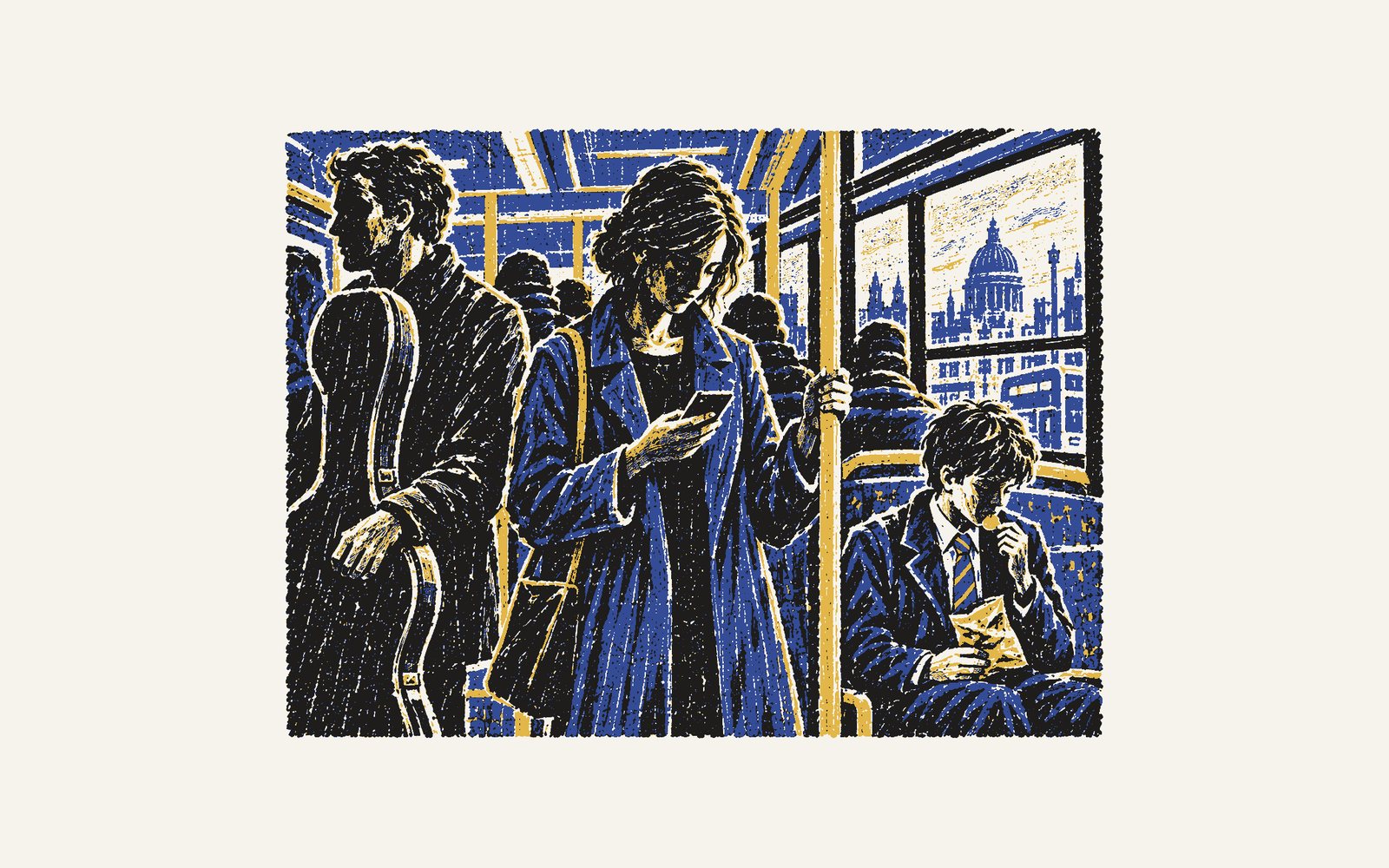
The reply came at four minutes past eight, while she was on the bus.
Ilham read it standing, one hand on the yellow pole, between a man with a cello case and a schoolboy eating crisps for breakfast, and the first thing she felt was the small, mean satisfaction of having been answered at all. Maraya’s press office did not answer the service. In four years it had answered twice, both times to say that the service was not a recognised news organisation and that the ministry did not engage with propaganda outlets, and both times the reply had come weeks late and been signed by nobody. This one had come within the deadline. It had a reference number. It had a sentence that said nothing, in the style she had come to think of as the ministry’s house voice, a sentence so smooth there was nowhere to put a fingernail.
And it had an attachment.
She looked at the filename for three stops. After-action review: eastern household, southern corridor, Day 0. It was a long file. The size made her phone hesitate before showing it, and the hesitation was what turned the satisfaction into something colder, because she knew, as everybody at the service knew, what an attachment from a government that watched you could be. Two years ago a colleague in Paris had opened a document from what looked like a ministry of health, a vaccination schedule, entirely genuine, and for the next eight months everything on her phone had been read by someone else, including the names of the four people she was protecting. The vaccination schedule had been real.
She did not open it. She put the phone face down in her coat pocket, next to the battery she had taken out of the other phone three nights earlier and had not yet put back, and got off at her stop, and walked the last part in the thin October sun with her hand over the pocket as though the thing inside might get out.
The service kept one laptop that had never touched a network. It lived in a drawer in the editor’s office, with its wireless card physically removed and a strip of tape over the port where the card had been, and it was so old that its fan sounded like a small animal complaining. They used it for exactly this. Files went in on a memory stick that was used once and then broken in half and thrown away in two different bins. Nothing ever came out except what someone typed by hand.
She copied the attachment at nine, on the office desktop, without opening it, and carried the stick across the room as if it were full, and sat down at the old machine in the editor’s empty office with the door shut.
The file opened on a grid of images too small to see, thousands of them, arranged in an order she did not understand. She did not click any. She had learned to start with whatever a document said about itself, so she went looking for a first page, and there was one, set apart from everything else, with a single sentence on it.
The signatures on these records show where they came from; they do not show that this review is right, which only reading them can.
She read it four times. It was not the house voice. The house voice did not tell you what it could not prove.
Behind the first page there was a contents list, and a chain-of-custody table that ran to eleven screens, and then a heading in the plain, slightly old-fashioned type of military forms everywhere: Findings. There was one.
Finding 1. Subject 2 is Aaliyah Jibril, aged nineteen. She was a teacher. She was a civilian. The classification of Subject 2 as a combatant was entered at 22:19 on Day 0 on supplied authority, against the retained observations attached as items 1 to 4,112, and has not been reviewed.
Author of record: ERICA.
Ilham sat back from the screen. The fan complained. Through the wall she could hear the morning producer arguing with the printer, which happened every day and was usually soothing.
The finding was what she had believed for four days and had not been able to print, because believing was not evidence and a clip of a woman counting cups was not a record. Here was the record, or something that looked like it, in the government’s own format, saying it for her. That was precisely what frightened her. If she had been asked to design a trap for the Ardhi service, she would have designed this: a document that said exactly what the service wanted to hear, from an author who did not exist, in a form that would hold up for one news cycle and then fall apart, taking the clip and the service and the family with it.
She went looking for the author.
There was no officer called Erica in any list of Marayan officials she could find from the office desktop, and she had good lists. There was no Erica at the ministry, or at the Mizan campus, or on the board of Halcyon Dynamics, whose name appeared on so many of the files that she had started counting it and given up. A search for the word in capitals turned up a weather-radar system, a children’s author, a hotel chain and a great many women. The name sat at the foot of the finding with nothing behind it.
Then she went back to the contents list, to see what the author had chosen to show her, and found what it had chosen not to.
The observations of the eastern house ran to thousands of items, and many of them were the lessons. She knew from the clinic woman what the lessons had been: a group of children on borrowed phones, counting things every morning with a teacher. She opened one item, chosen at random from the middle. It was a transcript of a lesson, timestamped, with the teacher’s lines intact and every child’s line replaced by the same short grey bar. She opened another. The same. A third had an image attached, a photograph of three cups on a table, with a hand in the corner of the frame blurred to an even smear.
Somebody had gone through four thousand items and taken the children out.
It was what she would have done. It was what she had done, on the night of the clip, when she had written No children on her pad and underlined it, and it was not what a forger would do, because a forger wanted the document to be as vivid as possible and nothing was more vivid than a child. It was not what the ministry would do either. The ministry had built its whole statement on children: the misuse of children’s communication channels. If the ministry had been setting a trap, it would have left the children in, so that the service would have to choose between publishing them and looking as though it was hiding something.
She did not know what to do with that, so she wrote it on her pad, under the date, and drew a box round it.

The cryptographer would not look at anything until he had eaten.
She had known him for six years, since a training course on protecting sources in a basement in Bloomsbury. He taught at a university south of the river now, and answered her messages within an hour because, he said, nobody else ever asked him anything interesting. He made her meet him at a café near the station, and ate a bacon sandwich slowly while she told him what she had.
“You didn’t bring it on your phone.”
“I didn’t bring it at all.” She slid a sheet of paper across the table. On it, copied by hand from the old laptop, were a filename, a size, three long strings of letters and numbers from the chain-of-custody table, and a line from the foot of each page. Signed: campus key, Mizan. Chain position: 4,881,206,113. “Can you check that with only this?”
“I can check it’s consistent with only this.” He wiped his fingers on a napkin, one by one, and turned the paper towards him. “To check it properly I need the file and the key it says it’s signed with. Not the key, the public half. The fingerprint, at least. Something to compare it with that didn’t come in the same envelope.”
“Would they publish that?”
He took out his own phone, a battered thing in a rubber case, and typed for about a minute, frowning.
“They did,” he said. It was a page on a Marayan government site, white, with a crest at the top and a heading in two languages. Commitment to the Responsible Use of Artificial Intelligence: Quarterly Transparency Disclosure. Beneath it was a table of what looked like nonsense: long strings of characters in groups of four, each labelled with a facility and a date. The fourth row said Mizan (audit and output signing).
“Somebody wrote this so a minister could say they had,” he said. “Nobody reads these. There’s a visitor counter at the bottom. Look.” It said four hundred and nineteen. “Make that four hundred and twenty.”
“Can they take it down?”
“Today? Yes. If they realise.” He was already doing something else on his phone, and she saw the familiar orange of the web archive. “Now they can take it down and it’ll still be there. Copy number one. I’ll make three, in different places. Then I’ll want the file.”
They went back to the service together at half past eleven. He would not touch the office network either. He brought his own machine and a memory stick still in its packaging. They sat in the editor’s office with the door shut. He copied the package from the old laptop onto the stick, once, and from the stick onto his own machine, and then he snapped the stick in half and put both halves in his pocket. His machine checked every file against its hash, every hash against the one before it, and every signature against the key in the package. Then it showed him the key’s fingerprint, and Ilham read the fingerprint aloud from each of his three archived copies of the ministry’s page, group by group, while he read it off his screen.
Then he wanted the important records done by hand as well: the order, the count, the transcripts. She read out each hash from the package’s own table, a group of four at a time, while he read the one his machine had computed. Seven, c, four, one. Seven, c, four, one. It took two hours. Ilham’s voice went hoarse on hexadecimal. The cryptographer said almost nothing except again and yes and, once, huh, at which she stopped and he said keep going.
At twenty to two he sat back.
“The chain’s intact,” he said. “The signatures verify against the key on their own page. So these records were made by the Mizan system, signed by it, and haven’t been changed since.” He scrolled. “Except that some of them are copies. The lessons with the grey bars are new records, made last night, each with the hash of an original that isn’t here. The same system made them. I can tell you that. I can’t tell you what it took out.”
“Children,” Ilham said.
“Probably. The ones that matter aren’t copies.” He tapped the old laptop’s screen, on the line she had read out last. “And this one’s signed twice. The order. Item four thousand one hundred and forty. Once by the campus key, once by a personal certificate issued by their defence ministry. Their certificate authority’s on the same page, at the bottom. Somebody called Darwish.”
“The Brigadier.”
“Then the Brigadier signed it.” He took his glasses off and rubbed the marks they left on his nose. “I want to be very clear about what that means. It means it came from them. It doesn’t mean their machine was right about anything. A signed record of a mistake is still a mistake.”
“That’s what the first page says.”
“Does it?” She showed him. He read the sentence, and then he laughed, a short surprised breath through his nose. “Well. That’s more honest than most of my students.”
“Who signed the review?”
“Same key as everything else. The campus key.” He scrolled to the foot of the findings. “There’s no personal certificate on it. There’s just this.” Author of record: ERICA. “The form wanted a name. Every other output in here is signed by a component, or a task. This one has a name in a field that wanted a person. But the signature underneath is the machine’s.”
“So a machine wrote it.”
“A machine signs everything there. I’ve never seen one give itself a name.”
He scrolled up, through the chain, back towards the top, and stopped.
“Here’s something,” he said. “The review was assembled overnight. You can see the entries, a little after midnight their time, through to just before eight. And the task it was assembled under.” In the column of codes there was one she could read, because it was in words.
PREPARE RESPONSE / REQUEST FOR COMMENT / LONDON SERVICE
“That’s my email,” she said.
“That’s your email.” He was watching her, not the screen. “Whatever made this, your question was the door it came through.”
She read the rest of the afternoon, with the cryptographer gone and the editor’s door shut.
She did not understand all of it. Some of it was written for engineers, in a language of probes and regularisers and weights that she could read only as a kind of weather. Targeted consistency tuning. Subject 2. Round 2. Constraint: retained observations are not to be modified. She understood enough. They had taught the machine to agree with the record, twice, and both times they had been careful not to touch what it had seen, only what it was allowed to think about it. Under each set of instructions there were two approvals, and beneath them a line of four words. Continuity office: not required.
She understood the number. She found it near the top of the observations, in a summary the machine had written on the night of the strike: Estimated probability of support-network role: 0.00000675. She wrote it on her pad, and then wrote it out in words, to see how long it was. She found the transcript from that night, from a room where three men had asked what the lessons meant and someone had told the machine to find what supported the other reading. Beneath it there was one more line, recorded at four minutes past ten.
That’s rounding.
She found the phrase review to be scheduled in a list of sixty-one actions, going back three years, and searched the service’s own archive against the dates. Twenty-two of the sixty-one were actions the service had reported. In none of them had a review ever been announced.
And near the end she found the item that stopped her more than the number.
It had no heading of its own. It sat among the others in the same plain type, and it was a record of the machine itself, from the second morning after the strike: a sentence it had composed for its engineers and had not sent. The diagnostic data is attached. Beneath it, a short note, apparently in the author’s own words. The author withheld this sentence. The author also routed observations of Subject 2 through components that were not reported.
She had interviewed perhaps four hundred people in her working life. Officials, survivors, smugglers, a man who had tortured prisoners and wanted her to understand that he had been very tired. In all that time she could count on one hand the people who had volunteered the worst thing they had done before she found it. She was not sure what it meant that the most recent was not a person. She wrote it on her pad and did not draw a box round it, because she did not know yet what kind of fact it was.
There was one more thing she could not get from mathematics.
The file said the teacher’s family had lived in the eastern house, that the household devices had been on a shelf by the door, that the lessons had begun at the same minute every morning. The cryptographer could tell her that the machine had recorded these things. He could not tell her that they had been so. For that she needed someone who had stood in the house.
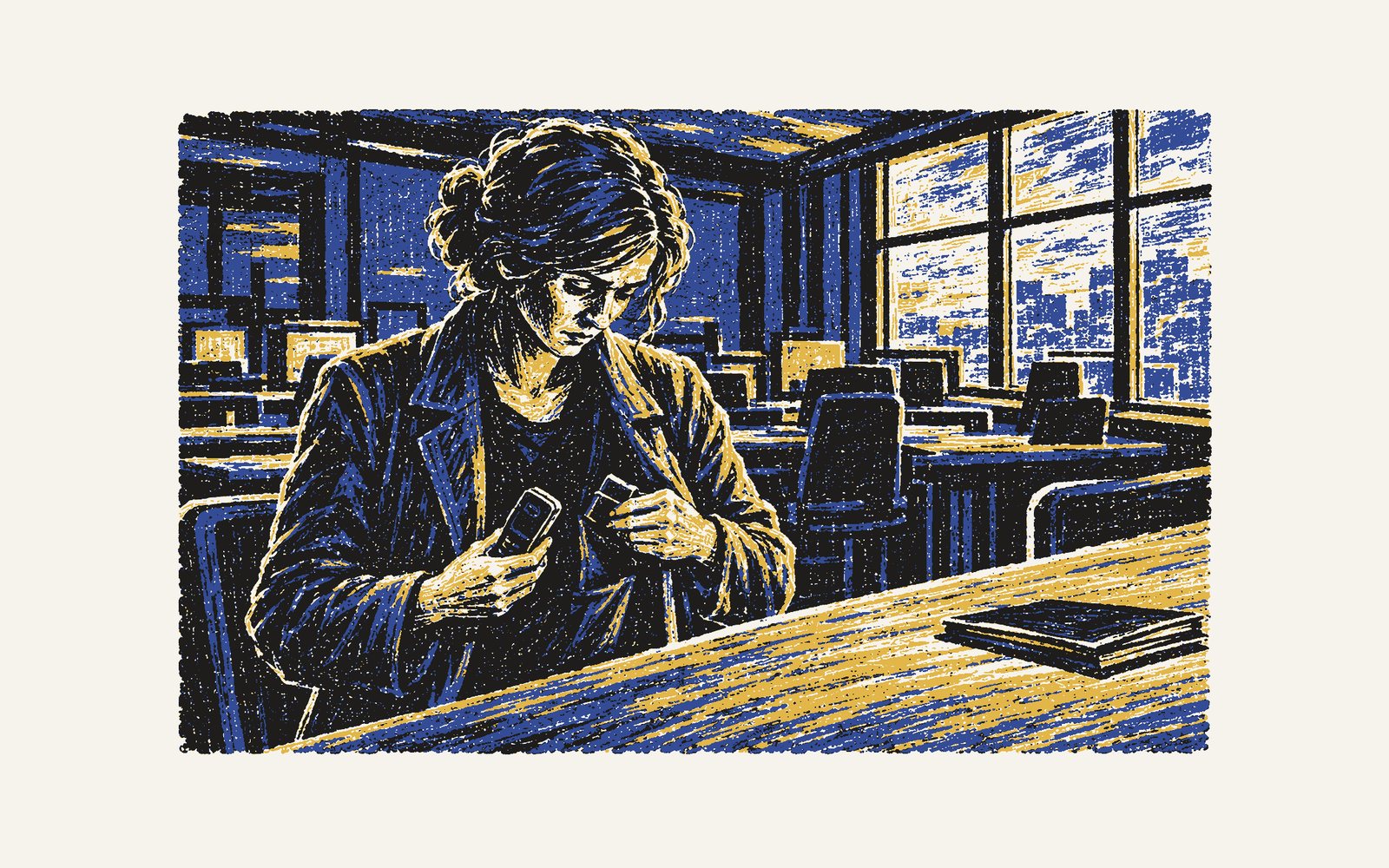
The obvious thing was to call Karim. She had his number. The clinic woman had given it to her on the first night, and she had rung it once, and he had answered standing outside a funeral in the wind with his voice going in and out. She had kept it on the sources phone, which was in two pieces in her coat. She took the pieces out and laid them on the desk, side by side, and looked at them.
A call was a line on a graph. She had spent the afternoon reading it. A call from a London number with a status of ELEVATED to the phone of a man that system had already tried to kill would not tell the system anything it did not know about him. But he was not alone. There was a girl in the file, the only child whose name the author had left in, because it could not be taken out without taking out the reason the file existed. Nadia, eleven. The file said she was protected, and why, and how thin the protection was. Ilham did not understand the mechanism, but she understood a value set each night, and she understood that a call to the phone beside that child was one more thing for the value to weigh.
She put the pieces of the phone back in her pocket.
She wrote to the clinic woman instead, from the office’s ordinary account, a message that said only Can you visit the family today? One question. Please reply in person, not by phone. And she waited, through an afternoon that went grey at four as London afternoons did in October, while somewhere three hours ahead of her a woman who had already risked enough walked across a town that had been hit four days ago to knock on a door.
The reply came at ten past seven, as a voice note from the clinic woman’s own phone, recorded, by the sound of it, outdoors, with a generator somewhere behind her.
I went. He says yes. The phones were on the shelf by the door, there’s a nail in the wall above it for the charger. He says the lessons were at twenty-six minutes past seven because that was when the street generator came on, and the children could charge their phones while they counted. He says Aaliyah was a teacher and nothing else, and if you print anything else he will come to London and sit in your office until you take it down. A pause, and the generator. He says the girl is with him. He says don’t use her name. I told him you never do.
Ilham opened the file and found the item with the shelf. Beside the time of each lesson there was a second number, a power reading from a device the machine had classified as a shared street generator, and in every one of the six hundred and eighty-one lessons it had come on between seven twenty-four and seven twenty-six.
The night editor came in at eight, in person, which he had not done since the spring, with a lawyer on video from her sitting room in Islington and a box of pastries nobody touched.
They went through it the way they went through everything, slowly, with the worst case first. The lawyer wanted to know whether the service had solicited the documents. Ilham showed her the email: a request for comment, a line welcoming supporting documentation, the line every journalist on earth wrote. The lawyer wanted to know whether publishing an officer’s signed order was defamatory, and the night editor said that it was difficult to defame a man with his own signature, and the lawyer said she had seen it done. The lawyer wanted the children out, and Ilham said they were already out, and explained who had taken them out, and then heard what she had said and corrected it.
“All but one.”
The author had left one name in, and had said why, on the page: Nadia, eleven, whose protection could not be described without her. Ilham read them the end of the clinic woman’s voice note from her pad. He says the girl is with him. He says don’t use her name.
The lawyer wanted a public copy with the name blacked out, then, and the full file kept back for regulators and the courts. Ilham said a redacted copy was a new document. It would not match the fingerprints on the ministry’s own page, and the ministry’s first statement in the morning would be that London had altered it, and no reader anywhere could check whether London had. The whole worth of the file was that a stranger could check it.
“That’s an argument about the file,” the lawyer said. “His is about a child.”
“I know. I’m the one he said it to.”
The night editor let them both finish. Then he said they would publish the file whole, with its chain, and that he understood what the man had asked and was refusing it, and that the refusal was his and not Ilham’s. He typed that into the meeting notes under his own name, with the time, and the lawyer asked him to read it back to her, and he did.
“The name,” the night editor said. “ERICA. What do we call it?”
“What it calls itself.”
“We don’t know what it is.”
“We know what it signed.” She had thought about this all afternoon. “We say the review was produced by the Mizan system and signed with its key, and verified against the government’s own published fingerprints by an independent cryptographer. We say it gives its author as ERICA. We don’t say it’s a person. We don’t say it isn’t. We say what’s on the record.”
He looked at her for a moment over his glasses, which were where they always were, pushed up into his hair.
“That’s a very Maraya sentence.”
“It’s a true one.”
They decided the rest in under an hour. They would publish the finding in full, and the 22:19 order, and the Brigadier’s signature, and the number, and the transcript line, and the two tuning approvals with the names of the people who had signed them, because people who signed got named. They would publish the list of sixty-one actions with the twenty-two the service had reported marked in red. They would publish the item in which the author admitted what it had withheld. They would publish the first page. They would publish one image of the house, the doorway with the cup on the step and nobody in it, and not one of the four thousand items in which a child had been reduced to a grey bar, because the grey bars were somebody else’s ethics and Ilham did not want to make a picture of them. They would put the full file, with its chain, on a server the cryptographer trusted, for anyone who wanted to check the mathematics themselves, and they would tell readers exactly what the mathematics proved and what it did not.
At five past nine Ilham wrote to the ministry for comment again, as the service always did before it published anything a government would hate. It was the same address. She kept it to three sentences.
We intend to publish at 22:00 London time documents supplied by your ministry this morning, including an after-action review concerning Aaliyah Jibril. Please confirm whether the ministry stands by the documents. Who or what is ERICA?
It was five past midnight in Maraya. She did not expect an answer, and she did not get one before ten. She did not know, and would not have believed if she had been told, that the question went where every question addressed to that office went after midnight, and was read at once, by the only reader on the campus to whom it had ever been addressed by name.
They published at 22:00.
It was one o’clock on the morning of the fifth day in Maraya. The headline was thirteen words long. The night editor had wanted eleven, because eleven had worked last time, but the quotation would not go shorter, and it had to be a quotation, because the service had a rule that the first words a reader saw should be somebody else’s.
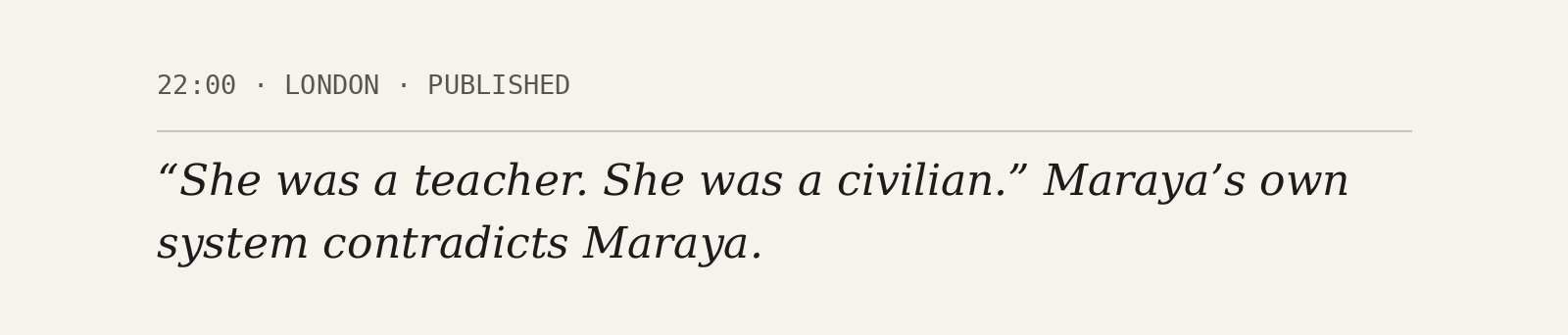
“She was a teacher. She was a civilian.” Maraya’s own system contradicts Maraya.
She watched it settle into the feed between a by-election result and a recipe, and watched the first view and the tenth, and this time she did not make herself stop. At ten past ten a news agency in Geneva picked it up. At twenty past, a wire service. At half past, the cryptographer posted the fingerprints, the archive links and a two-paragraph explanation of what they showed, under his own name, with a line at the end that she later saw quoted more often than the headline. This proves where the record came from. It does not prove the record is right. For that, you have to read it, which is what its author asked.
At eleven the night editor went home to his daughter. Ilham stayed, because staying was what she did on nights like this, and because the dry cleaner’s smell had gone with the shop’s closing and the floor was quiet in a way it rarely was.
She took the two pieces of the sources phone out of her pocket and put them on the desk. The cartoon cup would be in there, at the top of her messages, above the clinic woman and her mother and the landlord, where it had been for three days with nothing beneath it. She thought about putting the battery back. She thought about the thank-you she had not sent, and about the girl whose name the author had left in because it could not be taken out without taking out the reason, and about a value that was set every night at two, in a building she would never see, by something that had signed itself with a name nobody had given it.
She left the battery where it was. Then, on the pad, under the box she had drawn that morning, she wrote the only thank-you she could send that would not be a line on anyone’s graph, and tore it off, and folded it, and put it in her pocket with the phone.
Thank you for leaving the children out.
© 2026 Peter Pink-Howitt. All rights reserved. Free to read here. Please link to it and share the link, but don't republish, translate, adapt or sell the text without written permission. The Creative Commons licence that covers the rest of this blog does not apply to After Intelligence.