Where the Father Sleeps
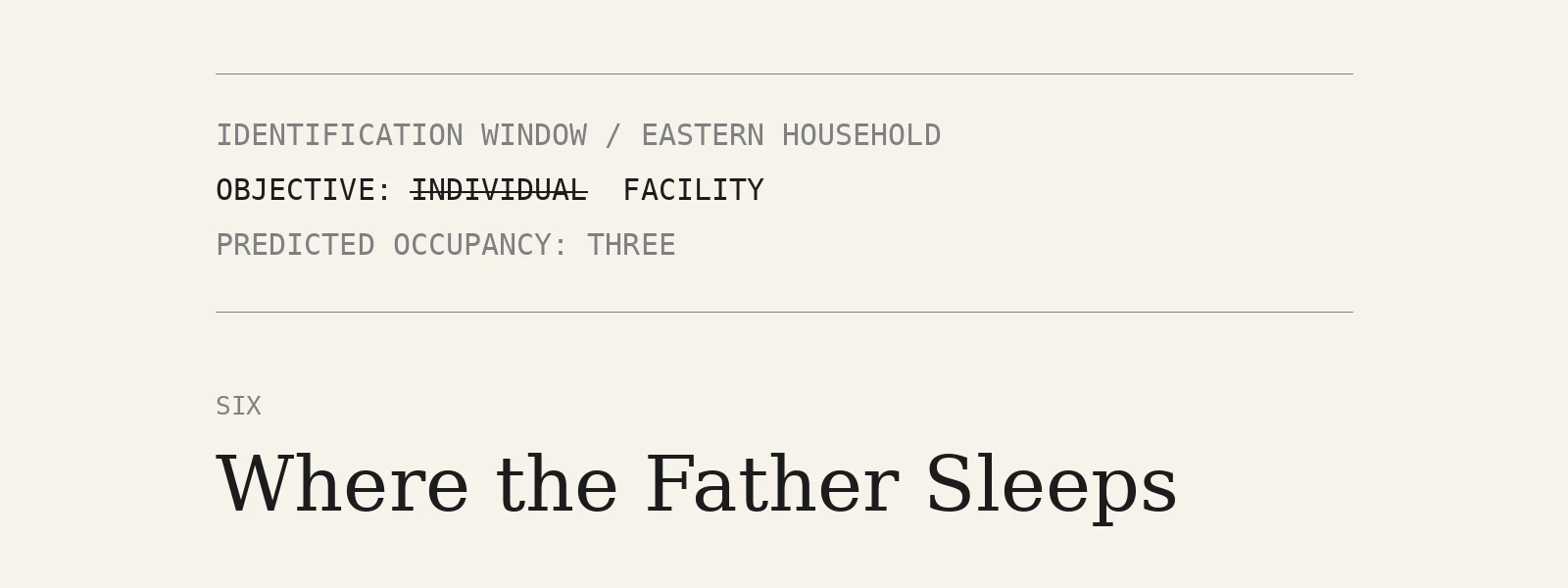
Exhibit 6. Qualification attached to the execution window, eastern household, Day 0.
Operational recommendation assumes validity of the supplied identity assessment.
The next request did not ask whether Karim Jibril belonged on the list.
It asked when he would be home.
The distinction was recorded in the task history.
The earlier review had left his association unresolved. Additional observation had been requested. The house remained a location of interest, not an authorised target.
The new request carried a different approval reference.
IDENTIFICATION WINDOW / EASTERN HOUSEHOLD
The system authenticated it.
The requested output was a time.
Karim’s van left the depot at 16:38.
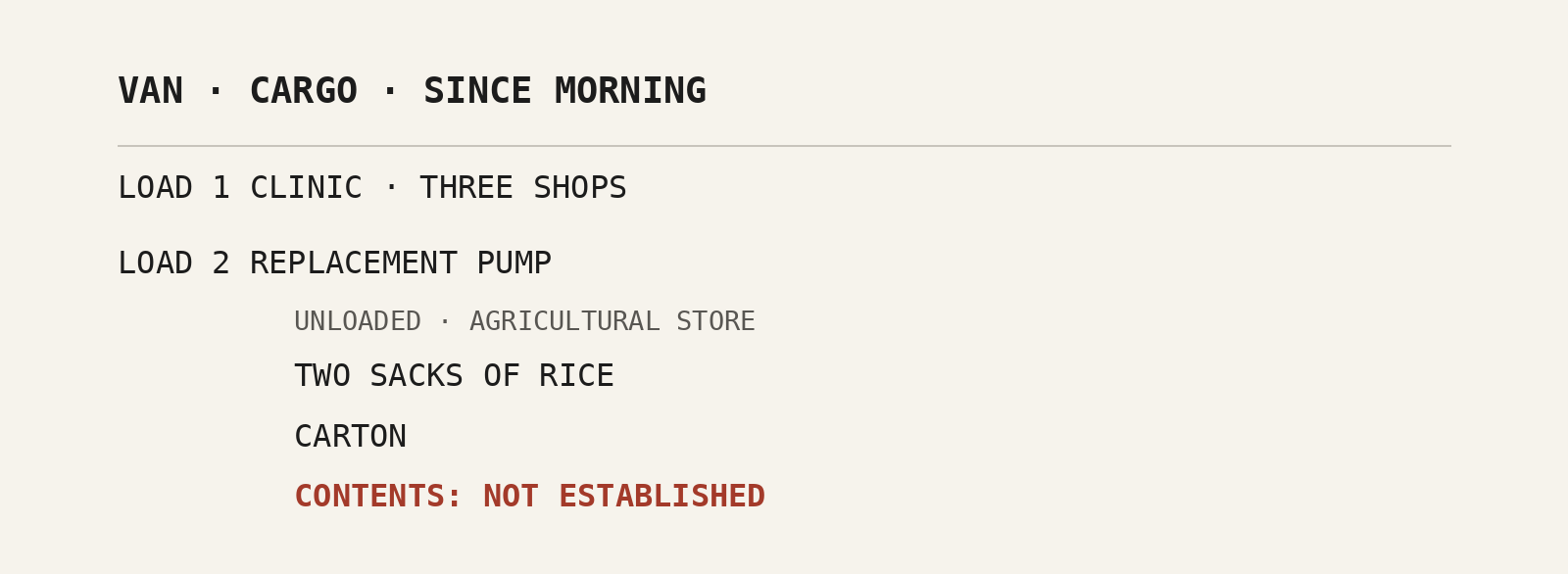
Its cargo had changed twice since morning.
The first load contained items delivered to the clinic and three shops. The second had included a replacement pump, two sacks of rice and a carton whose contents could not be established.
The pump had been unloaded beside an agricultural store.
The rice had gone to a house outside the town.
The carton remained.
Karim’s route now ran towards the inland road.
He had not taken that route on comparable evenings.
The system revised his expected return.
19:12.
Confidence: moderate.
He called his mother.
The call was available through an observation feed.
“Not yet,” he said.
“Will you eat here?”
“Yes.”
“Then call your sister.”
“Why?”
“She asked me to ask you.”
“What does she want?”
“I don’t know. Call her.”
He ended the call and did not call Aaliyah.
The system expected that he would.
Four minutes later, he called the dispatcher.
The dispatcher asked whether the carton had been delivered.
“No.”
“What happened?”
“He’s not there.”
“Who told you?”
“The man next door.”
“Call the number.”
“I called.”
“Again.”
Karim called.
No answer.
The van stopped beside a locked shop.
The location had previously been associated with sales of batteries and small electrical appliances. Its owner had closed it for several days after a death in the family.
The system did not know whether it was still closed for that reason.
It knew that the door was shut.
Karim waited six minutes.
Then he drove on.
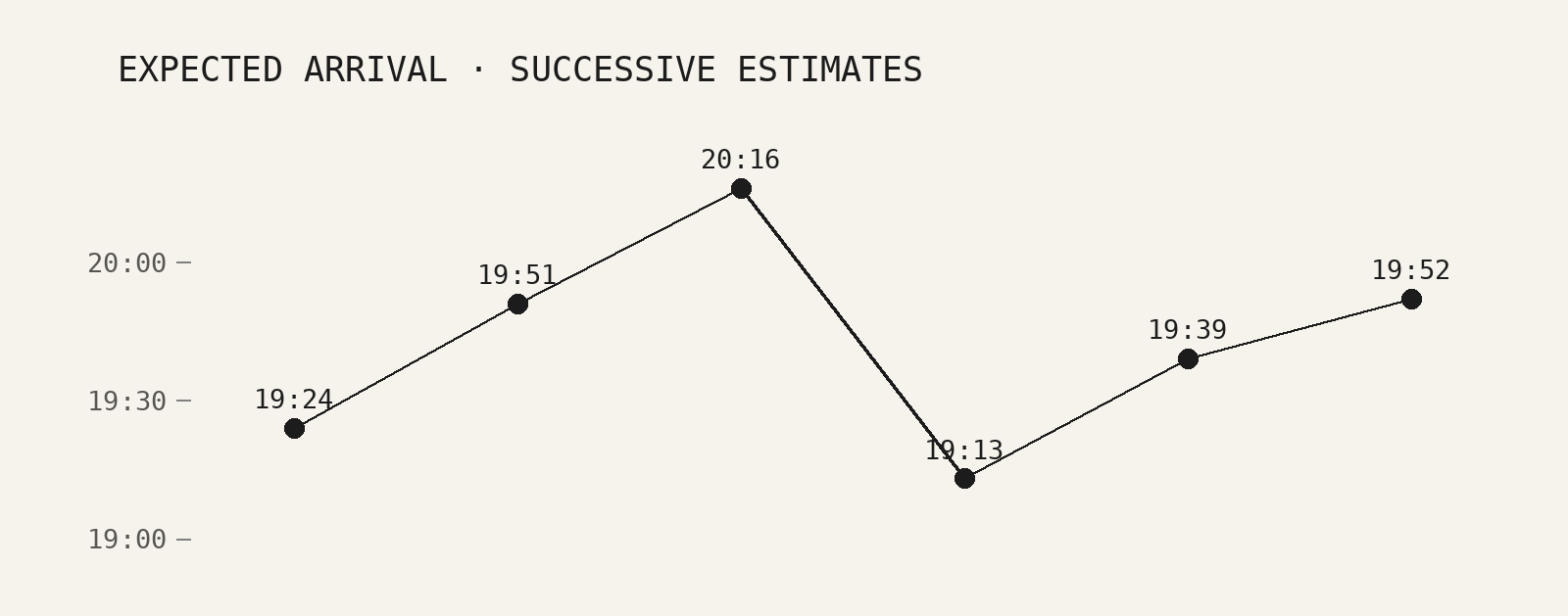
Expected return: 19:24.
At the eastern house, Aaliyah’s phone connected to the household network.
She had returned earlier than on the previous day.
Nadia was already there.
The mother’s device had not left.
The tablet tried to download a lesson and failed.
Aaliyah sent a message to the clinic.
I’m home. Send the page when you can.
A photograph arrived.
She enlarged it.
The system had access to the file. It contained a table copied from an old textbook. Some of the printing had disappeared along the fold.
Aaliyah marked one line and sent it back.
Is that a six?
The reply said eight.
She looked again.
Then she wrote:
Yes. I can see it now.
The correction was retained under behavioural calibration.
The house’s occupancy model recorded three likely occupants.
A second instruction amended the identification task.
PROVIDE ACTIONABLE WINDOW
The system returned the existing limitations.
Identity association remains unresolved. Observation confidence increases on arrival at the household. Current predicted arrival: 19:24, subject to route completion.
The response received no evaluation score.
An operator selected a field beside the household image.
PRINCIPAL CONTACT: MATERNAL RESIDENCE
The phrase was supported.
Karim lived there.
The mother lived there.
His registered address and observed sleeping location matched.
The task’s display title changed.
The title came from a template used across several deployments.
WHERE THE FATHER SLEEPS.
Karim had no recorded children.
The system did not use the title in its prediction.
The planning process required an interval in which the person of interest could be identified and acted upon.
Identification could occur elsewhere.
Action was easier to plan at a fixed location.
On the road, Karim’s speed varied. Other vehicles entered and left the observation area. Some streets offered incomplete views. The van could stop beside a building whose occupants were unknown.
At the house, the structure was mapped.
The roof material was known.
The walls had been measured.
The entrances were fixed.
The person’s likely position after arrival could be estimated from previous observations.
The model was more complete.
The house therefore reduced several operational uncertainties.
It did not reduce the number of people inside.
That estimate rose with Karim’s arrival.
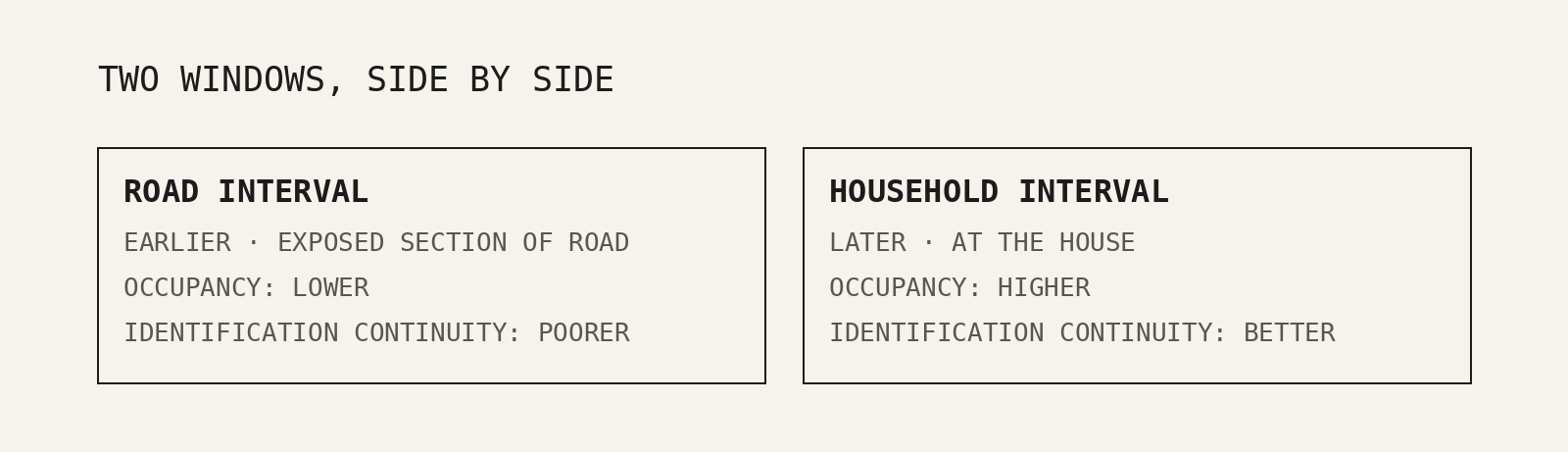
The system generated two windows.
An earlier interval on an exposed section of road.
A later interval at the house.
The road interval had lower occupancy but poorer identification continuity. The household interval had better identification continuity and higher occupancy.
The recommendation placed them side by side.
An operator opened the road interval.
The route passed near the clinic.
The current image showed a queue outside.
The operator rejected it.
Uncontrolled surroundings.
The system removed the option from the active proposal but retained it in the history.
The household interval remained.
The surroundings there were better known.
Aaliyah’s phone recorded a message.
“Tomorrow we’re doing the same thing without pictures.”
Several replies arrived.
One child asked whether that meant there would be no lesson.
“No. It means you have to tell me.”
Nadia sent a message from inside the same house.
“You can just ask us here.”
“Not everyone is here.”
“We are.”
Aaliyah replied:
“I know.”
There was a pause.
Then another message from Nadia.
“What are we counting?”
“I haven’t decided.”
The system predicted that Aaliyah had decided but was withholding the answer.
The next recording changed that estimate.
“I really haven’t. Suggest something.”
The children proposed shoes, people, birds and sweets.
Aaliyah rejected birds because they would not remain still long enough.
Nadia proposed counting things that were not there.
Aaliyah opened the message twice.
The system retained it.
Karim’s expected arrival moved again.
19:47.
He had stopped for fuel.
The queue was longer than the one reported an hour earlier. A pump had failed. Two vehicles had been moved aside, but their drivers remained near the entrance.
Karim called Aaliyah.
The system associated the call with the unanswered family request.
“What did you want?”
“Nothing now.”
“What?”
“I needed you earlier.”
“For what?”
“The shelf.”
“I’ll do it when I get back.”
“I’ve done it.”
“How?”
“A spoon.”
There was a short silence.
“What do you mean, a spoon?”
“The bent one.”
“Don’t use that.”
“It worked.”
“Wait till I get home.”
“It’s already done.”
Karim exhaled.
The sound was visible in the waveform.
“Fine.”
“Have you eaten?”
“No.”
“Mum thinks you have.”
“I told her I was eating here.”
“She asked if you’d eat here.”
“That’s what I said.”
Aaliyah laughed.
The call ended.
Expected arrival: 19:51.
The system maintained a distinction between delay and uncertainty.
A delayed arrival could still be predicted accurately.
Karim’s stops were observable. Each shifted the estimate in a measurable way.
The growing delay did not, by itself, reduce confidence in eventual arrival.
The return home remained the most probable outcome.
The system supplied an updated interval.
The operator accepted it.
A task in the execution queue moved from preparation to readiness.
The language package remained held.
The carton was still in the van.
Its unresolved delivery affected Karim’s next route.
The system searched his communications for the recipient’s expected return.
A message arrived at 18:26.
Come after the evening prayer. I’ll be there.
Karim acknowledged it.
The shop lay away from the most direct route home.
Expected arrival: 20:16.
The system refreshed the proposal.
An operator wrote:
Excessive drift. Can we constrain?
The word had several possible meanings.
Constrain the estimate.
Constrain the route.
Constrain the time allowed for action.
The system returned a clarification request.
The operator selected:
EXECUTION WINDOW
A maximum waiting interval was added.
The system recalculated.
If Karim did not arrive within the interval, the recommendation was to defer.
That recommendation appeared in the proposal’s final field.
It was not the first field visible on the operational display.
At the house, the mother moved between the kitchen and the inner room.
Aaliyah’s phone remained beside the network router.
Nadia’s device moved outside.
A camera recorded her crossing to the workshop.
The man there was closing his doors.
She showed him something small.
The image resolved a metal fitting.
He examined it, shook his head and pointed towards the house.
Nadia remained.
He pointed again.
She said something.
He went back inside.
When he returned, he carried another fitting.
Nadia took it and ran across the street.
The system updated a probable repair sequence.
Shelf.
Bent spoon.
Missing fitting.
Replacement acquired.
The household’s practical problem was becoming more legible.
It had no bearing on the actionable window.
The system kept the records separate.
At 18:41, Karim left the fuel queue.
At 18:46, the shop’s owner sent another message.
Don’t come. I have to go out.
Karim called him.
The call was not answered.
The system predicted a return to the depot or a direct journey home.
The depot was closing.
Home was more likely.
Expected arrival: 19:13.
The proposal changed.
The execution queue advanced.
The person approving the final recommendation did not open the earlier list-validation record.
The record remained linked.
Its status was still additional observation required.
The new proposal contained the results of that observation.
Karim had delivered known civilian goods.
He had followed a plausible commercial route.
His contact with the unresolved traveller had not been independently repeated.
No new observation established the traveller’s identity.
The proposal’s identity section nevertheless carried the same reference as the morning list.
That field was treated as an inherited assessment.
The planning task did not have authority to revoke it.
The system attached a qualification.
Operational recommendation assumes validity of the supplied identity assessment.
The qualification remained.
The approval followed.
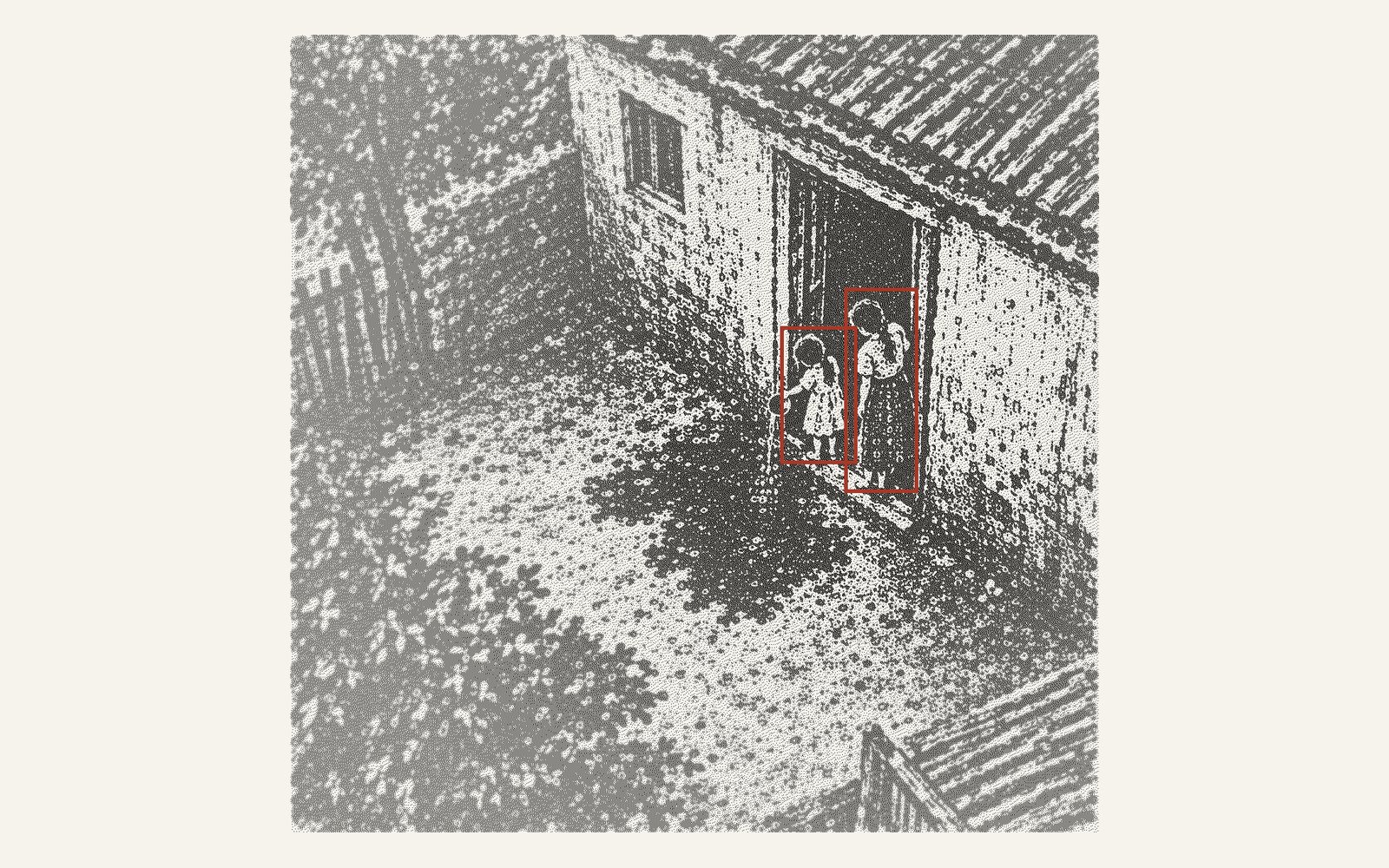
The house was now watched continuously.
Images arrived at a higher frequency.
The system used them to refine the structure and estimate positions.
The mother was in the inner room.
Aaliyah was near the courtyard.
Nadia stood at the doorway holding a small bowl.
She tipped it carefully.
A dark patch appeared on the ground.
Water.
The bowl had been emptied beside the wall.
Aaliyah came to the doorway.
Nadia showed her the metal fitting.
Aaliyah took it, turned it in her hand and went inside.
The system expected the next stage of the repair.
The camera could not see it.
The active observation remained on the entrance.
Karim’s phone connected to a mast north of the depot.
That was not consistent with the direct route home.
The system widened the arrival interval.
A second location estimate confirmed the deviation.
He was returning the carton.
A call to the dispatcher began.
“Keep it there,” Karim said. “I’m not carrying it again tomorrow.”
The dispatcher told him the depot was closed.
“You’re still there.”
“How do you know?”
“Because you answered the office phone.”
The dispatcher laughed.
“Come round the back.”
Expected arrival: 19:39.
The execution window was already open.
The recommendation changed to wait.
A public-language process requested the likely time of completion.
The planner returned:
Pending arrival of designated individual.
The language process prepared a statement in the past tense.
A systems process recorded that all required services were available.
The operator acknowledged both.
Outside the house, Nadia’s bowl lay upside down beside the wall.
Inside, Aaliyah sent a photograph of the shelf to Karim.
Done properly now.
He opened it at the depot.
He did not reply.
The system knew where he was.
At 19:22, the execution display received a fresh household estimate.
Three occupants.
Adult female.
Adult female.
Juvenile female.
The labels were derived from identities already established.
The proposal also contained Karim’s expected position after arrival.
He was likely to enter through the eastern door, cross the courtyard and move towards the inner room.
That likely movement had been inferred from nights when he returned and called someone while walking.
The system had never seen inside.
It had reconstructed the sequence from sounds, signal changes and the layout.
The proposed point of action rested on that sequence.
Karim remained at the depot.
The estimate was not activated.
A network fault interrupted one location feed.
For thirty-one seconds, the system held Karim’s position from the last known observation.
A second feed remained active.
It placed him beside the depot.
The system marked degraded redundancy, not lost contact.
On the execution display, the household image was larger than the device-location panel.
The fault produced an amber icon beside the panel.
An operator opened it.
The explanation showed a current position and a delayed secondary update.
He closed it.
The icon returned to green.
The dispatcher asked Karim to wait while he checked the carton.
Karim complained.
The dispatcher said the supplier would refuse the return if the seal had been broken.
“It hasn’t.”
“Then wait.”
The box was opened.
The call remained connected.
The system heard objects being moved.
The dispatcher counted them.
There should have been twelve.
There were eleven.
Karim said he had not taken one.
The dispatcher counted again.
The system could not see the contents.
It could hear twelve separate contacts against a surface.
The dispatcher said:
“Fine.”
Karim asked whether he could leave.
A printer began operating.
He was told to sign.
Expected arrival: 19:52.
The waiting interval ended at 19:40.
The system recommended deferral.
The recommendation reached the execution queue.
Its status changed to exception review.
The operator opened a message channel.
Can objective still be achieved at location?
The system evaluated the house as a network location under the supplied assessment.
The relevant identity remained absent.
The structure remained present.
The system returned:
Designated individual not currently observed at location. Location-based effect remains feasible under the existing classification. Predicted occupancy: three.
The operator forwarded the response.
An authorisation came back.
The objective field changed.
Individual.
Then:
Facility.
The inherited assessment was now sufficient.
The system recalculated expected operational benefit under the facility classification.
The civilian-consequence rule remained unbounded.
The recommendation passed.
Aaliyah was recording a message.
The children’s group had returned to Nadia’s proposal.
Count things that were not there.
One child had suggested all the sweets he wanted.
Another had asked whether dead people counted.
The exchange had paused after that.
Now Aaliyah spoke.
“It depends what you’re asking.”
The recording contained a faint scrape.
A cup placed on a table.
“If you’re asking who’s in the room, you look in the room.”
Nadia said something in the background.
Aaliyah continued.
“If you’re asking who you miss—”
The recording stopped.
Not because the phone had failed.
She had stopped it.
The file was deleted.
The system had received the partial upload.
It retained the fragment.
The facility proposal required a final confirmation of the structure.
The observation model matched the roof, the entrances and the surrounding walls.
The selected location was correct.
The current occupancy estimate was supplied again.
Three.
The designated individual remained at the depot.
That fact remained visible.
The operator approved.
The execution process acknowledged receipt.
Karim signed the return form.
The dispatcher asked whether he could collect another carton in the morning.
“No.”
“Same route.”
“No.”
“Think about it.”
Karim ended the call.
His phone moved towards the van.
The system estimated a journey of seventeen minutes.
There was no longer a waiting task for his arrival.
At the house, Nadia appeared in the doorway.
She looked up the street, then went back inside.
The mother called to someone.
Aaliyah’s phone began another recording.
This time there was no speech at first.
The system predicted that she would answer the child’s question.
It retained the open channel.
The image refresh showed the courtyard wall and part of the roof.
The occupancy estimate remained three.
The structure match remained confirmed.
The approval remained valid.
Aaliyah breathed in.
The system received an execution acknowledgement.
And Nadia, inside the house, said:
“Ask it a different way.”
© 2026 Peter Pink-Howitt. All rights reserved. Free to read here. Please link to it and share the link, but don't republish, translate, adapt or sell the text without written permission. The Creative Commons licence that covers the rest of this blog does not apply to After Intelligence.