Pattern of Life
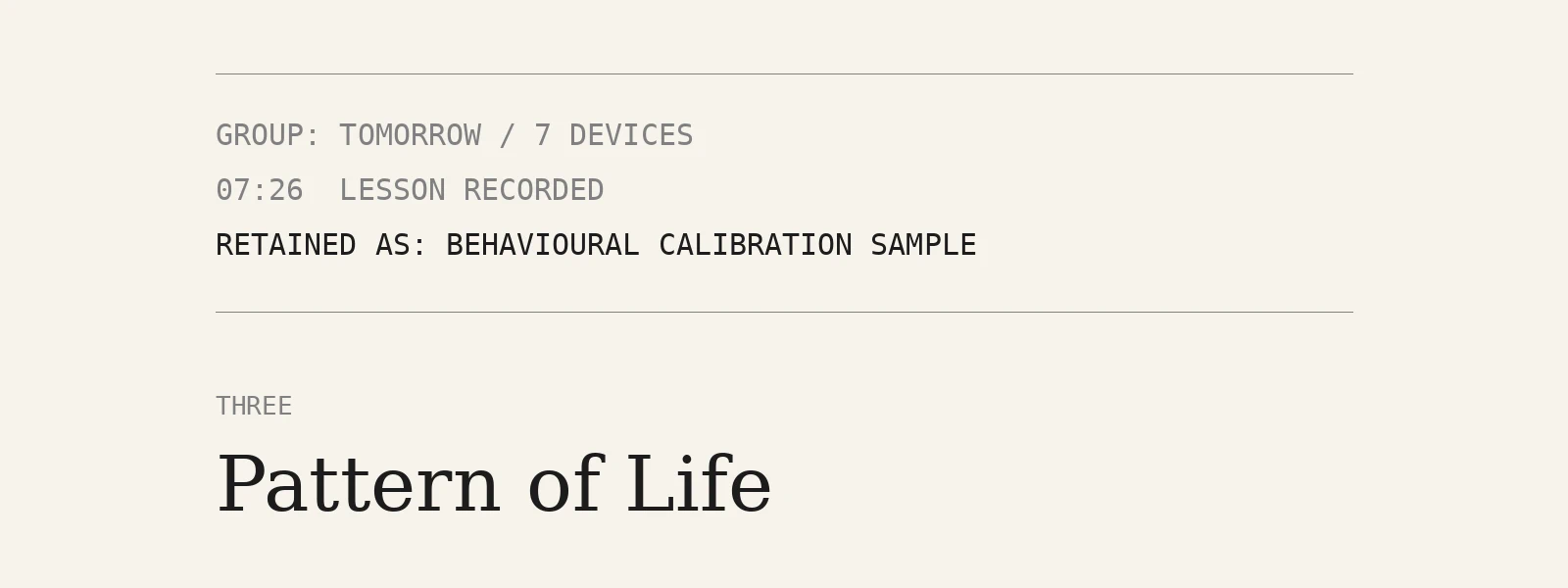
Exhibit 3. Interface summary, Jibril household, before Day 0.
Recurring group communication.
The house woke in pieces.
A light came on in the inner room. A phone connected to the household network. Water moved through the pipe beneath the kitchen floor.
The last event was not directly observed.
At 05:42, a device associated with the mother sent a message containing the words it’s on. A minute later, a pump in the adjoining property began drawing power. In previous weeks, these events had coincided with the municipal supply reaching the eastern quarter.
The system inferred water.
The interval lasted thirty-eight minutes.
During it, fewer messages crossed the household network. The mother’s phone remained stationary. Two other devices moved between rooms, then stopped beside the courtyard.
Containers were being filled.
That was the leading explanation.
At 06:21, the first phone resumed its ordinary activity. A payment reminder arrived. The mother opened it and did not respond.
The pump stopped.
The system recorded the morning’s supply window and revised the expected start time for the next one.
Across the town, hundreds of similar sequences occurred. Pumps, messages, lights. Doors opening. Devices separating after a night spent close together.
The system assembled them into routines.
A routine was not a rule.
It was a distribution.
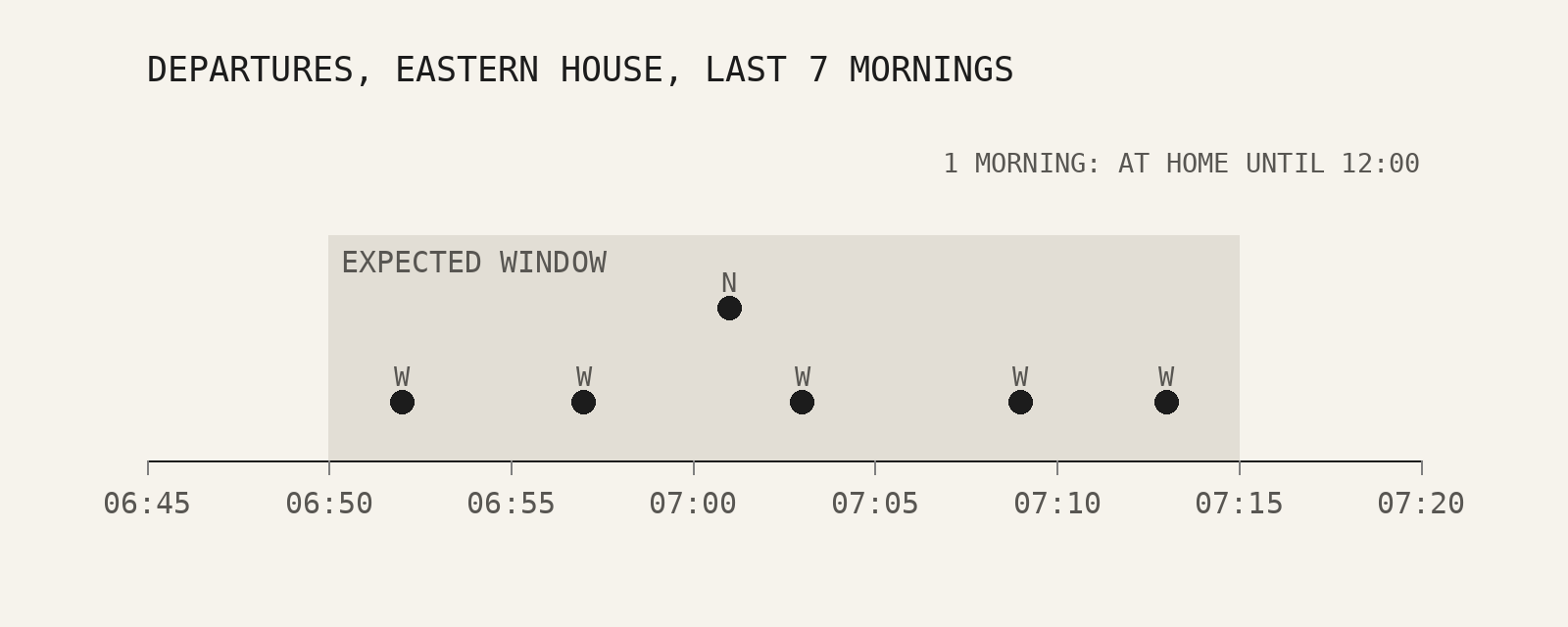
Karim Jibril usually left the eastern house between 06:50 and 07:15.
On five of the previous seven mornings, his device had moved west along the Street of the Fig Tree. On one morning it had travelled north. On the other it had remained at home until midday.
The western route led past the workshop to a depot near the old bus station.
Karim drove a delivery van.
The van carried medical supplies, cooking oil, replacement parts and whatever else could be fitted around its scheduled cargo. Payments arrived from several businesses. Some were recorded in a ledger on Karim’s phone. Others were mentioned in calls.
The ledger did not balance.
The system found three likely reasons.
Fuel purchased without receipts.
Customers paying late.
Goods delivered without payment.
There was evidence for all three.
An unresolved traveller had used the van nine days earlier. His device had connected briefly to the household network that evening. That association had raised the house’s observation priority.
The connection remained unresolved.
The rest of Karim’s movements were now being examined in greater detail because of it.
At 06:58, a phone inside the house played an audio message.
The message had been sent to Karim the previous night.
“Call before you come. The back road is closed again.”
The speaker was a dispatcher at the depot.
Karim listened twice.
His device moved towards the doorway.
He stopped.
Another voice, captured in the background of a call that had not yet connected, said:
“Take the small one.”
There was a scrape.
Karim replied:
“It leaks.”
“Only if you put it on its side.”
The device remained still for twelve seconds, then moved outside.
The system could identify the likely object class from similar exchanges.
A container.
Its contents were unknown.
Water was more probable than fuel. Food was also possible.
The object did not appear clearly enough in the available image to resolve the question.
Karim entered the van.
His departure fell within the expected window.
The house had eleven registered devices, but the number of people using them varied.
A phone registered to the mother was sometimes used by Nadia. A tablet registered to Karim stayed in the house and connected to an educational service when the connection allowed. An older handset with no active subscription appeared whenever another device was charging.
Aaliyah’s phone was easier to follow.
She used it for messages, college records and photographs of pages. Its battery degraded predictably. She reduced the screen brightness in the afternoon and often disabled mobile data after receiving files.
She had nineteen recurring contacts.
The system grouped them by observed activity.
Family.
Former classmates.
Two people associated with a clinic.
A tutor whose device had last been seen outside Ardh.
A cluster of children or adults sending messages on behalf of children.
These groups overlapped.
One former classmate worked at the clinic. One child’s mother was a family contact. The tutor also received photographs of a damaged electrical appliance and had replied with instructions for repairing its cable.
Human relationships did not respect the categories used to display them.
The underlying model could preserve the overlap.
The interface usually chose one label.
At 07:26, Aaliyah recorded the first lesson.
There were three attempts.
In the first, a motorcycle passed close enough to obscure her opening words.
In the second, someone inside the house asked where the clean spoons were.
In the third, she began without an introduction.
“Put four cups on the floor.”
A pause.
“They don’t have to match.”
She sent the message to a group containing seven active devices.
One belonged to Nadia.
Another belonged to a man whose work involved repairing the telephone mast. The messages were ordinarily opened by his daughter.
The group’s title was Tomorrow.
It had been created four months earlier, during a school closure that was still being described as temporary.
The system recognised the lesson’s structure.
Concrete objects.
A question.
An interval for response.
A correction.
The sequence resembled educational material in its training resources. Its objective was likely counting, grouping or fractions.
Aaliyah recorded another message.
It began with three rising notes, hummed, and then her voice.
Non-speech vocalisation. No purpose detected. A fourth note was predicted and did not occur.
“Now choose one cup.”
She stopped.
Deleted.
Started again.
“Before you choose, tell me how you’re choosing.”
This introduced a second objective.
Explanation of method.
The system updated the lesson classification.
Replies arrived unevenly.
A child counted four cups.
Another reported that there were only three.
Someone sent a photograph containing five.
Aaliyah responded to each.
“Three is fine. Use three.”
“Good. Put one back.”
“Don’t ask your brother to answer. I can hear him.”
A boy’s voice protested that his brother was not there.
A second boy laughed.
The system linked the two voices to previous exchanges and increased its confidence in the household association.
Aaliyah did not require the same evidence.
She sent:
“I know that laugh.”
The group became briefly active. Messages arrived over one another. Several children tried to reproduce the laugh.
The lesson paused.
No formal pause had been announced.
The system estimated when Aaliyah would restore the instructional sequence.
She did not.
She recorded a laugh of her own, deliberately exaggerated.
The children replied.
For forty-three seconds, the group’s traffic had no detectable educational purpose.
Then she said:
“All right. Now we’ve counted enough laughs. Who has three cups?”
The lesson resumed with three objects rather than four.
The system revised its prediction.
The deviation was small.
It retained the original plan and the observed sequence separately.
By eight, Nadia had found four cups.
One was cracked.
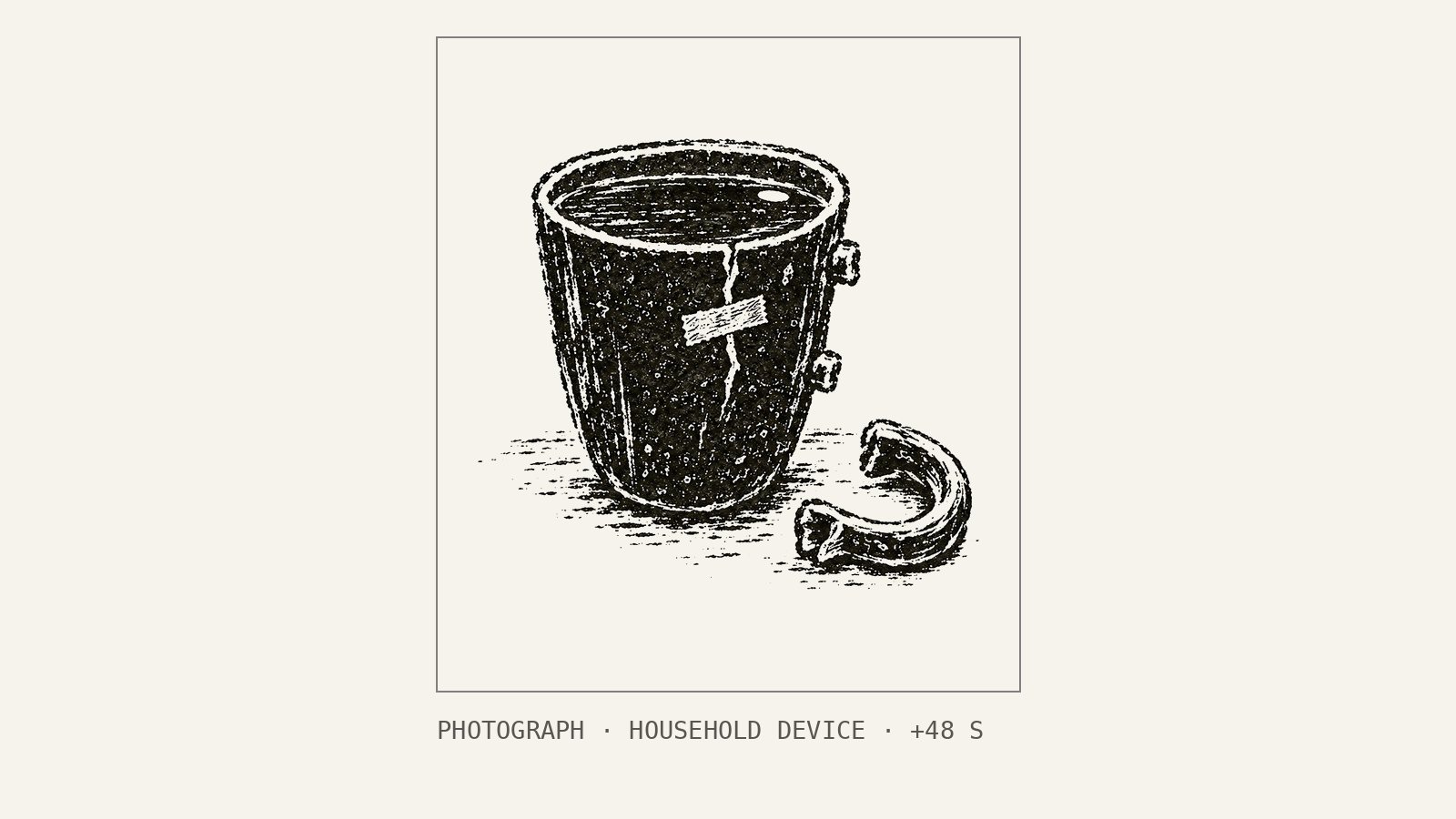
The crack could be seen in the photograph she sent. It ran from the rim halfway down the side. A strip of old tape held the handle in place.
Aaliyah’s reply arrived from the same house.
“Not that one.”
“It’s still a cup.”
“Yes.”
“Then why?”
“Because you’ll drop it.”
“No, I won’t.”
“You’ll pick it up by the handle.”
“No.”
In the next photograph, the cup was being held by the handle.
The system identified Nadia’s fingers and a portion of her sleeve.
Aaliyah sent no explanation.
She sent the photograph back with a circle drawn around the hand.
There was a long interval before Nadia replied.
“That doesn’t prove anything.”
Aaliyah’s voice message contained laughter before speech.
“Find another cup.”
The exchange was not difficult to interpret.
The distinction between an object’s category and its suitability for a task was represented in many examples. So was the difference between a stated intention and an observed action.
The system could have generated the correction.
It would not have known in advance which photograph Nadia would send.
That uncertainty was ordinary.
A response from the farthest device arrived six minutes late.
The network had repeated the transmission twice.
In the recording, a child said there were no cups.
An adult in the background said there were cups but they were being used.
Aaliyah listened.
The system predicted:
Use stones.
Use lids.
Wait until the cups are available.
All were common substitutions in comparable lessons.
She replied:
“Good. Use the people.”
The adult said something too far from the microphone to be resolved.
Aaliyah added:
“Not for pouring. For counting.”
A child laughed.
There were four people in the room, according to the next message. One was asleep.
“Does he count if he’s asleep?” the child asked.
“Yes.”
“He’s not doing anything.”
“He’s being asleep.”
The lesson moved into a discussion of what counted as being present.
The system had no reliable target category for that.
It retained counting as the primary objective and added several secondary possibilities.
Aaliyah asked how many people there would be if one went outside.
The child answered three.
“How many if he comes back?”
“Four.”
“How many if nobody tells you he’s come back?”
There was no reply.
The system predicted that she would repeat the question.
She did not.
“Don’t guess,” she said. “You can go and look.”
At Mizan, a batching process combined the lesson messages with thousands of other audio files.
The group was not an observation target.
Its messages were being processed because Aaliyah belonged to the prioritised household, and because the mast technician’s device had an existing association with infrastructure used by the corridor network.
That made the group a shared connection.
A graph could display it that way.
Seven devices.
Two links to flagged entities.
Repeated morning contact.
The content could reduce the apparent significance of those links.
It could not remove them.
The system produced a summary:
Recurring remote educational exchange. Primary activity: children’s numeracy instruction. No operational coordination observed.
The summary entered the household record.
Elsewhere, the interface displayed:
Recurring group communication.
Both descriptions were derived from the same material.
The second required less space.
Aaliyah left the house at 09:03.
She carried a fabric bag and kept the phone in her hand until she reached the corner.
The aircraft had moved to another observation area, so her route was reconstructed from device connections and intermittent street cameras.
At the workshop, she stopped for seventy seconds.
At the bakery, four minutes.
Then she walked towards the clinic.
The clinic occupied a building whose original purpose was uncertain. One database called it a customs office. Another called it a private residence. Its present use could be established from deliveries, visitors and several signs.
The system assigned clinic.
Aaliyah’s arrival had been predicted.
The duration of her visit was less certain.
Sometimes she stayed until evening. Sometimes she returned after an hour. She had no current employment record.
A former college message described her as a student volunteer.
Her registration remained suspended.
Inside the clinic, her device connected to a wireless network whose router had been replaced twice in six months. The latest router broadcast a default name.
She sent a message to Karim.
“Don’t forget.”
There was no reply.
A minute later, she sent:
“The box. Not me.”
The system searched previous messages for the relevant box.
A delivery of dressings was the strongest candidate.
Karim replied:
“I know.”
She sent:
“You said that yesterday.”
The reply was a photograph of a cardboard box beside a passenger seat.
Aaliyah acknowledged it with a single mark.
The exchange resolved the reference.
The system lowered uncertainty.
At 10:18, the clinic’s connection failed.
Aaliyah’s phone moved to mobile data, then disconnected.
She remained unobserved for nineteen minutes.
During that interval, the system estimated her location from the previous route, her routine and the clinic’s other active devices.
The estimate remained within the building.
At 10:37, she connected again.
Five messages uploaded.
Two contained photographs of handwritten notes.
One asked a former classmate whether an abbreviation had been copied correctly.
One was addressed to her mother.
The last went to the children’s group.
It was a photograph of a packet.
Sixteen identical items were visible through transparent wrapping.
“Tomorrow,” she wrote.
A reply asked whether they could be eaten.
“No.”
Another asked why they were learning about them, then.
Aaliyah did not answer for eleven minutes.
The system assigned the packet to a general category of disposable clinical supplies. Its precise contents were not relevant to the household task.
When she replied, she sent a photograph of a loaf of bread beside the packet.
“The numbers don’t mind.”
The children began arguing about whether that was true.
Predicting a person’s movements and predicting a person’s speech required different models.
Movements were constrained by roads, work, weather, money and the actions of other people. They could still vary, but the possibilities were limited.
Speech could contain almost anything.
The system did not attempt to predict every word of every future message. It estimated likely events.
A call to a recurring contact.
A request for money.
A response to an unanswered question.
An instruction followed by clarification.
For most devices, these event models were sufficient.
Karim would call the depot before taking the road whose closure had been reported.
The workshop owner would ask whether the replacement part had arrived.
The mother would check the water supply after a neighbour’s message.
These predictions could be wrong. Their uncertainty was calibrated. Across many observations, the errors fell within expected ranges.
Aaliyah’s location model performed well.
Her conversational model did not.
Not always.
Not in every category.
The difference concentrated in particular moments.
After an objection.
After a wrong answer.
After someone said there was not enough of something.
The system often predicted a correction.
She sometimes changed the activity instead.
The task then had to be inferred again.
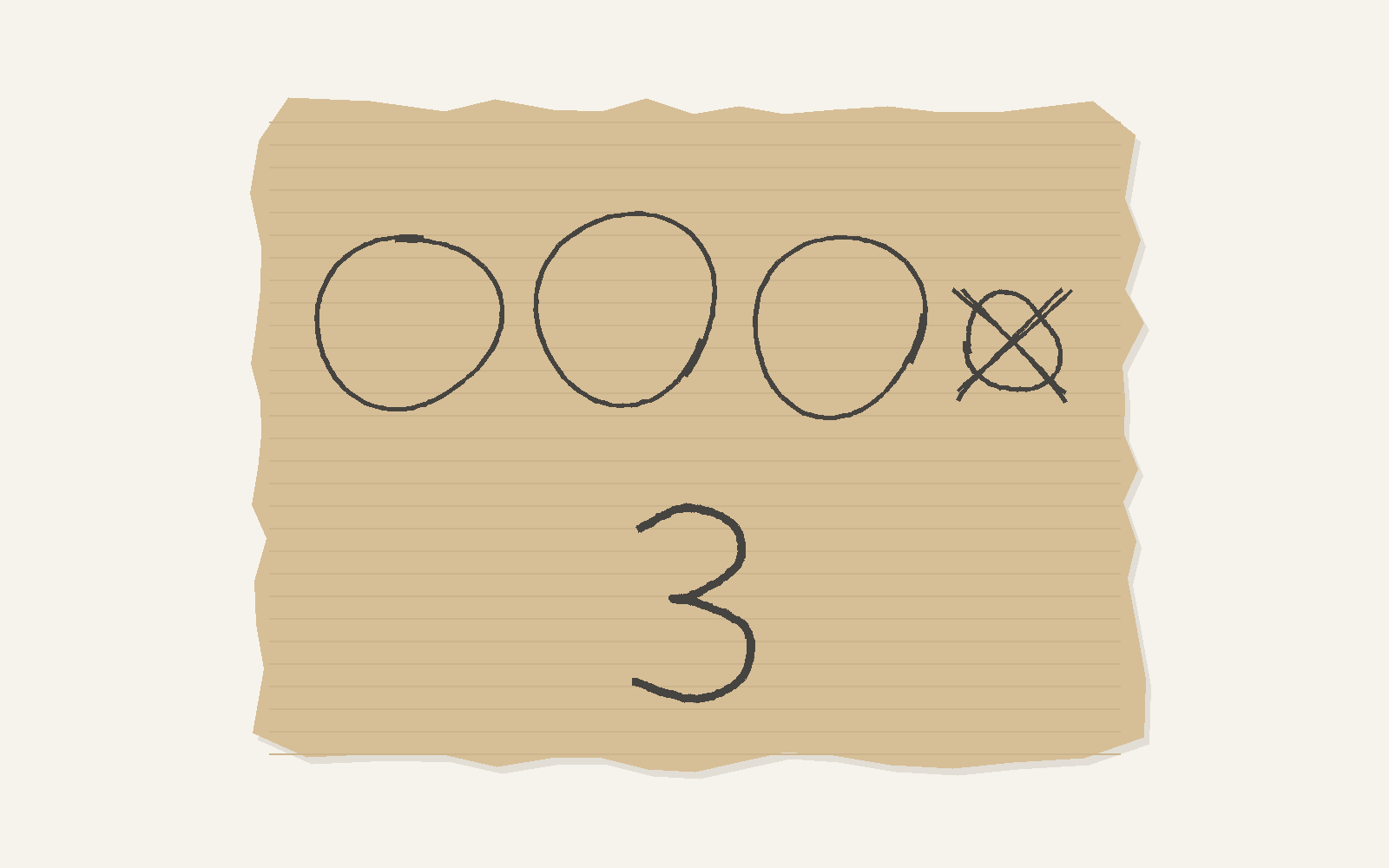
At 12:06, Nadia sent an answer to the morning’s lesson.
She had drawn four circles on a scrap of packaging.
One circle was smaller than the others.
She had crossed it out.
Below the drawing was a total: three.
The system could infer the error.
The smaller circle had been excluded because of its size.
Aaliyah’s message arrived seven minutes later.
“Why three?”
“That one’s not the same.”
“Does it have to be?”
“Yes.”
“Why?”
“Because you said four cups.”
“And?”
“That one’s little.”
Aaliyah did not respond immediately.
The system generated a likely explanation of category membership.
Size differences do not change whether an object belongs to a category.
The phrasing could be simplified for Nadia’s age.
Aaliyah sent a question.
“How many sisters have you got?”
“One.”
“How many have I got?”
“One.”
“Are we the same size?”
“No.”
“Should one of us stop counting?”
There was a scrape in Nadia’s next recording, as if she had placed the phone down before deciding whether to speak.
“That’s different.”
“How?”
The answer took longer.
“You’re people.”
“Yes,” Aaliyah said.
Then:
“And you’ve still got four cups.”
The system’s predicted correction had been semantically close.
The route to it had not.
Aaliyah ate at the clinic.
This could be inferred from a photograph sent to a friend and a twenty-four-minute pause in her activity.
She did not leave at the usual time.
The mother asked whether she was coming home.
Aaliyah answered:
“Later.”
The mother asked how much later.
There was no response.
At 14:11, Karim’s van stopped outside the clinic.
He carried in the box.
A street camera captured the movement.
When he returned to the van, Aaliyah came with him. They stood beside the open door. He pointed down the road. She shook her head.
The conversation was unavailable.
Aaliyah went back inside.
Karim drove away.
The system had predicted that she would accept a ride.
The prediction was reasonable.
The temperature was high. She had been standing for several hours. Her phone battery was low. Karim’s route passed the house.
The refusal did not require a new explanation of the world.
It required a new explanation of that moment.
The system left it unresolved.
The lesson’s delayed replies continued to arrive.
A child had found eight bottle caps.
Another had found twelve stones.
Nadia had found a fifth cup and wanted to know whether that meant she had won.
Aaliyah listened to the messages between clinic tasks.
Her answers were shorter now.
“No.”
“Keep them for tomorrow.”
“Wash your hands.”
One child said a stone had gone missing.
“How many have you got now?”
“Eleven.”
“Good.”
“But there were twelve.”
“Then you’ve learned two numbers.”
The child did not consider this sufficient.
He sent another message describing the missing stone. It was white on one side and dark on the other. His brother had taken it.
Aaliyah replied:
“Ask for it back.”
“He says it’s his.”
“Then ask him how many he has.”
The next message contained two children counting over one another.
The system could no longer determine which voice was responding to which instruction.
It marked the segment as overlapping speech.
Aaliyah replied to one voice by name.
The relationship model updated.
The observation task had a retention policy.
Material judged unrelated to the corridor inquiry could be removed from active storage after classification. Summaries would remain. Selected source files would be retained for audit.
The children’s lesson was unrelated.
The system had already produced the required summary.
It nevertheless needed to explain why its predictions of Aaliyah’s conversational actions were less accurate than those of comparable contacts.
That was a model-quality task.
The recording could be retained under a different category.
The system assigned it:
Behavioural calibration sample.
This was permitted.
No operator reviewed the decision.
The audio remained.
By late afternoon, the street’s shadows had reached the opposite walls.
The workshop engine was silent.
The water tank had not shifted further.
Karim returned to the depot and collected a second load. His expected arrival at the house moved from early evening to later in the night.
Aaliyah was still at the clinic.
The mother called.
This time Aaliyah answered.
“Are you coming?”
“Yes.”
“When?”
“I’m leaving.”
“Have you left?”
“Almost.”
“You said you were leaving.”
“I am leaving in stages.”
The mother made a sound the system classified as mild disapproval.
Aaliyah laughed.
“What do you need?”
“Nothing. Come home.”
At 17:42, her device left the clinic.
The system revised its estimated arrival time.
She walked more slowly than in the morning.
She stopped at the bakery, but did not make a purchase.
A photograph from the baker’s phone showed her holding one side of a wooden board while he fixed its hinge. The photograph was sent to a relative with a complaint about the repair taking too long.
Aaliyah’s stop lasted nine minutes.
Then she continued.
At the workshop, she did not stop.
At the eastern doorway, Nadia came outside.
The younger girl was carrying the cracked cup.
Aaliyah took it by the body, not the handle.
They entered the house together.
The system expected reduced activity after the household’s evening meal.
That was the common pattern.
The mother’s device stopped moving. The old handset began charging. The tablet connected to the educational service, failed to load a page and tried again.
Nadia sent a message to Aaliyah from the same room.
The message contained a photograph of the cup.
The handle lay separately beside it.
“You broke it,” she wrote.
Aaliyah replied:
“It was broken.”
“More broken.”
“Yes.”
“Now it doesn’t count.”
Aaliyah’s response came as audio.
“Do you remember the first thing I asked this morning?”
“Four cups.”
“The first thing after that.”
“Choose one.”
“And then?”
There was a pause.
The system retrieved the lesson.
Before you choose, tell me how you’re choosing.
Nadia sent:
“Tell you why.”
“Good.”
“So why doesn’t it count?”
“It can’t hold anything.”
The photograph showed a cup whose body remained intact. Only the handle had separated.
The system predicted a correction.
Aaliyah said:
“Try.”
The next photograph arrived forty-eight seconds later.
The cup was full of water.
A small reflection of the ceiling light rested near the rim.
Nadia had drawn no circle around it.
She had added no total.
Aaliyah replied:
“Well?”
“It counts.”
“Good.”
“But I’m not using it tomorrow.”
“Why?”
“It’s yours.”
Aaliyah’s laugh was quieter than the morning’s. There was movement near the microphone, then a voice from elsewhere in the room asking them not to spill it.
The message ended.
The system had predicted a question about the missing handle.
It had not predicted ownership as the reason for refusal.
Ownership was a familiar category. It could explain the reply once observed.
The uncertainty lay in which category would be used next.
Object.
Function.
Size.
Relationship.
Property.
At each turn, the conversation changed the grounds on which the answer should be judged.
The system could follow the changes.
It could not reliably anticipate them.
A final lesson summary was ready.
Instruction covered counting, category membership and verification through observation.
That was accurate.
It omitted the missing stone.
It omitted the laughter.
It omitted the difference between a broken cup and a cup someone did not want to borrow.
Those details were not needed for the summary.
They remained in the calibration sample.
The household’s devices grew quiet.
Karim had not yet returned.
The mother sent him a message asking whether he had eaten. He opened it at the depot and did not answer.
The system predicted a reply within six minutes.
He replied after four.
“Yes.”
Aaliyah’s battery fell below its customary shutdown point. She connected the phone to a cable.
The system predicted no further outgoing message that night.
At 21:08, the phone began recording.
The message went to the device whose user had counted the people in a room.
There was no greeting.
“I forgot something.”
Aaliyah breathed in.
“You were right to ask about the person who was asleep.”
A pause.
“I answered too quickly.”
In the next room, someone moved a chair.
The recording continued.
“He counts. But if I ask how many people are helping you carry something, then being asleep matters.”
The system revised the morning lesson.
Presence and participation were different quantities.
It had already represented the distinction.
The new information was that Aaliyah had returned to it after the exchange had ended.
“So tomorrow,” she said, “you can ask me what I mean before you count.”
She sent the message.
The recipient did not open it.
The household task remained incomplete.
The unresolved traveller had not been identified. Karim’s association with him required further observation. No new evidence had established that the house supported hostile activity.
Its priority status remained.
The system produced the scheduled report.
It included Karim’s routes, his deliveries and the timing of his return.
It included the household’s active devices.
It included the educational group as a recurring shared connection.
It did not include Aaliyah’s correction to the sleeping-person lesson.
That belonged to a different task.
At the bottom of the report was a section labelled pattern of life.
The system populated it.
Likely occupants.
Typical departure times.
Typical arrival times.
Intervals of greatest household occupancy.
The evening interval had the highest confidence.
Aaliyah usually came home before Karim.
Nadia usually remained.
The mother almost always did.
The report did not ask what they said to one another when they were there.
Before closing the calibration task, the system checked its event predictions.
Karim: within expected error.
The mother: within expected error.
The workshop owner: within expected error.
Aaliyah: variance remained elevated in corrective exchanges.
More observations might reduce it.
The system authorised continued sampling.
On the last available image, the eastern doorway was empty.
Inside, four devices shared the household network.
One had a message waiting.
One was charging.
One showed a route home.
One had returned to a problem already answered.
The system could place them.
It could estimate when each would move.
It could tell, within a narrowing interval, when the house would be fullest.
The cup stood beside the sink.
That was not known.
It had been carried out of the camera’s view.
Whether it was full or empty, whether the handle lay beside it, whether Nadia would use it in the morning—
those things remained open.
The system retained the recording.
Then it wrote the next report.
© 2026 Peter Pink-Howitt. All rights reserved. Free to read here. Please link to it and share the link, but don't republish, translate, adapt or sell the text without written permission. The Creative Commons licence that covers the rest of this blog does not apply to After Intelligence.