Freewill Or Freedom? – Part 2
“Tell me the name of the flower that flies from bird to bird?”
A Fragile Living Skin
Continued from Part 1.
Introduction #
How steam molecules are distributed in a room, how they will move and how long before they are water again are all, in principle, determinable. But at the finest scale — where each molecule is and where it is going — things get fuzzy, and at the sub-atomic level certainty becomes impossible.1 Determinism at any scale is only approximate; the smaller the scale or the larger the field, the harder it is to measure and compute every variable.2 Entropy is the universe’s way of keeping us all honest about the future, though some may know more than others.
So blessed water does not seem to have free will. Let us try living things, starting with plants.
A plant does not choose to be alive, nor the conditions it arises in. It begins entirely reliant on code developed over billions of years, and on luck. It then meets a specific landscape it did not choose, which will determine how well the code does its job. So far, no freedom to will. The plant is coded to grow toward light, which on Earth comes from above and is strongest around midday. We expect plants to grow upright with leaves to the sky. But sometimes the sun reaches a plant only at an angle, or it has rooted behind a wall or tree, and it must find the best path given these and many other constraints. Many plants are flexible and take winding paths, though they are rooted. A plant’s degrees of freedom are limited by the need to find and use light efficiently while immobile. A brainless plant that “decides” badly does so almost entirely through poor code, and will usually have less chance to pass that code on.
“Tell me, is the rose naked / or is that her only dress? … Tell me the name of the flower that flies from bird to bird?”3 (Pablo Neruda)
If we drew a plant’s options graphically, they would look like a bell curve: it could grow other than perpendicular to the Earth, but it is much more likely to grow upright.

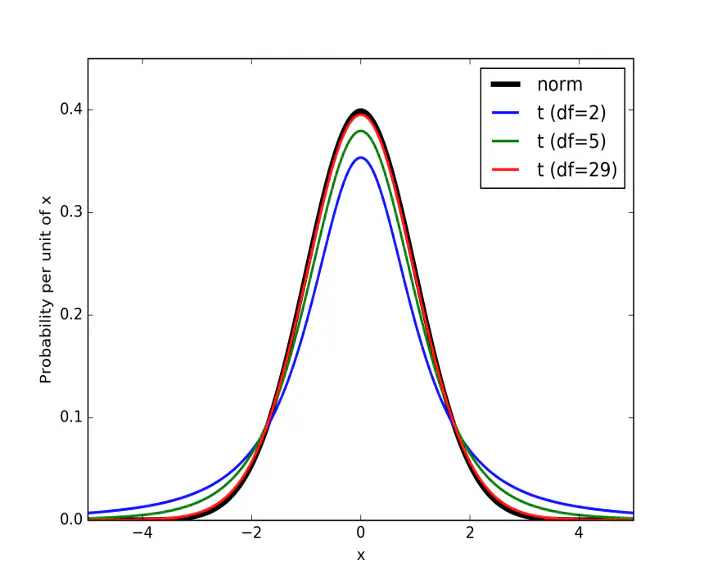 Right: t-distributions with 2, 5 and 29 degrees of freedom approximating a normal distribution (Joanna Diong, scientificallysound.org, 2018).
So we must decide whether, for life-forms, freedom means the ability to deviate substantially from the mean of the actions of the relevant local population. If a life-form’s decisions were placed on a distribution, free will might mean being able to choose arbitrarily where to sit on that curve — unlike height, colour, or where a plant is rooted. But even here it is not simple. Plants have found ingenious ways to travel almost everywhere on Earth: they use the wind, and they persuade insects, birds and animals to carry their seeds and pollen to more favourable climes. The first plants to do this must have looked extraordinary on a bell curve of distance from the normal actions of surrounding plants. Neruda, as so often, gets to the underlying reality with the fewest words: freedom quickly becomes a group function between interacting species and generations.
The Free Will Tyrant #
An unusually irate reader might say: “This is ridiculous, plants don’t make choices and so can’t have free will. Get back on track.”
All right, take it easy. We can do it that way, but then we must check our assumptions. Excluding plants looks immediately like unfair discrimination unless we redefine the term — unless by free will we mean the ability to make conscious choices, though why consciousness should be the relevant criterion is not objectively justified. Call this Free Will C. I have reservations, much as I have reservations about treating unconscious processes and code as not being examples of great systemic intelligence. Life, manifest in collections of life-forms, is very intelligent even though evolution is not conscious.4 Any intelligence humans have is embedded in communal code and culture — group properties.
Under Free Will C we may only consider conscious life-forms. So: what do we mean by conscious? If it means being aware of and responsive to the surroundings, any plant qualifies. At this point one may become a free will tyrant and insist on a brain and a nervous system. Call that Free Will T, and to keep the tyrant happy, focus on mammals.
“I can, therefore I am.”5 (Simone Weil)
Free Will T: non-human mammals #
The bell-curve analysis applies to any variable property of a population — height, for instance — that has nothing to do with will, so we need to say more.
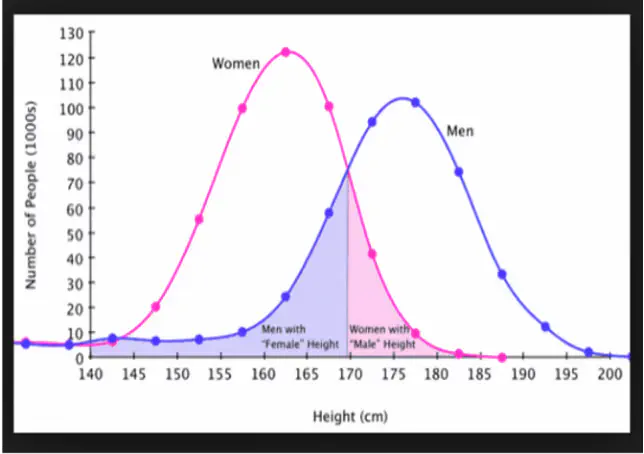
Provisionally: free will must in principle be the ability of an individual to choose arbitrarily where it sits on the distribution for any action; in practice it can only be the extent to which the life-form actually deviates from the mean. For an action to count as freedom of action it must measurably deviate from the expected distribution, and it should carry some risk or cost.
A population may each believe they act freely while the distribution as a whole is exactly what it would be with no choice at all (as with height).6 A life-form believing it is free is not proof of free will and, depending on the property, may go far toward proving it delusional. Notice the similar shape of two definitions: negative entropy, distance from surrounding normality, and this proposed approximation of free will. That is no surprise; life-forms evolve on the benefits of unusualness. Height deviates through code and conditions but is not willed; location may deviate because of a decision — which may or may not be freely made.
Does a polar bear have freedom? How much, and what would the evidence look like?
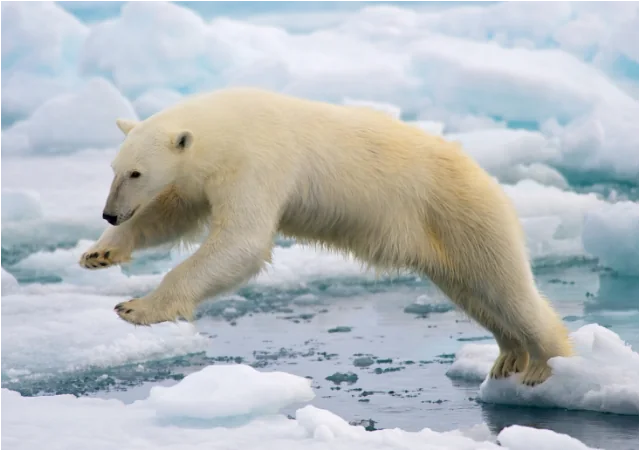 Arturo de Frias Marques, “Polar Bear”, 2011, CC BY-SA 4.0.
Like all mammals, a polar bear cannot choose its colour, size or weight. It exercises freedom mostly in movement and sometimes in its choice of mate. It might exercise some freedom in food, but the constraints are strong: survival depends on rich protein and fat, and much deviation here would be deadly. Polar bears diverged from brown (grizzly) bears several hundred thousand years ago;7 they can still interbreed and produce fertile young,8 so the two are classified as separate species on ecological and morphological grounds rather than strict reproductive isolation. Presumably at some point a pregnant female, or a small group, moved north and became separated from its sleuth, and over generations the group acquired adaptations to cold, water and ice. Size helps against hypothermia, so they grew larger.9
Is it the train That falls like meteorite Backward into space, to alight Never again? Or is it the illusory world That falls from reality As we look? Or are we Like a thunderbolt hurled? One or another Is lost, since we fall apart Endlessly, in one motion depart From each other.10 (D. H. Lawrence)
Even for this event, which started a new kind of bear in a new place and is therefore statistically very unusual, we cannot know whether the departing bears chose to separate for good, and they could not have known the consequences. Most of a bear’s freedom lies in choosing paths and places to live, yet most bears live where they grew up. Deviation in location is significant risk-taking, given the uncertainties about food. Perhaps the ancestors were risk-takers from a place of shortage;11 perhaps they were unlucky and made the best of it. We can say only that over generations the population migrated — behaviour some distance from the ordinary. In principle each bear could live somewhere entirely new; in practice most choices are made within a narrow range — this part of the river, that part of the shore.
Free Will T: humans #
So what does this mean for us?
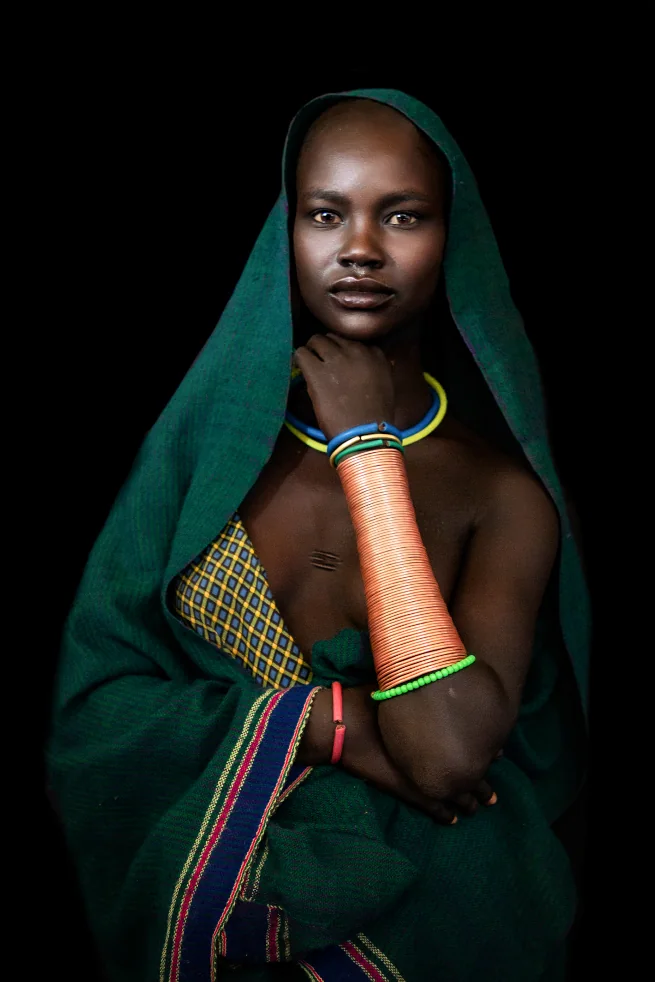 Inger Vandyke, “Suri girl: Ethiopia”, 2019.12
Humans can currently make many more choices than other mammals, so we are more likely to have the opportunity to exercise greater freedom of action. But while we might exercise it, by definition we rarely do.
Freedom of action is relative, and it is a group quality unfolding over generations in both code and culture. Each step from the normal is taken from a different normal, set by previous outliers. The freedom available then grows by more than the sum of individuals’ unusual actions.13
“I invented nothing new. I simply assembled the discoveries of other men behind whom were centuries of work … Progress happens when all the factors that make for it are ready, and then it is inevitable. To teach that a comparatively few men are responsible for the greatest forward steps of mankind is the worst sort of nonsense.”14 (Henry Ford)
Think of how water molecules work collectively. When water boils, the molecules do not split into hydrogen and oxygen; the hydrogen bonds between them change, and that is how the same molecules can be ice, water or steam.15 Flow, droplets, waves and boiling are collective behaviours; no single molecule does any of them.
Our self-centredness and excessive individualism have misled us about how the world works and what we control. Even today’s obsession with what people do, wear and look like is a group dynamic: people asking for their specialness to be affirmed by others. We stand on the shoulders of giants, and every step forward or sideways from mediocrity is a cumulative step for all — back to the beginning of our culture and code, and further, to the ancestor from which all life on Earth evolved.
“In the Mind there is no absolute, or free, will, but the Mind is determined to will this or that by a cause that is also determined by another, and this again by another, and so to infinity … Spinoza believes that this is something that has not been sufficiently understood by previous thinkers, who seem to have wanted to place the human being on a pedestal outside of (or above) nature.”16 (Stanford Encyclopedia of Philosophy on Spinoza)
At the individual level, freedom of action means doing something that is a real outlier from the activities of one’s family, friends or class. It may be, or seem, arbitrary. It usually involves perceived risk and can bring loneliness, ostracism, economic failure or early death. Freedom sounds brave or foolhardy — and which it is depends on what happens next, which is often out of the individual’s hands.
“Like Edison, Thom Hartmann is a visionary who uses history to illuminate the potential cost to society of shackling unique minds aching to soar. He questions the cultural imperative that compels us to label what is outside the bell curve as pathological rather than extraordinary.”17
Perhaps the first Homo sapiens to radiate out of Africa were real risk-takers, which would help explain both our migratory nature and the strong tendency to gamble across human societies — and perhaps some of our violence. Where risk-taking succeeds it enters our common code and culture. Once the outlier or small group succeeds, freedom of action is a cumulative group property.
If freedom to deviate is coded into mammals, what does that mean for the persistent idea of free will?
“Freedom is what we do with what is done to us.”18 (Jean-Paul Sartre)
 And1mu, “EM-Wave”, 2016, CC BY-SA 4.0.
Hartmann’s “Edison gene” hypothesis — that traits now labelled ADHD are a human expression of a coded capacity to deviate — is speculative, but the picture it suggests is apt. Life moves like light: by deviation from the baseline, and each deviation is from a baseline that has itself moved forward, permitting a new deviation from a new starting point.
So when we speak of freedom (I am no longer talking to the tyrant), we must mean something like: the capability and tendency, contained in code and potentially in culture, for life-forms to take actions that are an unusual distance from the mean of the expected distribution of actions of the local population, evidenced when enacted.
This is an equivalent description of evolution in action. By Occam’s razor,19 we have no need of a metaphysical property called free will to explain the behaviour of any life-form. For sapients we might add that such action will usually involve perceived risk, particularly as perceived by the rest of the population — though the outlier may see it differently.
“Remembering that you are going to die is the best way I know to avoid the trap of thinking you have something to lose. You are already naked. There is no reason not to follow your heart.”20 (Steve Jobs)
The heart #
This essay refers to the value of the “heart” in decision-making, which may look incongruous in a project aimed at reducing our dependence on the passions in ethics — or rather, at transforming passion into compassion, wise action. Yuval Noah Harari warns:
“Friends giving advice often tell each other, ‘Follow your heart.’ But the heart is a double agent that usually takes its instructions from the dominant myths of the day.”21 (Yuval Noah Harari)
Harari is right about passion as the only guide. But Jobs uses the word in a more specific and more interesting way. The heart as the seat of judgement has the deepest roots: from ancient Egypt, through the Hebrew sense of heart as mind, to the Latin cordatus — heart-shaped, judicious, sagacious. Read “heart” here as decision-making not driven purely by probability or expected gain. It is what is missing in the robot that fails to try to save the young girl in I, Robot.
The heart can make decisions with a very low chance of success and a very high payoff, allowing extraordinarily useful and unlikely freedom of action. It can be a source of courage when used as a weighing tool for wisdom, and it can tell us what to do when the information is too complicated for computation or the conclusion of the computation is frightening. It is not fail-safe, but it can be a source of great strength — courage to do the difficult even, in extremis, at the price of life itself. And when the heart leads to failure, that failure, if not fatal22 or pure folly, carries the seeds of success.
“Edison turned on me like a flash, and with a smile replied: ‘Results! Why, man, I have gotten a lot of results! I know several thousand things that won’t work.’”23
Good intentions are not sufficient in themselves. Many actions taken to help someone find “truth”, “God” or “purity” have caused great suffering.
“Just ‘cause you feel it / Doesn’t mean it’s there.”24 (Radiohead)
The true test of ethics is action measurable in its initial impact and longer-term effects. There is no great mystery here: a good mindset and an evidence-based approach to assessing what flows from it. In a universe that is not fully deterministic or fully representable, there are no guarantees; probabilities may be all we ever have.
So, free will. It would be better described as courageous and costly will, given the social and financial risks of exercising freedom. The cost is circumstantial evidence of some freedom of choice, since the likelier action is cheaper on its face. Yet we still cannot be sure whether the life-form is choosing freely or responding to its history, culture and space-time in a statistically unusual way, according to its code. With more life-forms and species, the capacity for diverse outliers increases, and a group can make decisions unavailable to any individual.
“… if a stone, while continuing in motion, should be capable of thinking and knowing, that it is endeavouring, as far as it can, to continue to move. Such a stone … would believe itself to be completely free, and would think that it continued in motion solely because of its own wish. This is that human freedom, which all boast that they possess, and which consists solely in the fact, that men are conscious of their own desire, but are ignorant of the causes whereby that desire has been determined.”25 (Benedictus de Spinoza)
Is belief in free will the delusion of total self-determination held by a member of a population that acts unusually?
History is led by outliers of a group #
On this analysis the history of life-forms is a history of fortunate outliers finding success (and of great failures), passing the benefits on in code or culture, each deviant step taken from an ever-changing baseline. They are deviant members of a group, not individuals acting alone. Diversity is the configuration with more possible arrangements and more outliers. Human history, like all evolution, is led by outliers — we call them crazy, reckless, wonderful, brave, malicious, smart and, rarest of all, wise. They do not act alone.
Freedom is not free; it is usually costly. Nor is it free in the sense of starting from a blank page. How far a life-form’s subjective beliefs bear on its freedom of action cannot be verified or quantified, and the causes of those beliefs cannot all be known. Freedom of action is different: the coded capacity to act in a statistically unusual way. As Auden said, “We live in freedom by necessity.”26
Whatever freedom we have to choose is not freely chosen by us. Freedom to deviate begets more freedom to deviate. It is measurable. Let us stop using the term free will and attend instead to this quality of freedom in the universe — freedom of action, the freedom to act differently.
The impact on justice #
“It is customary to talk about man as an individual who moves freely about our planet, and freely constructs his own history … In reality, no living organism exists in a free state on Earth. All of these organisms are inseparably and continuously connected.”27 (Vladimir I. Vernadsky)
Is a person acting badly — unskilfully — so different from a failing flower or tree?
- Do we look at a failing plant and angrily declare that if only it had greater moral purpose it could flower properly?
- Is it not kinder, and more honest, to ask what soil, weather, water, actions of others and code helped cause the behaviour?
- Are people so different from molecules in the sea, rising and falling, pushed and jolted by others, largely moving nowhere in a circle?
- Or are we like molecules in the river, pulled to the sea by gravity, believing ourselves free when we are in free-fall?
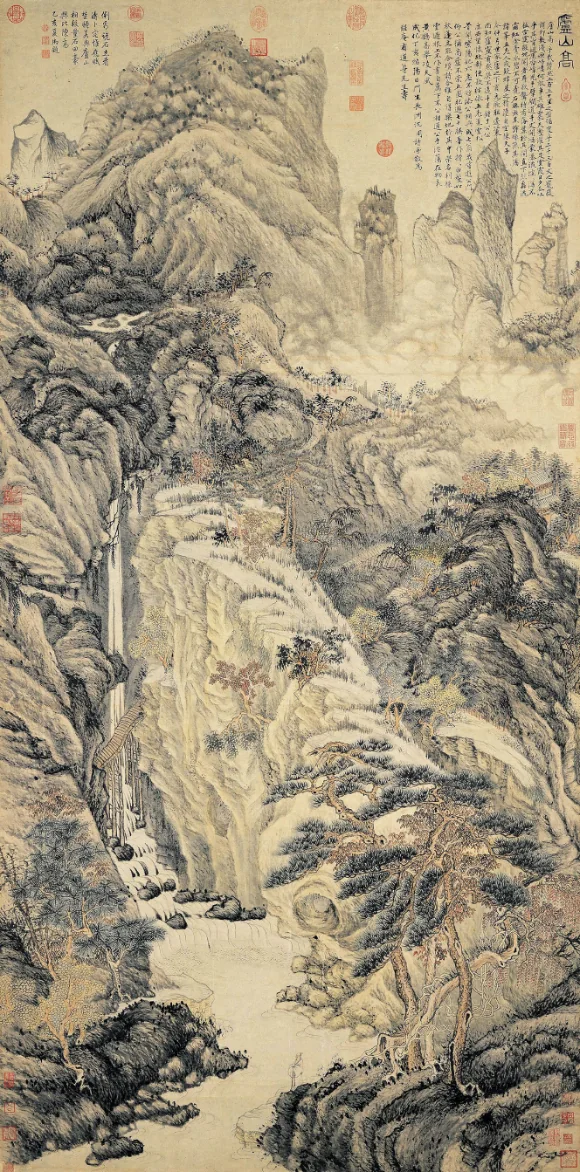 Shen Zhou, “Lofty Mount Lu”, 1467, public domain.
The critic will say I am claiming people bear no responsibility. Not so. The point is that isolating a person from surroundings and history and attributing all their actions to free will is as meaningless as doing it for an atom, a molecule, a plant or a bear. People are usually coded to grow toward the light; our efforts should go into helping them do so, into giving them good ground. If it were all free will, we would not have depression, mental illness, suicide, suffering — we would not need wisdom and compassion. If the believer in free will is so concerned about personal responsibility, let them ask what they wish to do with their freedom to improve conditions for all.
It is largely irrelevant whether one believes in free will or freedom of action; what we do next is what counts. And since prior conditions are probabilistically determinative, it is not equitable to point to an outlier — someone who overcame a difficult background — to damn the rest of that population for failing to be unusual.28
Individual and collective freedom #
Think for a moment on Adolf Hitler. Was he the freak bolt of lightning that set fire to the world, or a lightning rod for pent-up dark energy — the hatred, the self-loathing of weakness, the fury and the desire to blame someone for the suffering in the world? Would removing a young Hitler have prevented the horrors? We will never know, but to assume it definitely would seems naive. Individual deviancy can be extreme (Alexander the Great) and must not be underestimated, but the overwhelming probability is that by the time of his arrival the forces were ready to be unleashed and channelled themselves through him and his cohort.29 Removing him might be like removing one molecule from the sea and hoping the wave will not strike the shore. To have a real chance, we would need to go back and minimise the collective energies — antisemitism, newly industrialised mass murder, new tools of mass communication, the anger and shame of the reparations30 — that the raving Hitler resonated.
“Recognition of the fact of suffering as one of three basic characteristics of existence – along with impermanence (anicca) and the absence of a self (anatta) – constitutes the ‘right knowledge’.”31
We do not need to enter the subjective perception of any life-form to understand or measure freedom, nor to know whether or why it thinks it chose (which is too subjective to be determinative, since in most cases it could not know). Freedom of action means identifying and measuring the quantity and quality of unusual, diverse acts in a population. In ethics, positive deviancy gives rise to maximal diversity and freedom of action for as many life-forms and species as possible. It yields valuable new information. It may one day even give rise to a new human species.
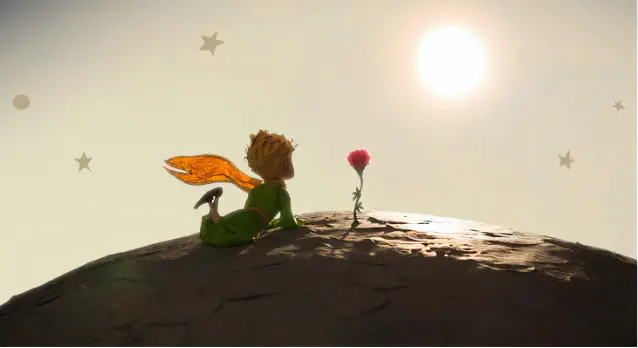
“It is only with the heart that one can see clearly. What is essential is invisible to the eye.”32 (Antoine de Saint-Exupéry)
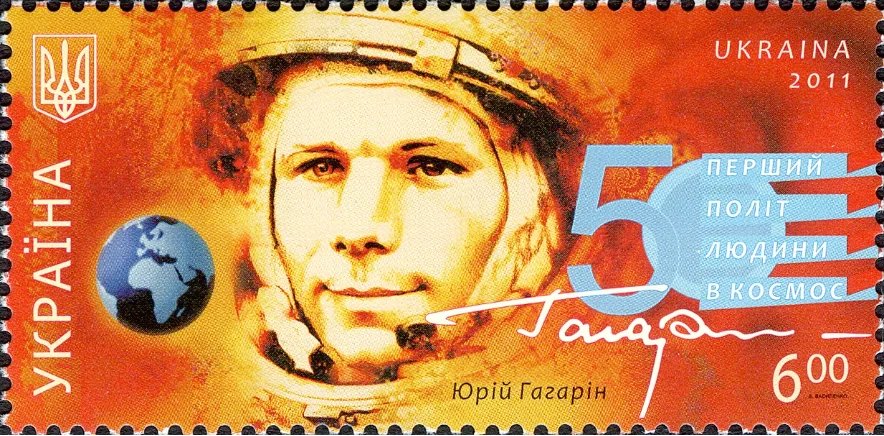
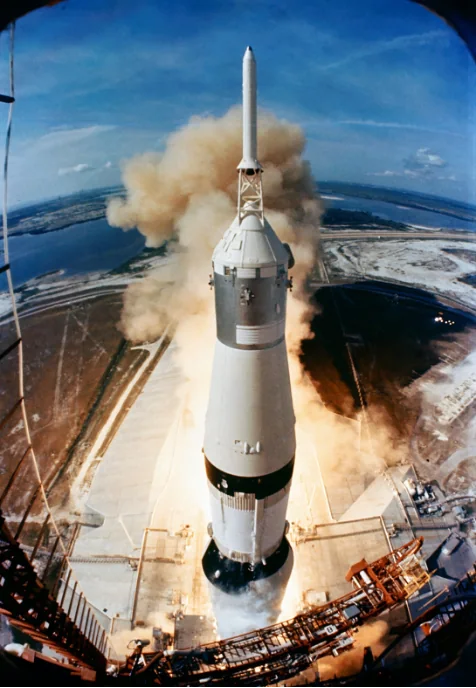
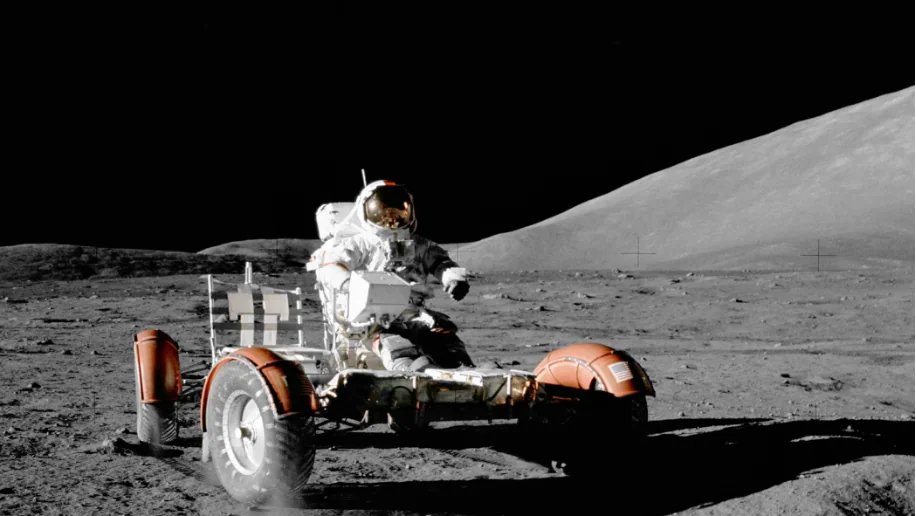
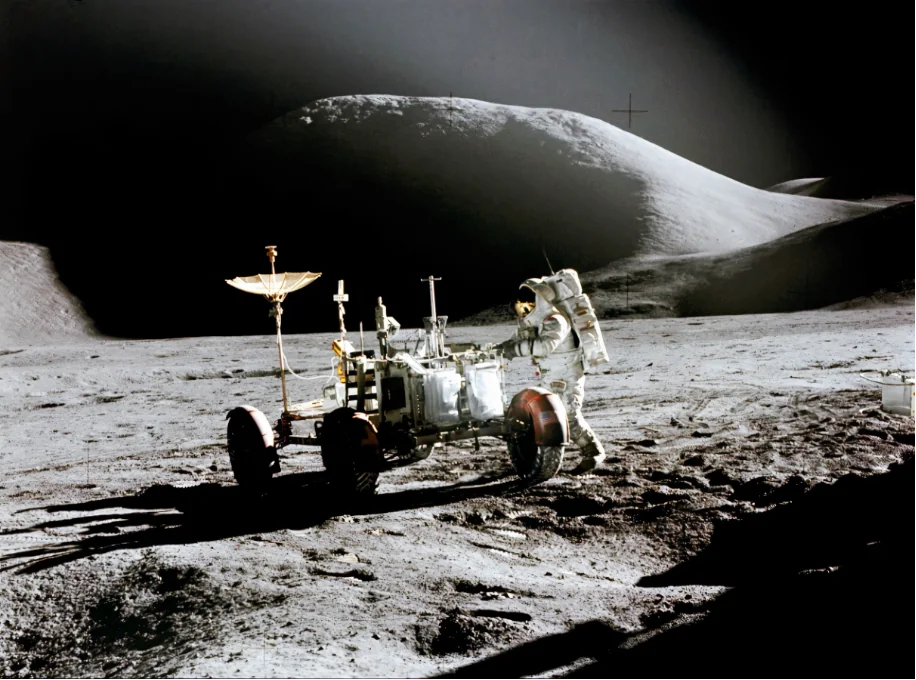
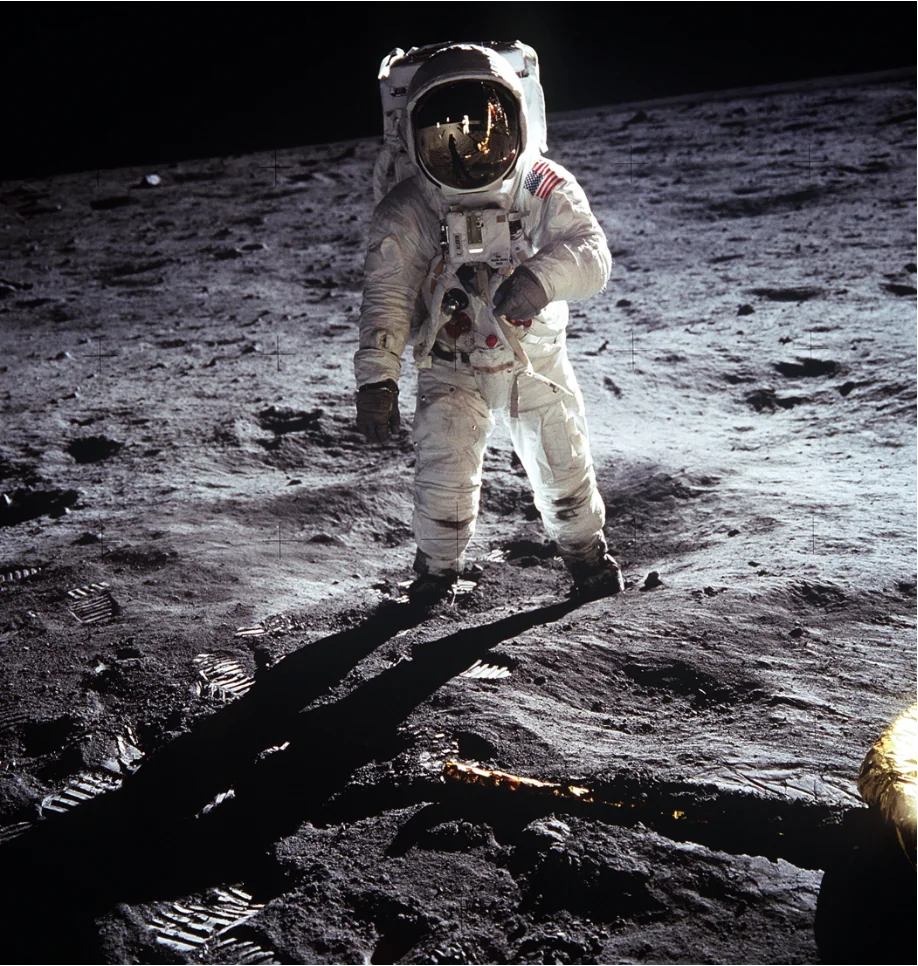
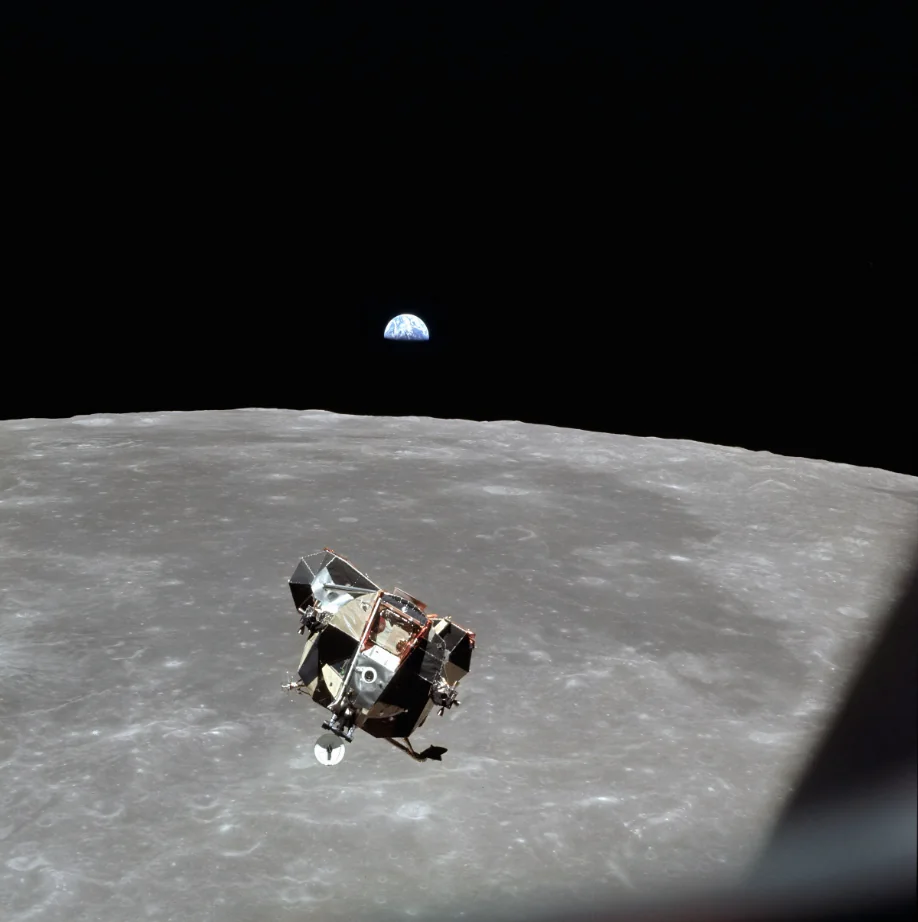
When the twins’ space journey is one day enacted, and the relativity of time shows in the different ages of their faces, it will be an extraordinary new example of life’s freedom of action.33 For a life-form to leave Earth, journey to another part of the galaxy and return is so far from the average behaviour of life-forms that it is obviously not an act of “free will” by an individual, a nation or even a species — though any of these may be the catalyst. It is the product of all human history and knowledge, of all the experiments with energy made by every life-form on Earth. And it is more: it is life itself exercising its greatest freedom of action so far, in this case through its human forms.
What need have we of the misguided, petty concept of individual free will in such a wonderful life and universe?
Just for a moment, meditate on the extraordinary improbability: a raw and tiny rock, hurtling through the heavens while growing a fragile living skin; and that skin deciphering how to join the fiery firmament, how to leap between the stars, reaching out towards infinity … ∞
If we must talk of freedom, let us talk about that world. For that is the world we live in, if we could but see it.
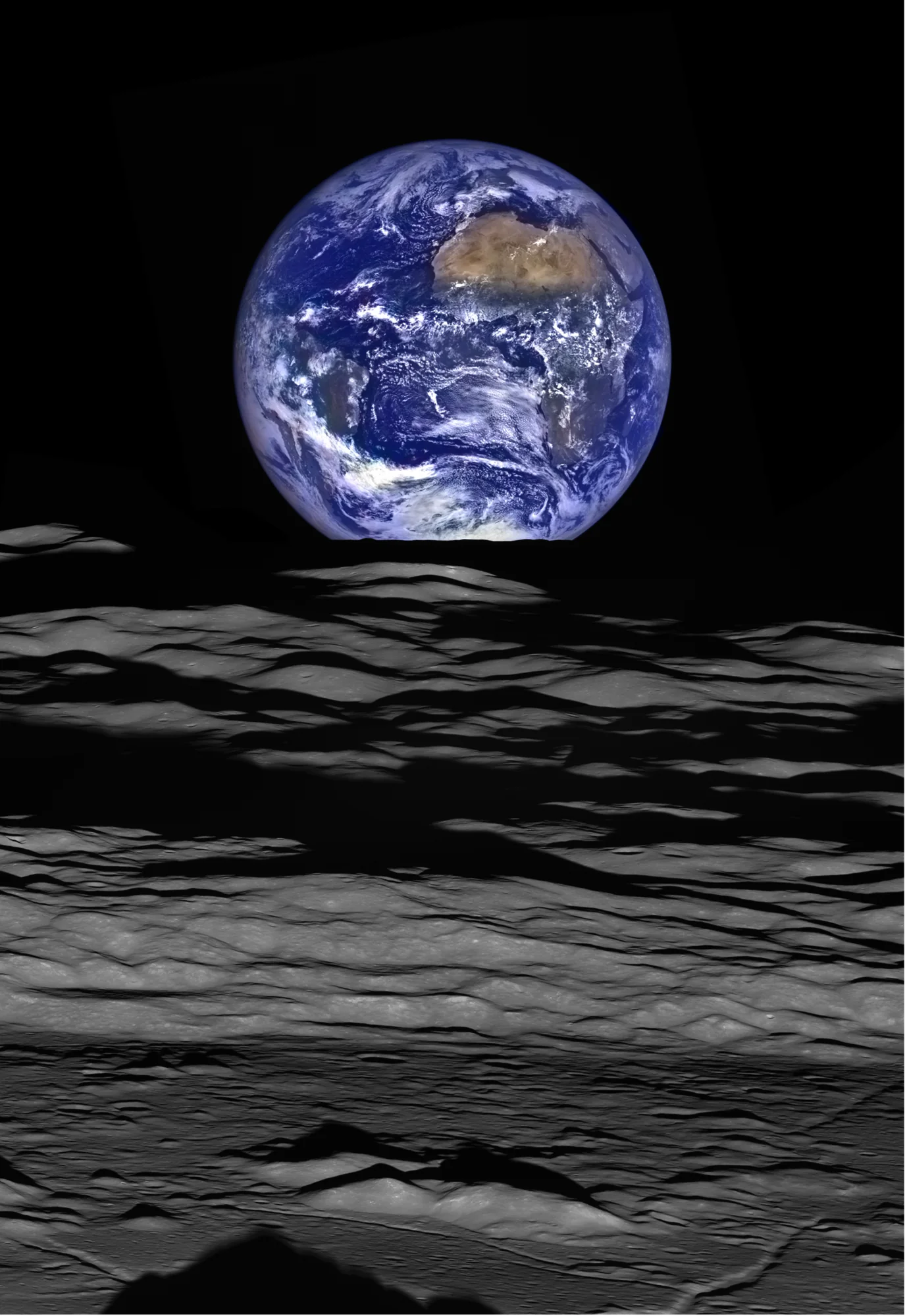 NASA, “Earth from the Lunar Reconnaissance Orbiter”, 2015, public domain.
Then such greatness and truth descended As over a new grave, when the mourners have gone And the stars come out And the earth, bristling and raw, tiny and lost Resumes its search Rushing through the vast astonishment. (Ted Hughes, “His Legs Ran About”)
Footnotes #
Wikipedia, “Uncertainty principle”. ↩︎
I am not suggesting quantum uncertainty is the same as macroscopic computational difficulty or chaos (the three-body problem), only that we perceive poorly at very large and very small scales and never have perfect continuous information from perfect tools. ↩︎
Pablo Neruda, The Book of Questions (1974). ↩︎
I discovered after writing much of this that my approach accords closely with Spinoza’s Ethics (1677): life itself as one substance without extension, life-forms as a collective body with extension (see Part I, Prop. 5). ↩︎
Simone Weil, Science and Perception in Descartes (1930; English edn 2009). ↩︎
“Highly intelligent people and criminals are both outliers; very short and very tall people are outliers … Outliers can be good, bad, or totally neutral. They’re just not normal, and normal people think that being normal is morally good, because they’re normal.” — evolutiontheorist, “On overlapping bell curves and the irony of being an outsider” (2016). ↩︎
University of Massachusetts Amherst, “How Did the Polar Bear Evolve From Its Grizzly Relative?”, Technology Networks, 18 June 2019. ↩︎
The first confirmed wild hybrid was shot by hunter Jim Martell in 2006; Associated Press, “Wild find: Half grizzly, half polar bear”, 11 May 2006. ↩︎
One World One Ocean, “Polar Bear Adaptations for Extreme Cold” (2012). ↩︎
D. H. Lawrence, “Tommies in the Train” (1919). ↩︎
How could Homo sapiens have dreamed, when they drifted out of Africa, of all that would follow? ↩︎
Many thanks to Inger Vandyke for permission to use this image, which is not public domain or Creative Commons. ↩︎
Compare Metcalfe’s law; Wikipedia, “Metcalfe’s law”. ↩︎
Henry Ford, quoted in Andrew Hargadon, Retooling R&D (2003). ↩︎
“An H₂O molecule is not just a little piece of water. Consider what liquid water does: it flows, forms droplets, carries ripples and waves, and freezes and boils. An individual H₂O molecule does none of that: those are collective behaviors.” — George Musser, “What Is Spacetime?”, Scientific American, 1 June 2018. ↩︎
Stanford Encyclopedia of Philosophy, “Baruch Spinoza” (2020). ↩︎
Ellen Littman, reviewing Thom Hartmann, The Edison Gene: ADHD and the Gift of the Hunter Child (2003). I confess I have not yet read Hartmann’s book — I can almost hear you shout “the shame of it”. See also Simon Baron-Cohen, “Why autism and invention are intimately related”, New Scientist, 2 December 2020. ↩︎
Jean-Paul Sartre, Being and Nothingness (1943). ↩︎
William of Ockham: “Plurality must never be posited without necessity.” See Tom Chivers, “What can Occam’s razor tell us about God?”, UnHerd, 17 September 2018. Ockham was an admirable empiricist and theologian, “convinced that belief in God is a matter of faith alone” (Internet Encyclopedia of Philosophy). ↩︎
Steve Jobs, Stanford commencement address (2005). Or, as Clive James put it: “Stop worrying, no one gets out of this world alive.” ↩︎
Yuval Noah Harari, Sapiens (2011). ↩︎
Even fatal actions, if not pure folly, can sow seeds for others: “the hero lives on; even his downfall was merely a pretext for achieving his final birth” — Rilke, “First Elegy”, Duino Elegies (1923), trans. Stephen Mitchell. ↩︎
Frank Lewis Dyer and Thomas Commerford Martin, Edison, His Life and Inventions (1910). ↩︎
Radiohead, “There, There”, Hail to the Thief (2003). ↩︎
Spinoza to G. H. Schuller, Letter 58 (1674). ↩︎
W. H. Auden, “XXVII”, In Time of War (1938). ↩︎
Vladimir I. Vernadsky, “The Biosphere and the Noösphere” (1943). ↩︎
Bruce Western, “Violent offenders, often victims themselves, need more compassion and less punishment”, USA Today (2018). There is diverse evidence that people “to whom evil is done / Do evil in return” (Auden). ↩︎
I would be more inclined to grant Hitler greater individual influence if the equally monstrous Stalin were not in power at the same time. This is the darker side of “cometh the hour, cometh the man”. ↩︎
BBC, “Why has Germany taken so long to pay off its WWI debt?” (2010). ↩︎
Encyclopaedia Britannica, “Dukkha”. ↩︎
Antoine de Saint-Exupéry, The Little Prince (1943). Image: The Little Prince, dir. Mark Osborne (2015), fair use. ↩︎
It has already been enacted to a lesser extent in our exploration of space, above all the Moon landings (Wikipedia, “Apollo program”). ↩︎