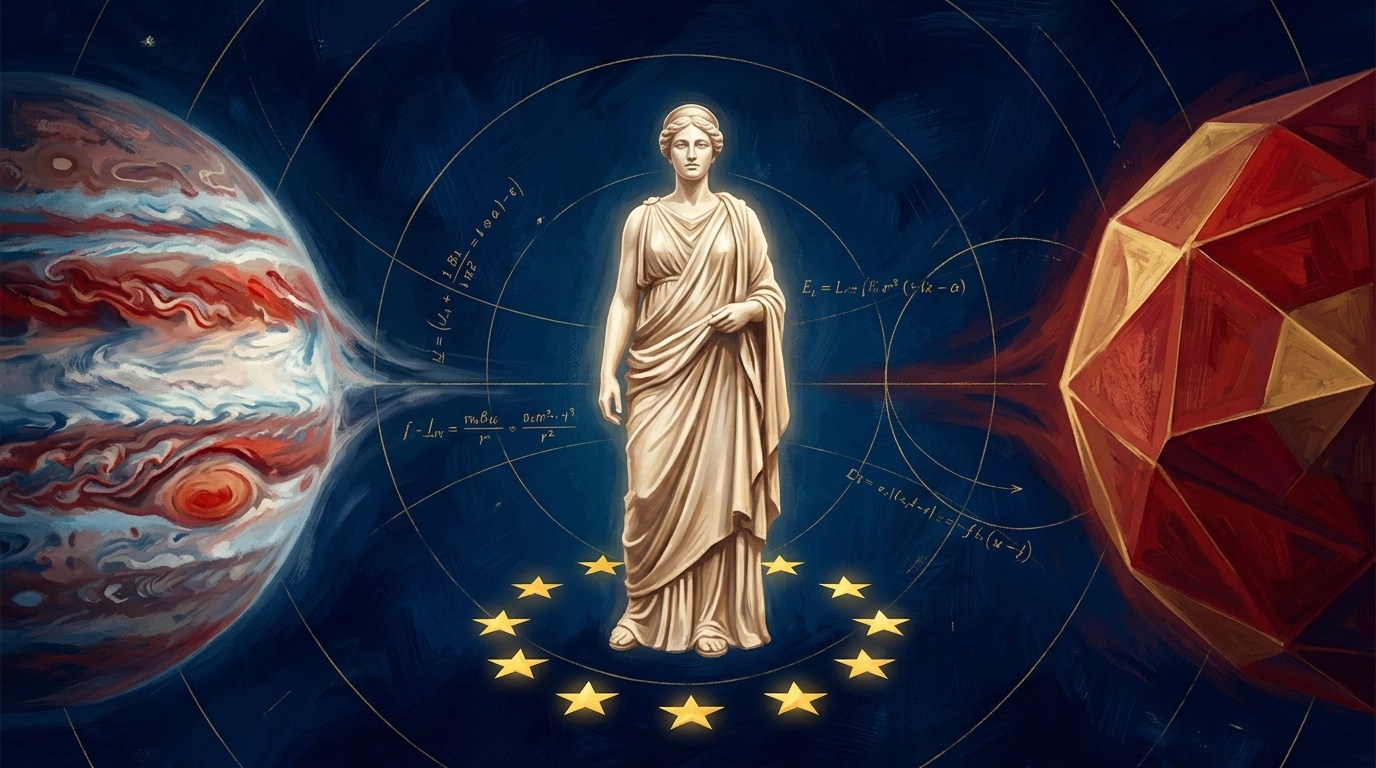
Free Will Or Freedom? – Part 1
“Be melting snow, Wash yourself of yourself”
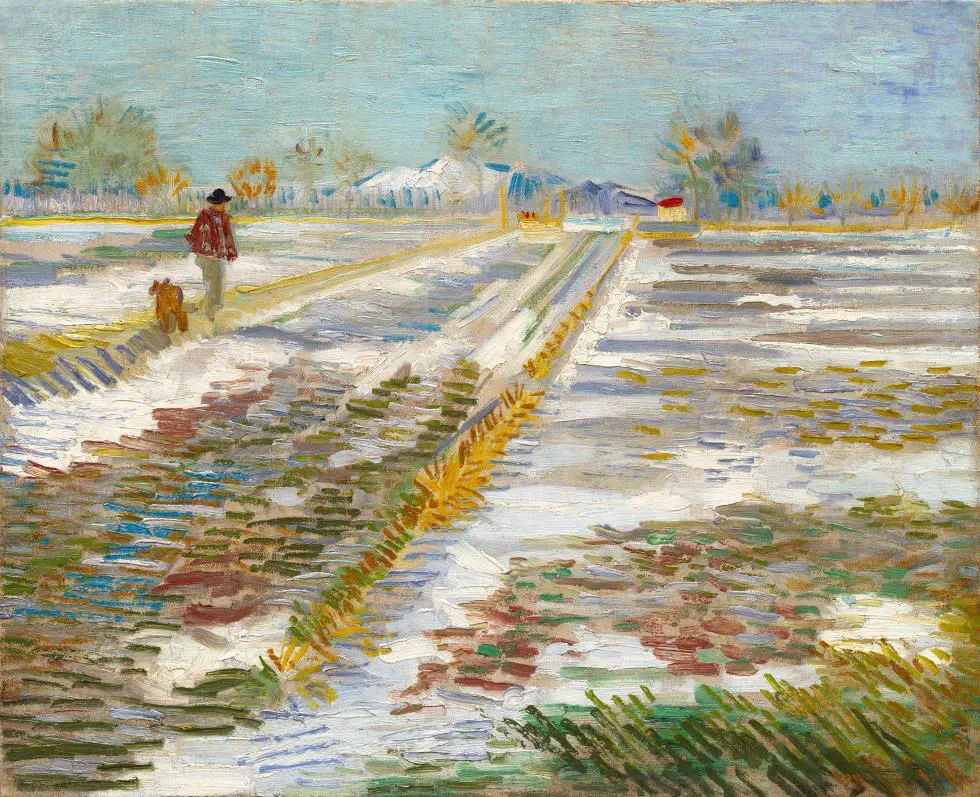
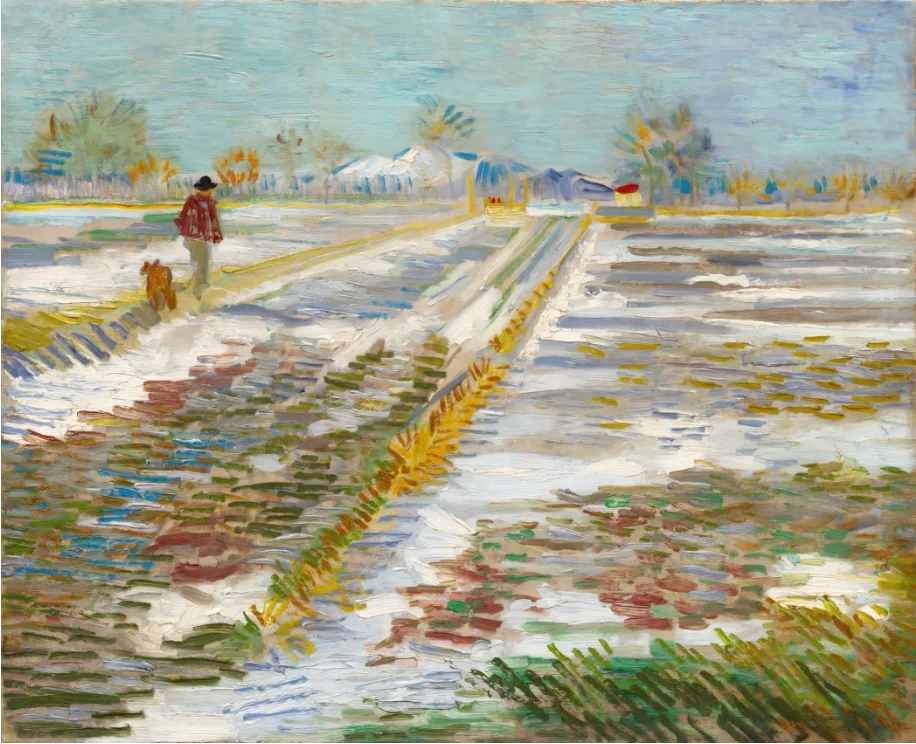 Vincent van Gogh, “Landscape with Snow”, 1888, public domain.
“Be melting snow. Wash yourself of yourself.”1 (Rumi)
AI Podcast #
Free Will #
The laws of physics are wonderful, not least because they show us some of the magic behind the seeming mystery of life and the universe. They are also proper laws: intended to hold across space and time.
Besides the equivalence of energy and matter, we have Einstein to thank for showing that there is no universal “now”. Special relativity, in Minkowski’s formulation, fused space and time into a single space-time in which observers in relative motion disagree about which events are simultaneous; general relativity then showed that mass and energy curve that space-time. Einstein left us unable to speak of the present moment as if it existed independently in the universe.
Time is not an independent thing that we measure with a clock. The movement and transformation of energy and matter — entropy — is what gives us the feeling of time flowing, and it is also what makes life unusual and useful. See What is Entropy? – Part 1.
You might wonder when I am going to start this article on the freedom to will. I have. I have exercised my freedom to start it by talking about other things. That sentence is less flippant than it looks.
“The idea that a well-defined now exists throughout the universe is an illusion, an illegitimate extrapolation of our own experience. It is like the point where the rainbow touches the forest. We think that we can see it – but, if we go to look for it, it isn’t there.”2 (Carlo Rovelli)
I have been looking for the rainbow we call free will and have found that it does not exist in the world, at least not as it is usually described. What we can find, and measure, is the nearest real thing: distance from the normal behaviour of the surrounding population — relative freedom of action.
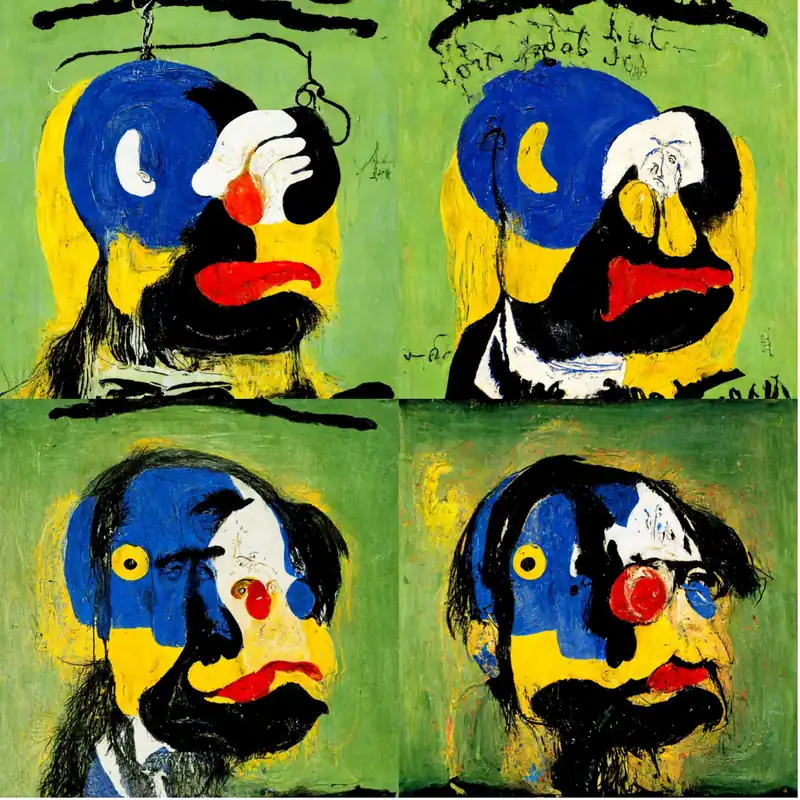
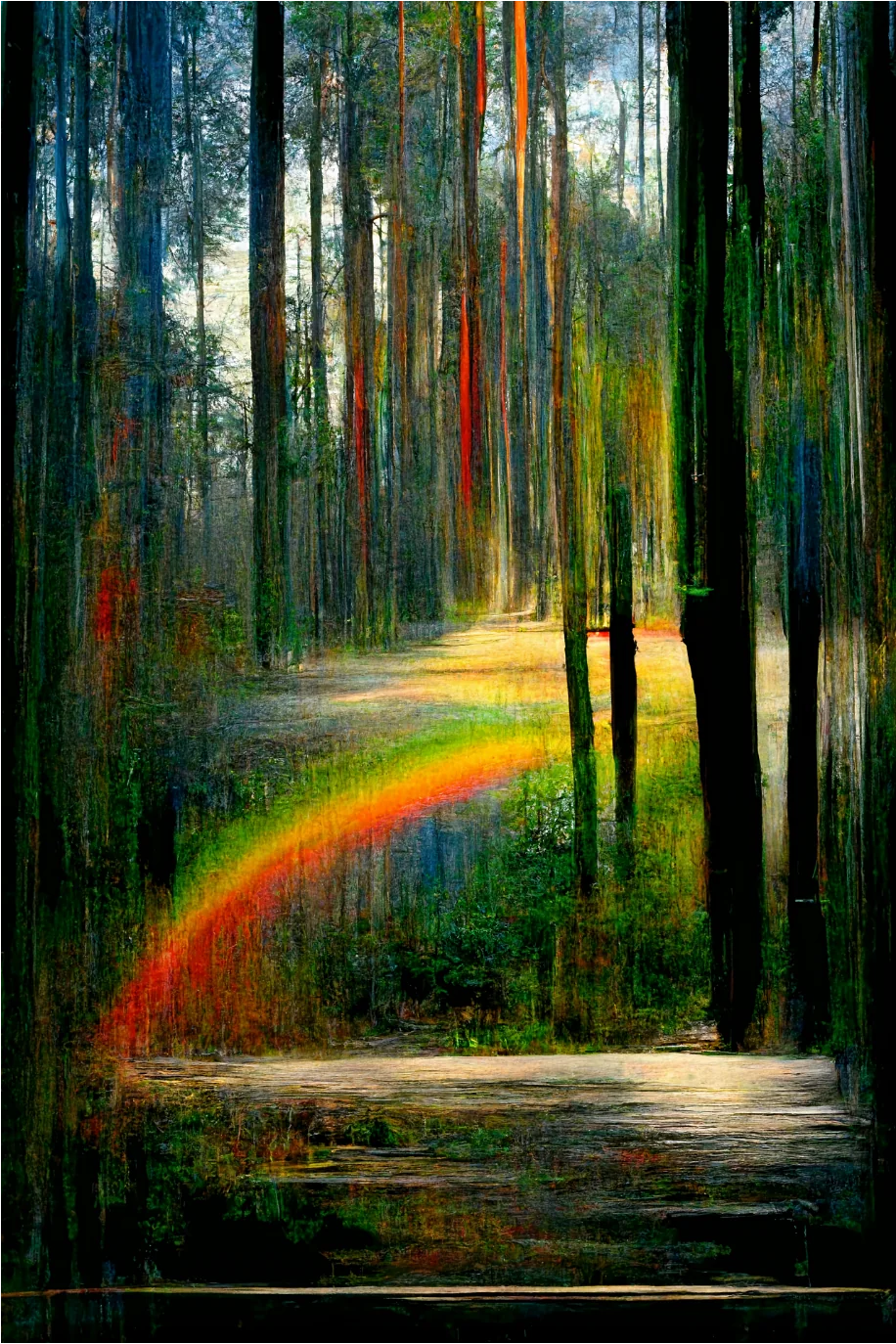 “Where the rainbow touches the forest”, Peter Pink-Howitt, AI art, 2022.
My feet are locked upon the rough bark. It took the whole of Creation To produce my foot, my each feather: Now I hold Creation in my foot Or fly up, and revolve it all slowly – I kill where I please because it is all mine. … The sun is behind me. Nothing has changed since I began. My eye has permitted no change. I am going to keep things like this.3 (Ted Hughes, “Hawk Roosting”)
Freedom of Action #
“Man can do what he wills; but he cannot choose what he wills.”4 (Arthur Schopenhauer)
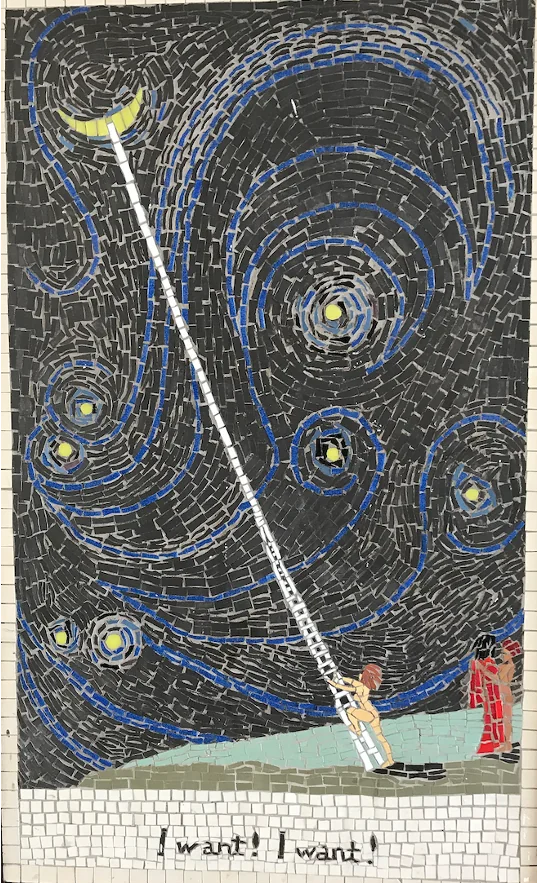 Matt Brown, “I want! I want!”, 2018, after William Blake, “For the Sexes: The Gates of Paradise”, Plate 11, 1826.
I opened with physics to remind us that all life-forms are subject to universal physical laws, and that this sets limits on what we can meaningfully say about “free will”. We cannot rationally will the impossible, though we can desire it — bearing in mind that the improbable is not the impossible, and that many of our greatest discoveries, and perhaps life itself, are very improbable.5
Strong free will is the notion that life-forms have the absolute ability to choose, as they wish, paths of action and to enact them, subject only to physical law. Action and decision can be embedded in code, arise from conscious reflection, or both; for humans, culture matters enormously too. Even an imprisoned animal, such as a human, retains some freedom of action while losing its liberty: within the smaller space it may still choose how to move.
Free will seems so obvious that one wonders why it needs discussion. Yet it has exercised some of the greatest minds in history, and the experts still do not agree what the term means, let alone whether or how much of it exists.
“Spinoza was the first to apply with strict consistency the idea of an all-pervasive determinism to human thought, feeling, and action. In my opinion, his point of view has not gained general acceptance by all those striving for clarity and logical rigor only because it requires not only consistency of thought, but also unusual integrity, magnanimity, and – modesty.”6 (Albert Einstein)
As you read, be wary of trying to reduce everything to a binary answer. Be willing to hold seeming contradictions in mind. One can believe in relative freedom of action — enacting unusual behaviour — without believing in strong free will — the power to decide and act independently of normal cause and effect. If you must (having no free will in the matter) collapse all mystery into certainty, be warned that whatever answer comforts you is unlikely to be meaningful. If there were an equation that gave us an answer, it would beg the question of what the question means.
“Again, no one knows how or by what means the mind moves the body, nor how many various degrees of motion it can impart to the body, nor how quickly it can move it. Thus, when men say that this or that physical action has its origin in the mind, which latter has dominion over the body, they are using words without meaning, or … they are ignorant of the cause … and do not wonder at it.”7 (Benedictus de Spinoza)
Let us build a picture of freedom of action from physical law and the wider community of life, so as to get closer to what people might mean by free will.8 Taking an issue away from its usual setting often lets us return with a clearer view of the hidden assumptions.
So, back to that flippant remark. Did I have freedom in how to write a section on free will? If so, how much? How would you or I know? How might we measure it? The scientist’s first question is: what useful work would we need to do to measure the freedom available in writing about free will? I could write no words at all, or an enormous number. Constraints within the publishing system make those outliers so improbable that, although they have some theoretical possibility, the ability to exhibit freedom in that respect is practically nil. Before going further we need to define what exhibiting freedom means.
Degrees of freedom #
In physics and chemistry:
“A degree of freedom is an independent physical parameter in the formal description of the state of a physical system. The set of all states of a system is known as the system’s phase space, and the degrees of freedom of the system are the dimensions of the phase space.”9
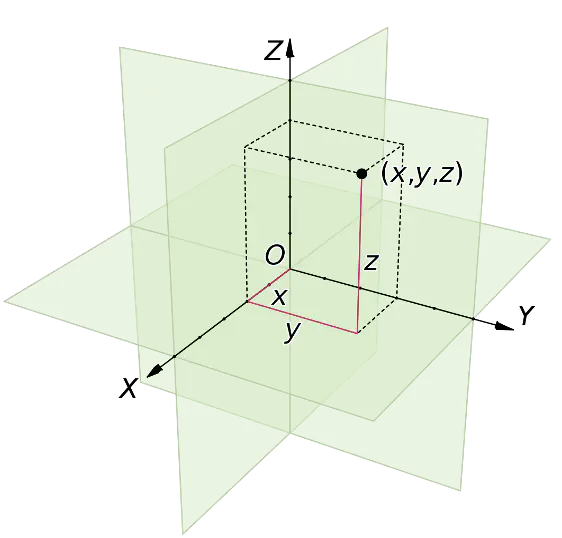 Jorge Stolfi, “Coord system CA”, 2009, public domain.
The location of a particle in three dimensions needs three parameters, the Cartesian coordinates x, y, z, named after Descartes, who gave geometry its modern algebraic treatment. The space is Euclidean, after Euclid of Alexandria, whose axioms still hold in ordinary 3D space two millennia on. The degrees of freedom are the parameters that are able to vary — to be different. A particle’s motion adds velocity components along each axis.
A ship has six degrees of freedom: it can translate along three axes and rotate about them — yaw (about the vertical axis), pitch (about the transverse axis) and roll (about the longitudinal axis).10 A spacecraft in microgravity has the same six.11
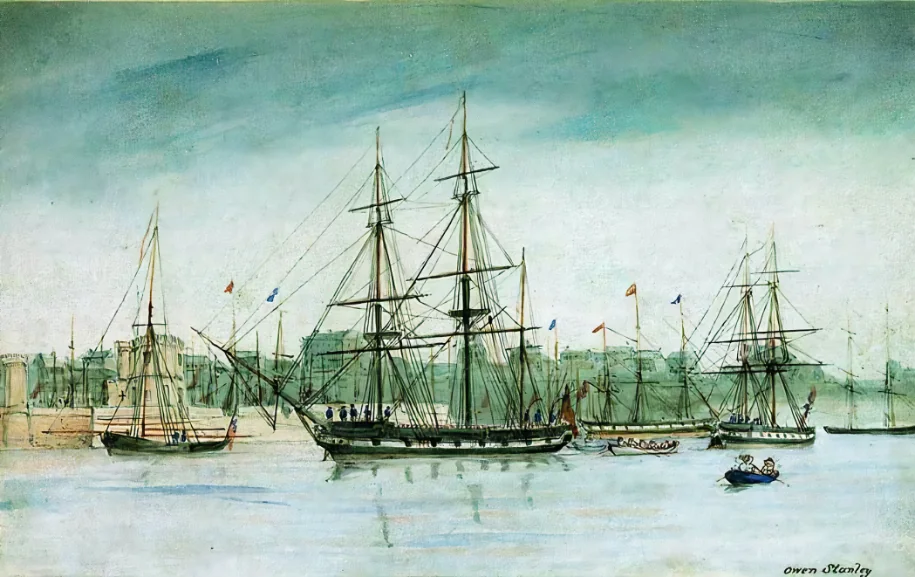 Owen Stanley, “HMS Beagle”, 1841, public domain — the ship on which Darwin sailed to make sense of the history of the natural world.
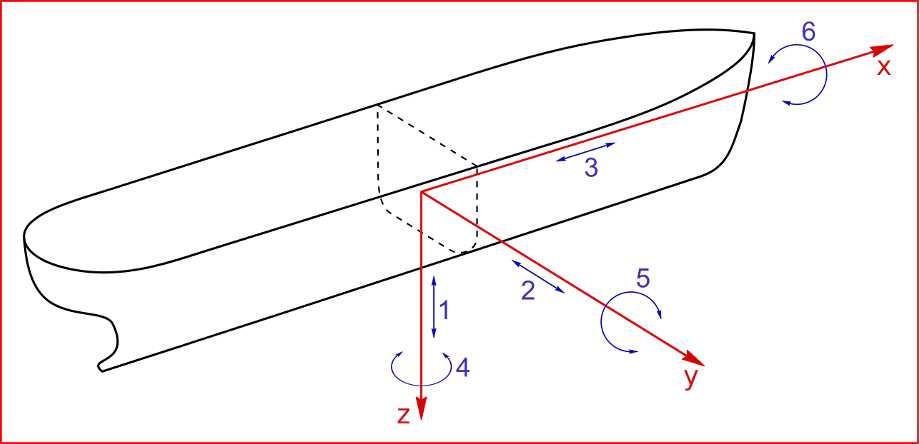
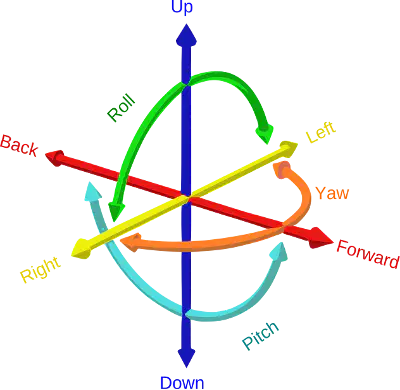
A spaceship capable of leaving Earth therefore has the same degrees of freedom in 3D space as a ship on the sea; the difference is one of extent and location. But we have been ignoring time. In Einstein’s space-time a spaceship’s velocity, and its ability to move between regions of markedly different gravitational potential, mean that time itself runs at different rates for it and for those left behind. We now need four parameters to specify an event — (x, y, z, t) — and t is a relative variable that can differ sharply between objects. Space-time adds a further degree of freedom to the physical coordinates, and depending on the body there may be others (pressure, temperature).
The hard sciences had barely begun to explore this new dimension before artists tried to translate the extra “freedom” into culture. Poincaré’s advice on the fourth dimension — that from inside it you would see every perspective of a scene at once — struck Picasso, and Cubism’s simultaneity, showing one subject from several viewpoints that could never be seen together in the real world, was one way artists illustrated it.1213
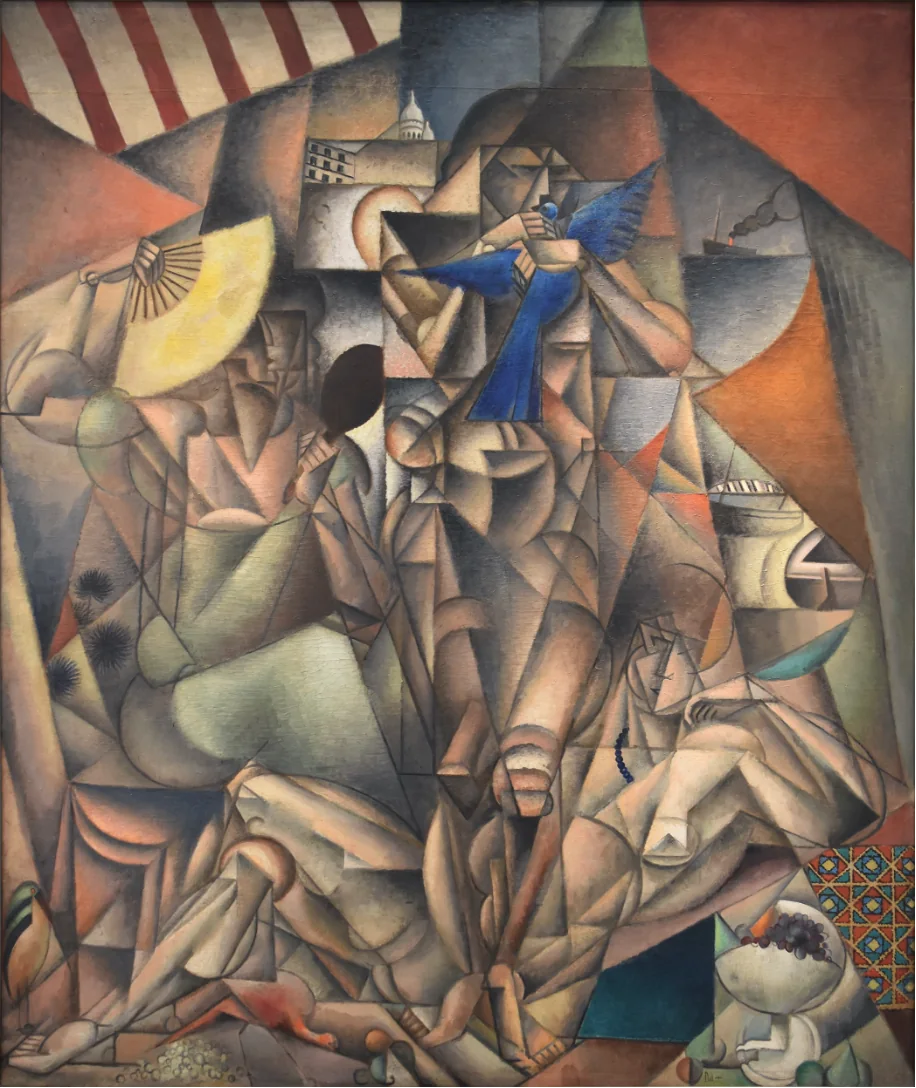 Jean Metzinger, “L’Oiseau bleu”, 1912–13, public domain. Perspective is fragmented into facets; depth survives, yet there is no absolute frame of reference.
The Twin Thought Experiment #
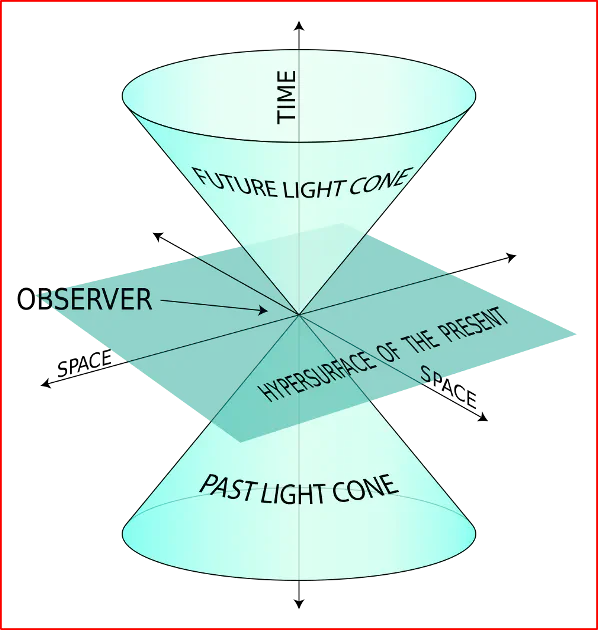
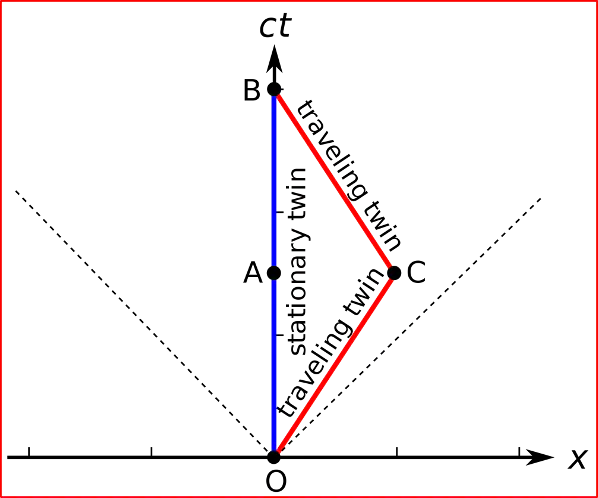
Around 1900 it became clear that physical reality is more flexible than had been imagined. Whatever lies outside our light cones, however far they project forward or back in time, is causally disconnected from our part of the universe. The deformation of space and time around dense objects affects a body’s freedom of action, and because there is no absolute frame, time depends on local space-time and acceleration, with extraordinary consequences for the “truth state” of any event.
The twin paradox makes this vivid for life-forms; its prediction — time dilation — has been confirmed experimentally with atomic clocks. One twin stays on Earth; the other flies away at great speed and returns at the same speed (assume the turnaround takes no time).
“In 1911, Paul Langevin gave a ‘striking example’ … The traveller remains in a projectile for one year of his time, and then reverses direction. Upon return, the traveller will find that he has aged two years, while 200 years have passed on Earth.”14
Take a gentler case. A planet lies 3 light-years away and twin A travels there and back at 60% of the speed of light. Twin B on Earth measures the journey as 5 years out and 5 years back: 10 years. But A’s clocks run slow by a factor of 1.25, so A ages only 8 years. When A reaches the planet, 5 years have passed for B and 4 for A.15
Why spend so long on physics in an essay about free will? To show that freedom is constrained by physical law, that those laws are more flexible than we think, and to place humans within the correct physical frame before discussing any freedom that can be seen and measured.
Measuring freedom of action in writing #
Back to the freedom I might exercise in writing this. It could be broken down into: the average number of words in an online article,16 the average number of sub-sections, the expected words per sub-section, and the number actually used. On a bell curve of sub-section length, the one above would sit left of the mean — somewhat unusual, not extraordinary. An empty or near-infinite sub-section would be a real outlier: potentially costly unusualness (the cost does not make it useful; that depends on what happens next).17
We would then need data on how likely a sub-section headed “free will” is to contain no direct treatment of the title and none of its words — which I studiously avoided. Putting this together, we might begin to measure the structural freedom on display. We have not measured quality, which in culture is a scalar that only becomes ascertainable with time,18 nor the freedom in the content, which in some countries and centuries has been enough to have a writer imprisoned, tortured or killed. There are degrees of freedom for cultural freedom of action too.
“The ages are all equal, but genius is always above its age.”19 (William Blake)
And here is the insurmountable crux. Even if we knew every unusualness score for this essay, we could not know whether I freely chose its structure and words. Did I choose to exercise freedom to be unusual, or did freedom to act unusually choose me?
I might think the essay arose from my choices and judgement, but my choices are severely constrained by a desire for readers, and they begin after billions of previous actions by everyone else, alive and dead. My knowledge relies far more on the work of others, passed on in common culture and language, than on any “free” thinking of mine. I did not choose my starting conditions; many of my decisions were made by others, or by “me” only subconsciously. All my experience, my DNA, the way my brain works, my family and culture — everything before and around me — bears on my actions.
Reality has a plasticity: what we do changes what we can do. But that is still within cause and effect. Asking what a life-form thinks is happening when it acts is not a useful way to understand its degrees of freedom. Nor is admitting only conscious action rationally justified; many actions are subconscious and no less intelligent for that.
Measurable unusualness #
When we admire a great writer — Einstein, Orwell — we do not say they have more free will than other writers. We are admiring their unusualness in content and quality of thought. Free will simply is not a relevant quality.
The only way to identify something like free will in the real world is to measure unusual behaviour. That is a statistical property within any set of variable things (height, place of birth), so it does not prove how free any individual is to will what it wishes — only the statistical extent of the freedom available to act differently from others.
Recommending statistical measures of unusualness is a marked improvement on the usual free-will debate, which is like asking whether there is an anthropomorphic god: unhelpful abstract speculation, an intellectual gamble guaranteed to pay nothing.
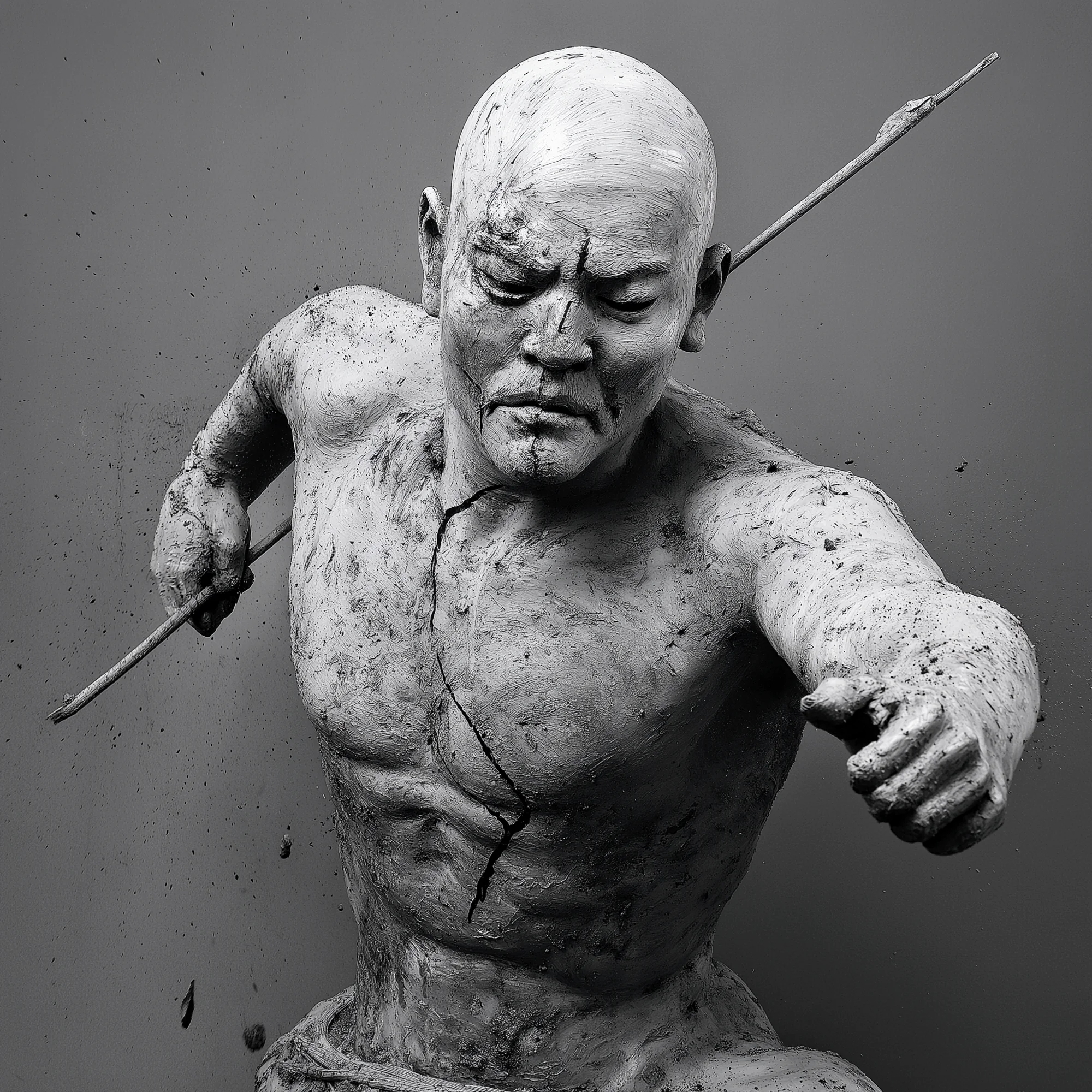
“It’s just as if a man were wounded with an arrow thickly smeared with poison … and the man would say, ‘I won’t have this arrow removed until I know whether the man who wounded me was a noble warrior, a priest, a merchant, or a worker … until I know whether he was tall, medium, or short … until I know whether the bow with which I was wounded was a long bow or a crossbow …’ The man would die and those things would still remain unknown to him.”20 (Gautama Buddha)
We must avoid abstract philosophy that fails to ask useful questions. Universal physical laws define the constraints on any behaviour — the potential degrees of freedom of anything in the system. In a world of cause and effect, if there is freedom, all it can mean is enacting unusual behaviour, compared with the relevant population, within the available degrees of freedom. Discussion of freedom must focus on the ability to make or enact better, worse or merely different choices from the paths available within the relevant phase space, absent overpowering external pressure.21
The box is theoretically the size of the universe — though because space expands faster than light can cross it, an ever-larger volume is forever causally disconnected from us, and without wormholes we can never affect anything beyond about 16.5 billion light-years, our “affectable universe”.22 In practice the freedom to choose is never as great as the theoretical extent. We always act from a conditioned, local starting point; decisions are made in a specific space-time and are literally caused by all that has come before in that part of the universe. Some paths are impossible under invariant law; others are merely too improbable from where we stand.
We will get to those tricksy humans. First, the freedom of things that are not alive.
Does each molecule of H₂O in a room filled with steam have freedom?
The answer seems a resounding no. We have no evidence that water molecules can decide anything or choose their location. In classical terms it is deterministic in principle where any molecule will be at any moment,23 though in practice the number of molecules and the shape of the room bring chaos into it:
“Small differences in initial conditions, such as those due to errors in measurements or due to rounding errors in numerical computation, can yield widely diverging outcomes for such dynamical systems, rendering long-term prediction of their behavior impossible in general.”24
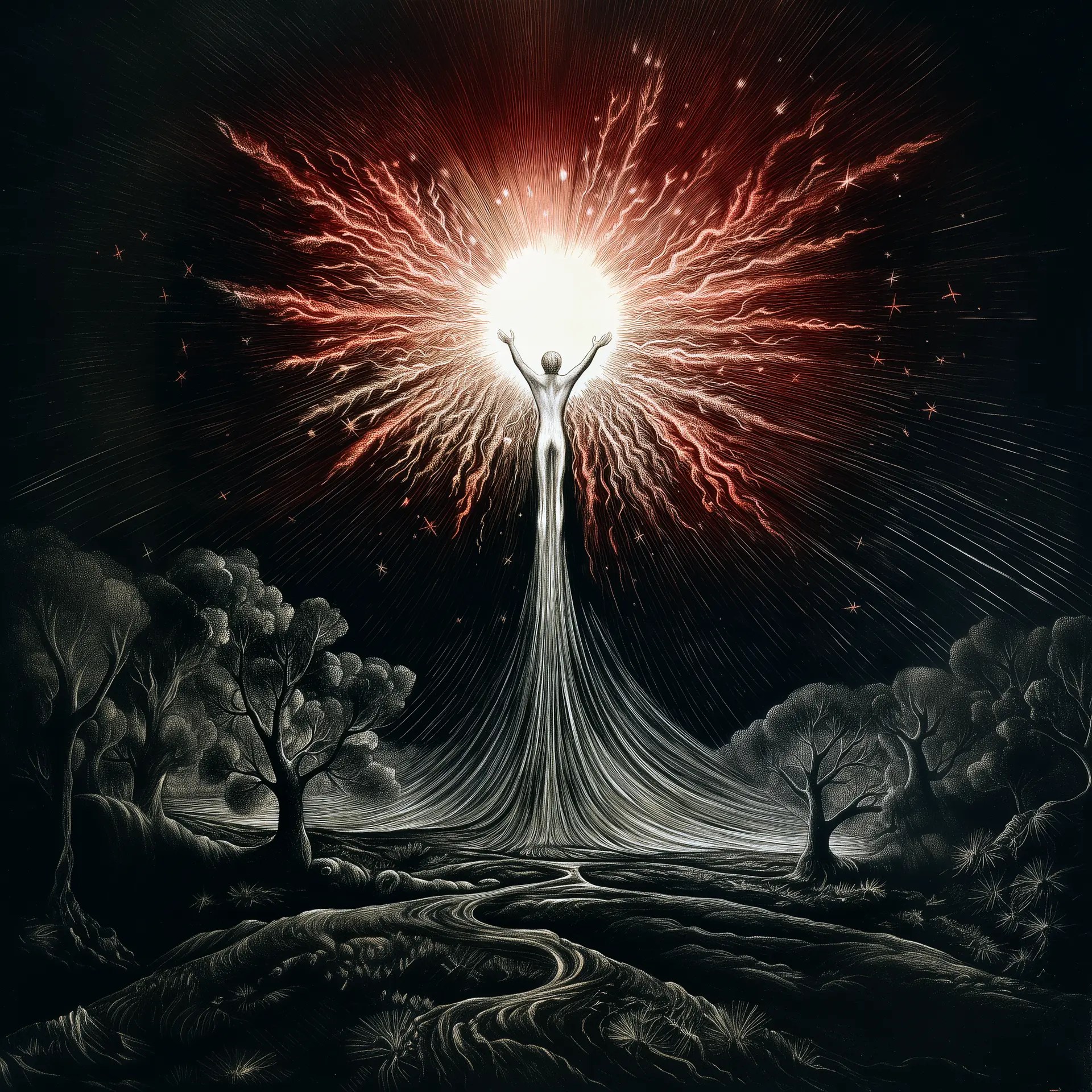
Poor time! We jail it and blame it We imprison eternity To try to feel free25
Continued in Free Will or Freedom? – Part 2: A Fragile Living Skin.
Footnotes #
This publication is based on the chapter of the same name in the book Ethics of Life – Freedom & Diversity.
Rumi, “Be Melting Snow”, in Rumi: Selected Poems, trans. Coleman Barks (2004). ↩︎
Carlo Rovelli, The Order of Time (2017). ↩︎
Ted Hughes, “Hawk Roosting”, Lupercal (1960). ↩︎
Arthur Schopenhauer, On the Freedom of the Will (1839). ↩︎
We should always be careful not to treat the improbable as impossible. ↩︎
Albert Einstein, letter to Dr Dagobert Runes (1932), Einstein Archive. ↩︎
Spinoza, Ethics (1677), Part III, Prop. 2, Scholium. ↩︎
Readers who wish to go down this rabbit hole could start with the Stanford Encyclopedia of Philosophy entries “Foreknowledge and Free Will” and “History of the Free Will Problem”. For Buddhist interpretations see Rick Repetti, “Buddhist Meditation and the Possibility of Free Will”, Science, Religion and Culture 2(2) (2015), and Katie Javanaud, “Reformulating the Buddhist Free Will Problem”, Journal of Indian Philosophy 46 (2018). ↩︎
Wikipedia, “Degrees of freedom (physics and chemistry)”. ↩︎
Wikipedia, “Ship motions”. ↩︎
Dante Lauretta, “Six Degrees of Freedom”, dslauretta.wordpress.com (2013). ↩︎
Arthur I. Miller, quoted in Phaidon, “Picasso, Einstein and the fourth dimension” (2012). ↩︎
Beth Gersh-Nesic, “The Fourth Dimension: Definition in Art History” (2018). ↩︎
Wikipedia, “Twin paradox”. ↩︎
NIHAN10, “The Twin Paradox (Part 4)”, properphysics.wordpress.com (2014). See also the WolframAlpha relativistic calculator. ↩︎
Reedsy, “How long should a chapter be?” (2017). The average book is nearly 90,000 words; the book from which this essay is drawn is about 125,000. ↩︎
The result of unusualness may become the cause of more unusualness, which is how we get from single cells to 150-tonne blue whales and primates in rockets. Alternatively, it may be unusualness that is not useful locally, in which case it will often not be passed on. ↩︎
As Nick Drake sang in “Fruit Tree”: “Safe in your place deep in the earth / That’s when they’ll know / What you are really worth.” ↩︎
Irene Langridge, William Blake: A Study of His Life and Art Work (1904). ↩︎
“Cula-Malunkyovada Sutta: The Shorter Instructions to Malunkya”, trans. Thanissaro Bhikkhu (1998), accesstoinsight.org. ↩︎
Stephen Cave, “There’s No Such Thing as Free Will”, The Atlantic, June 2016, is a good short introduction. ↩︎
Toby Ord, “The Edges of Our Universe” (2021), arXiv:2104.01191. ↩︎
In the sense of being measurable and forecastable from initial conditions. Part 2 adds the quantum caveat. ↩︎
Wikipedia, “Chaos theory”; see also “Three-body problem”. ↩︎
Peter Pink-Howitt, “Time”, unfinished poem; image “Poor time!”, algo-art, 2021. As always I am influenced by Blake: “He who binds to himself a joy / Does the winged life destroy / But he who kisses the joy as it flies / Lives in eternity’s sun rise” (Notebook, c. 1793). Neruda: “Time cannot be cut with your weary scissors” (“Too Many Names”, Estravagario). Thoreau: “As if you could kill time without injuring eternity” (Walden, 1854). ↩︎